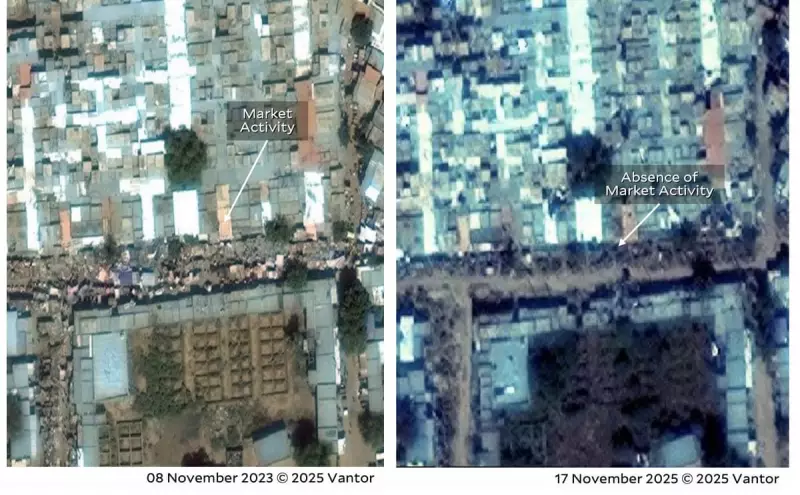
Satellite imagery has exposed the Sudanese city of El Fasher as a desolate "massive crime scene" following its capture by the paramilitary Rapid Support Forces (RSF), with evidence pointing to a systematic effort to conceal a large-scale massacre.
A City Transformed into a 'Slaughterhouse'
Analysis from the Yale Humanitarian Research Lab shows a chilling transformation. Where a bustling livestock market teemed with people, vehicles, and carts in November 2023, an image from 17 November 2025 shows no signs of life. Markets are now overgrown and all livestock appears to have been removed from the city, which was home to 1.5 million people before the war began in April 2023.
"It's beginning to look a lot like a slaughterhouse," said Nathaniel Raymond, director of the Yale lab. The city remains sealed off to outsiders, including UN war crimes investigators, forcing experts to rely on satellite evidence. This has revealed a network of newly dug pits, believed to be for mass burials or cremation, with large piles of corpses gathered in the streets awaiting disposal.
The Staggering Human Toll
While the final death toll is unclear, British MPs were privately briefed that at least 60,000 people have been murdered in El Fasher in a three-week period. Sarah Champion, chair of the Commons international development select committee, confirmed the shocking estimate.
Perhaps even more alarming is the fate of up to 150,000 residents who remain unaccounted for since the RSF overran the city, the army's last major stronghold in Darfur, on 26 October 2025. They are not thought to have fled, leading to grim speculation. Some sources describe small numbers being held in detention centres, but this does not explain the vast majority missing.
Human rights experts now believe the atrocities in El Fasher are likely the worst single war crime of the Sudanese civil war, a conflict already characterised by mass atrocities and ethnic cleansing. Over 32 months, the war has killed as many as 400,000 people and displaced almost 13 million, creating the world's biggest humanitarian crisis.
Blocked Aid and Famine Conditions
Despite pledging access, the RSF has refused to allow the UN or humanitarian organisations into El Fasher to deliver aid or investigate. Aid convoys are stuck on standby in nearby towns as negotiations for safety guarantees fail. A UN source stated there is currently no guarantee of safe passage for civilians or aid workers.
This blockade is catastrophic as the city has been declared to be in famine, with "staggering" levels of malnutrition reported among those who managed to escape. The need for assistance is deemed critical.
The report also highlights renewed calls for investigation into an RSF attack on the Zamzam displacement camp six months earlier. A new Amnesty International report documents how the RSF targeted civilians and destroyed infrastructure there, warranting war crimes investigations.
With the city locked down and evidence being actively destroyed, the full horror of what happened in El Fasher may never be fully known, but satellite images paint a picture of a city emptied and scarred by unimaginable violence.