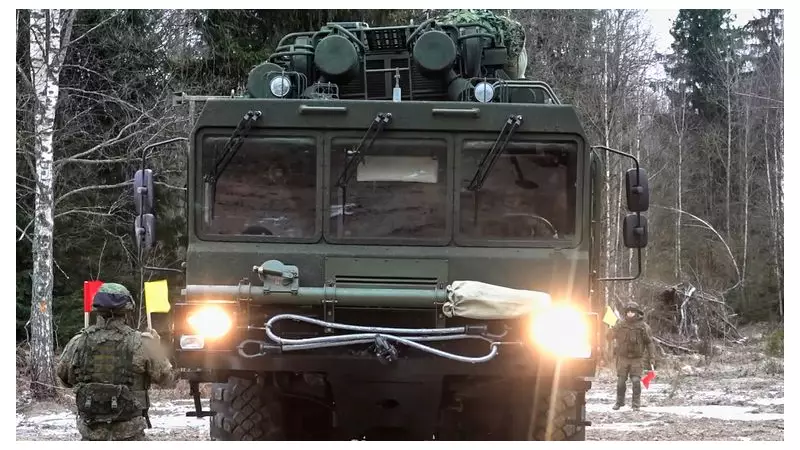
Russia's deployment of a new hypersonic missile in its latest barrage against Ukraine has sent a stark warning far beyond the immediate conflict zone, posing urgent questions for European and NATO security.
A Strategic Strike Close to NATO Borders
As part of a massive overnight assault on 8 January 2026, which involved 278 Russian missiles and drones, the Kremlin launched its nuclear-capable Oreshnik intermediate-range ballistic missile (IRBM). The target was the western Ukrainian city of Lviv, a location of profound strategic significance situated a mere 40 miles from the Polish border.
While the physical damage from this particular strike was reportedly limited to a state enterprise workshop, defence analysts agree the attack's true purpose was demonstrative. By firing the Oreshnik so close to NATO territory, Russia showcased the weapon's formidable capabilities as a direct message to the West.
Capabilities That Redefine the Threat
The Oreshnik missile represents a significant escalation in the technological arms race. With a reported range of up to 5,500 kilometres, it theoretically places the entirety of continental Europe within its reach. Its most alarming feature, however, is its speed: travelling at Mach 10-11, it presents a severe challenge to existing missile defence systems.
The Royal United Services Institute (RUSI) has assessed that an IRBM travelling at such velocity could strike Britain within approximately 10 minutes if launched from western Russia. This drastically reduces the time available for detection, tracking, and interception.
This comes at a time when Ukraine's air defence interception rates, which had previously reached 80%, fell to a worrying 54% in the last quarter of 2025. Weapons like the Oreshnik are designed to drive those rates down even further.
Timing and Implications for NATO
The launch's timing is viewed as highly provocative. It follows recent revisions to Russia's nuclear deterrence doctrine, which lowered the threshold for a nuclear response. Moscow also issued a heated warning stating that any future British or French military facilities in Ukraine would be considered legitimate targets.
Given the Oreshnik's reputation as a bunker-busting weapon, the implications for NATO infrastructure, storage facilities, and personnel are grave. Ukrainian Foreign Minister Andrii Sybiha has rightly labelled the system a "grave threat" to European security.
While some experts question if the Oreshnik is a truly new system or a modification of the existing RS-26 Rubezh, and initial assessments suggest the latest strikes may have used inert warheads, the strategic message is clear. Russia is signalling its capacity to strike with speed and precision at targets across Europe, underlining how the war in Ukraine is inextricably linked to the continent's broader security architecture.
For now, the Oreshnik's rare appearances add to its menace. However, with Vladimir Putin indicating intentions to use it with more conventional payloads, its more frequent use cannot be ruled out, forcing NATO leaders to urgently re-evaluate worst-case scenarios and defensive vulnerabilities.