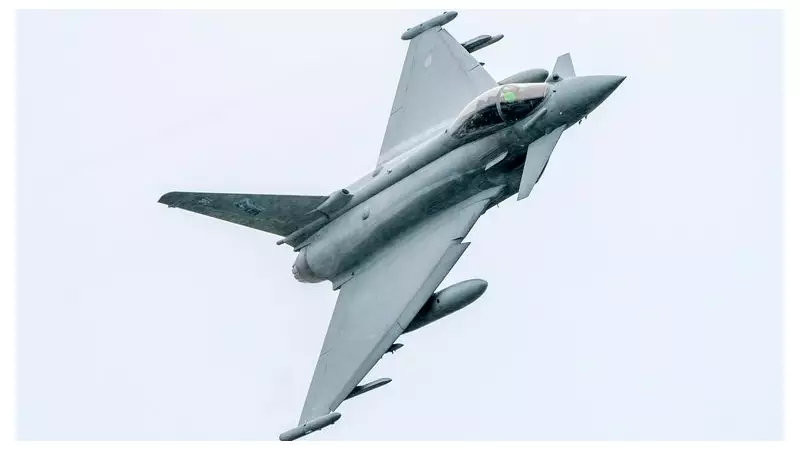
British Royal Air Force combat aircraft have conducted a targeted strike against a former Islamic State underground facility in Syria. The operation, carried out jointly with the French air force, aimed to disrupt the terror group's capabilities and prevent its resurgence.
Details of the Joint Military Operation
The mission took place on Saturday evening, 3 January 2026. RAF Typhoon FGR4 fighter jets deployed Paveway IV guided bombs to target several access tunnels leading to the subterranean complex. The aircraft were supported by a Voyager refuelling tanker during the sortie.
The Ministry of Defence stated the facility was located in a mountainous area north of the ancient city of Palmyra in central Syria. Intelligence indicated the site had been used by IS, most likely for storing weapons and explosives. The area was confirmed to be devoid of civilians at the time of the strike, with no indication of risk to the local population.
Objective: Preventing a Terrorist Resurgence
The primary goal of the operation was to "help prevent any attempted resurgence of the Daesh terrorist movement", according to an official MoD statement. Daesh is an alternative name for Islamic State, often abbreviated as ISIS or IS.
Defence Secretary John Healey said the action was designed to "eliminate dangerous terrorists who threaten our way of life". He emphasised the UK's leadership and determination to stand with allies to stamp out the group's violent ideologies in the Middle East.
This strike follows US military action against ISIS in Syria in December 2025, which similarly targeted fighters, infrastructure, and weapons sites.
The RAF's Typhoon Fighter Jet
The aircraft used in this operation, the Eurofighter Typhoon, is a multirole combat jet capable of speeds up to Mach 1.8 (approximately 2,222kph). Key points about the platform include:
- First deployed by the RAF over Libya in 2011.
- Used in operations against Islamic State in Iraq and Syria since 2015.
- Operated by several nations including the UK, Germany, Italy, and Spain.
- Although a fourth-generation jet, it remains a key part of UK defence, often tasked with intercepting Russian aircraft near UK airspace.
- Scheduled for replacement by the sixth-generation Tempest fighter from 2035.
All aircraft involved in the Syrian operation returned safely to base. While a detailed battle damage assessment is underway, initial indications are that the strike successfully engaged its target.
Western forces continue patrols over the region to counter the militant group, which controlled significant parts of Syria until its territorial defeat in 2019.