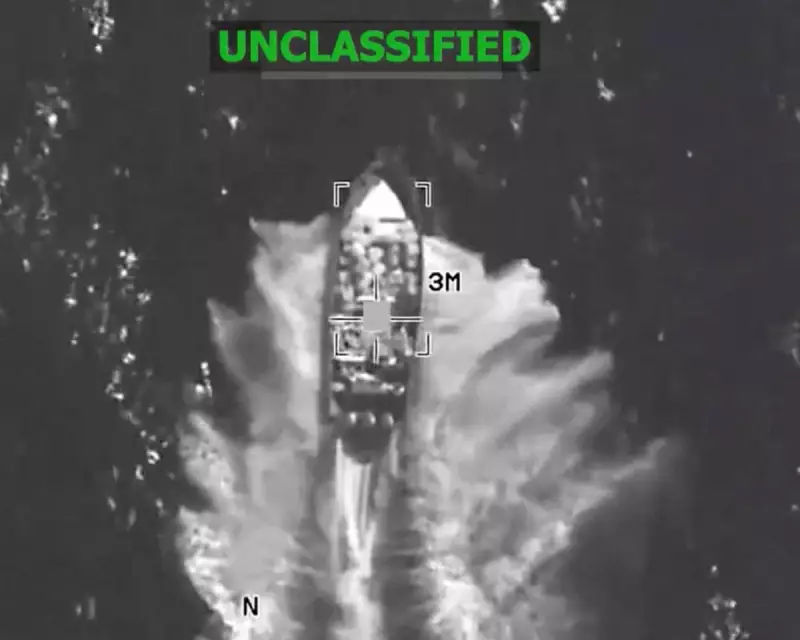
The United States military has carried out another lethal strike on a vessel suspected of trafficking illegal narcotics in the eastern Pacific, the Pentagon confirmed on Thursday. The operation resulted in the deaths of four individuals, escalating an ongoing controversy in Washington over the legal and ethical boundaries of such actions.
Mounting Scrutiny Over Military Tactics
The latest deadly engagement comes as senior US defence officials face intense questioning from Congress regarding a separate, highly controversial incident on 2 September. US Navy Admiral Frank Bradley and Chairman of the Joint Chiefs of Staff Dan Caine were summoned before closed sessions of the House and Senate armed services and intelligence committees to address that specific attack.
Lawmakers are investigating whether the military was instructed to launch a follow-up strike on survivors after an initial engagement. While both Democratic and Republican members stated that Defence Secretary Pete Hegseth did not issue an order to kill survivors of the 2 September incident, a sharp partisan divide emerged over the appropriateness of the so-called 'double strike'.
The tension was exacerbated after video footage of the September attack was shown during the confidential briefing. Jim Himes, the leading Democrat on the House Armed Services Committee, described the viewing as "one of the most troubling things I’ve seen in my time in public service." He did, however, note that Admiral Bradley had clarified no explicit 'kill them all' or 'no quarter' order was given.
Hegseth's Precarious Position
Secretary Hegseth, already embroiled in a separate scandal, has attempted to minimise his involvement in the 2 September operation. A recent report by the Pentagon's inspector general concluded he violated departmental policy by sharing classified information in a Signal messaging chat in March.
Despite his efforts to distance himself, the US Southern Command in Florida explicitly stated in a social media announcement that Thursday's overnight strike was conducted "at the direction" of Secretary Pete Hegseth, directly linking him to the latest fatal action.
Other Key Political Developments
In a busy day for US politics, several other significant events unfolded:
- The Supreme Court ruled on Thursday to permit Texas to implement a newly redrawn congressional map. This redistricting could create up to five additional Republican-friendly districts, bolstering the GOP's slim House majority ahead of the 2026 midterm elections—a strategy initiated by Donald Trump.
- A federal vaccine advisory panel is scheduled to vote on Friday on whether to alter the long-standing recommendation for universal hepatitis B immunisation for newborns. This panel advises the US Centers for Disease Control and Prevention (CDC).
- A grand jury declined to indict Letitia James, the New York Attorney General and a prominent political adversary of Donald Trump, less than two weeks after a judge ruled a similar case against her unlawful.
- Authorities arrested a man for allegedly planting pipe bombs outside both the Republican and Democratic party headquarters on the eve of the January 6 insurrection.
- A federal appeals court sided with the Trump administration, pausing a lower court's order to end the deployment of National Guard troops in Washington DC.
The confluence of these events underscores a period of heightened political and legal friction in the United States, with the legality of military engagements abroad provoking particularly fierce debate among the nation's lawmakers.