Mexico's Cartel Landscape: A Global Spotlight on Deadly Organized Crime
Cartels are scattered across Mexico, engaging in fierce turf wars and battling for control over drug supplies, from the Sinaloa region to the Gulf coast. The operations of these criminal organizations have captivated and horrified millions worldwide, with notorious kingpins like El Chapo and Pablo Escobar inspiring popular shows such as Narcos. This drama series, however, mirrors the real-life activities of some of the deadliest organized crime gangs in Latin America. Recently, a surge in violence across Mexico following the death of drug lord 'El Mencho' has thrust cartels back into the global spotlight. Here is an in-depth look at the largest and most dangerous criminal organizations operating today.
The Jalisco New Generation Cartel: A Rise Marked by Aggression
The Jalisco New Generation Cartel has dominated headlines this week after its leader, Ruben Oseguera Cervantes, was assassinated. Established in 2009, the CJNG has gained notoriety for its aggressive tactics, including direct attacks on military forces, such as targeting helicopters. This heavily armed group pioneered the use of explosives launched from drones and the installation of mines during turf conflicts. In 2009, internal battles within the Milenio cartel fractured its core, leading to the formation of two factions: the 'Resistencia' and the 'Torcidos', or 'Twisted Ones'. The latter eventually evolved into what is now known as the CJNG, initially led by former police officer El Mencho until his recent death.
Following the cartel's creation, violence escalated significantly in Jalisco, Mexico, where the organization is based. Forced disappearances, public murders, and the discovery of mass graves became commonplace as the cartel fought to defend its territory and protect drug supplies. CJNG has made numerous attempts to assassinate high-profile politicians, including Luis Carlos Najera and Omar Garcia Harfuch, and has been linked to the killings of journalists.
The Sinaloa Cartel: Infamy and Enduring Influence
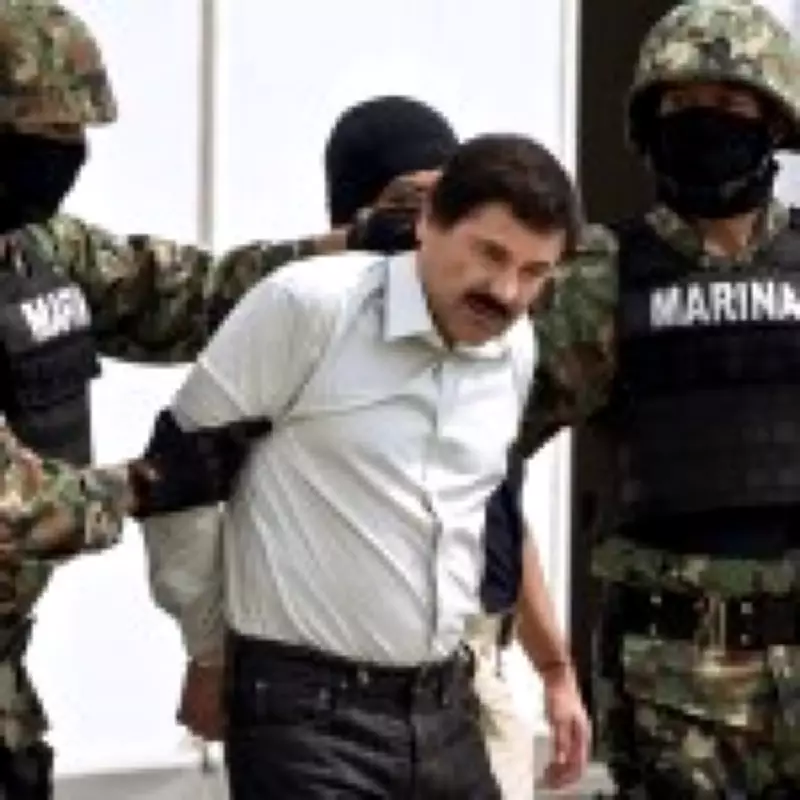
Arguably Mexico's most infamous cartel, the Sinaloa Cartel was founded in the late 1980s by Joaquín Guzmán, widely known as El Chapo. In 2019, he was sentenced to life plus 30 years in prison in the United States, but the organization he established continues to thrive in Mexico. As the largest supplier of illegal drugs to the United States, the Sinaloa Cartel is also notorious for kidnappings and forced disappearances. In recent years, Guzman's sons have led a faction called the 'Chapitos', identified as a primary exporter of fentanyl to the U.S. market.
The gang's strategic territory along the U.S. border provides prime locations for drug trafficking, fueling its growth. The cartel defends its interests through extreme measures, including kidnapping, torturing, and executing enemies, with bodies often hidden in mass graves scattered across their territory. In April 2011, Mexican officials uncovered more than 450 bodies buried in mass graves in northern states, highlighting the cartel's brutal methods.
The Gulf Cartel: A Legacy of Violence and Internal Strife
The Gulf Cartel's origins date back to the 1930s, but it exploded in prominence during the 1980s cocaine boom. Within a decade, the group, founded by Juan García Abrego, was generating billions annually. Based in northeastern Mexico, particularly Tamaulipas, the cartel is involved in smuggling cocaine, heroin, fentanyl, and marijuana, as well as migrant smuggling and forced disappearances. Abrego was arrested in 1996, and his successor, Osiel Cardenas Guillen, was also imprisoned. In 2010, Guillen's brother, Ezequiel Cardenas Guillen, took over before being killed by Mexican troops in a shootout.
Since then, the Gulf Cartel has been embroiled in internal conflicts and wars with rival groups, most notably Los Zetas, a paramilitary organization that splintered from the Gulf Cartel and grew into one of Mexico's most dangerous criminal entities.
Los Zetas Cartel: A Spin-Off Known for Brutality
The Los Zetas cartel emerged as a spin-off from the Gulf Cartel in 2010 after the Gulf's leadership was eliminated. Infamous for decapitations, kidnappings, torture, and drug smuggling, Los Zetas distinguishes itself by also trafficking illicit tobacco and humans. Based in the Tamaulipas region of northeastern Mexico, the group remains at war with the Gulf Cartel to this day. In 2013, its then-leader, Miguel Angel Trevino Morales, known as Z-40, was captured by U.S. forces. He was accused of shipping large quantities of cocaine and cannabis into the U.S. weekly and slaughtering hundreds of migrants.
Trevino Morales often displayed victims' bodies hanging from bridges as warnings to rivals and subjected others to brutal methods, such as beating them with wooden planks or 'stewing' them alive in large tanks. This cartel's operations underscore the extreme violence and diversification tactics employed by Mexico's organized crime networks.
As cartels continue to evolve and clash, their impact on Mexico and beyond remains a critical issue, with ongoing violence and criminal activities posing significant challenges to security and stability in the region.