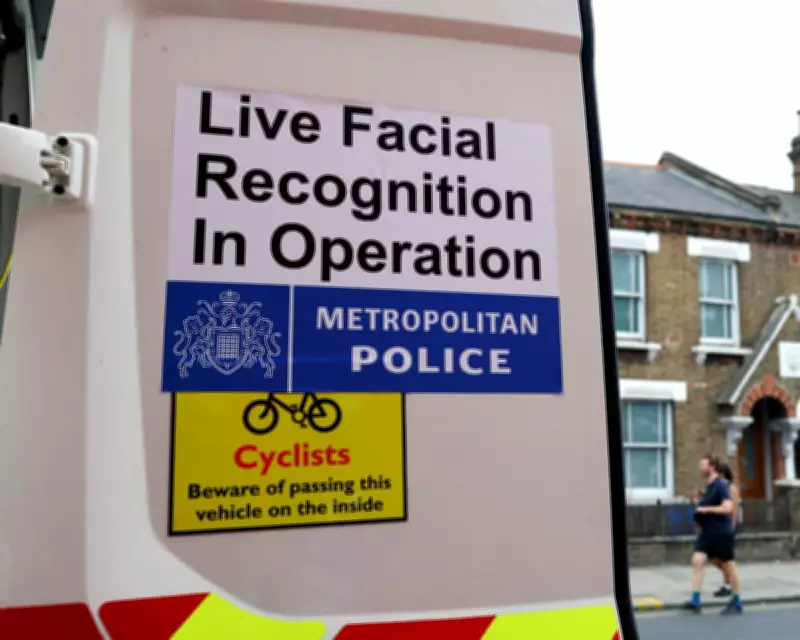
Metropolitan Police Initiates Six-Month Facial Recognition Pilot Program
The Metropolitan Police has announced a significant expansion of facial recognition technology in its operations, launching a six-month pilot program that will equip 100 officers with handheld devices capable of scanning citizens' faces. This move, confirmed by London Mayor Sadiq Khan, represents a major shift in policing tactics, extending the use of face scanning beyond fixed locations and van-mounted cameras to include mobile, officer-initiated checks.
Controversial Technology Deployment Sparks Immediate Backlash
While Mayor Khan defended the pilot as a tool to verify identities during police stops and avoid unnecessary arrests, opponents have labeled the initiative "alarming." The announcement came during questioning from Green Party London Assembly member Zoë Garbett, who expressed grave concerns about how this technology fundamentally alters police-public interactions.
"They're going to be able to literally walk up and scan people's faces on the device," Garbett warned during Thursday's City Hall meeting. "This is a new technique that really changes the relationship with the public."
Technical Implementation and Existing Precedents
The pilot emerges as the Met's website still states the force "does not presently use the so-called operator initiated facial recognition." However, similar technology is already operational elsewhere in the UK. South Wales Police employs NEC's "NeoFace" algorithm on smartphones for identifying individuals who are missing, at risk, or wanted when they cannot or refuse to provide details.
Police guidelines specify the technology can be used when there is "intelligence to suggest that they may pose a risk of harm to themselves or others," though civil liberties groups have criticized this as overly broad and nebulous.
Accuracy Concerns and Racial Disparities Highlighted
The timing of this announcement coincides with growing scrutiny of facial recognition accuracy. Just this week, The Guardian revealed how police arrested an Asian man for a burglary 100 miles away that he had never visited after software confused him with another person of South Asian heritage.
Mary Ann Stephenson, chair of the Equality and Human Rights Commission, emphasized: "There is a danger that these technologies can be inaccurate and falsely identify people. The data shows that there are racial disparities for false positive identification, causing human rights infringements and distress to those affected."
Political Support and Opposition Perspectives
Mayor Khan countered critics by explaining the practical applications: "The only alternative the police have is to arrest that person and take them to the police station. So one of the advantages of this device is to avoid that huge inconvenience and to see if the person they are speaking to is somebody whose face matches with somebody whose face they've got on the custody record."
Policing Minister Sarah Jones has called facial recognition technology "the biggest breakthrough for catching criminals since DNA matching," while simultaneously launching a 10-week consultation on its expanded use.
Regulatory Framework and Ethical Considerations
The Equality and Human Rights Commission has called for a new independent oversight body to regulate facial recognition technology in the UK, citing the need for a strong legal framework. This follows Khan's own March 2024 statement that he would expect the Met to consult stakeholders and consider legal, policy, community, data protection, and ethical impacts before deploying such technology.
Garbett criticized the lack of transparency: "It's shocking that I had to force the mayor to disclose that they are trialing operator-initiated facial recognition technology. We already have no clear legal framework for live facial recognition and now it's being further expanded."
Financial Contracts and Previous Successes
Alongside this pilot, the Met has signed a £490,000 three-month contract with controversial US AI firm Palantir to detect rogue officers based on their conduct patterns. Previous facial recognition deployments have shown operational success, with the Croydon pilot resulting in more than 100 wanted criminals arrested in its first three months using lamp-post mounted cameras.
As this six-month pilot begins, the debate continues between law enforcement efficiency advocates and privacy rights defenders, with the fundamental question remaining: how much surveillance technology should police wield in public spaces, and what safeguards must accompany its use?