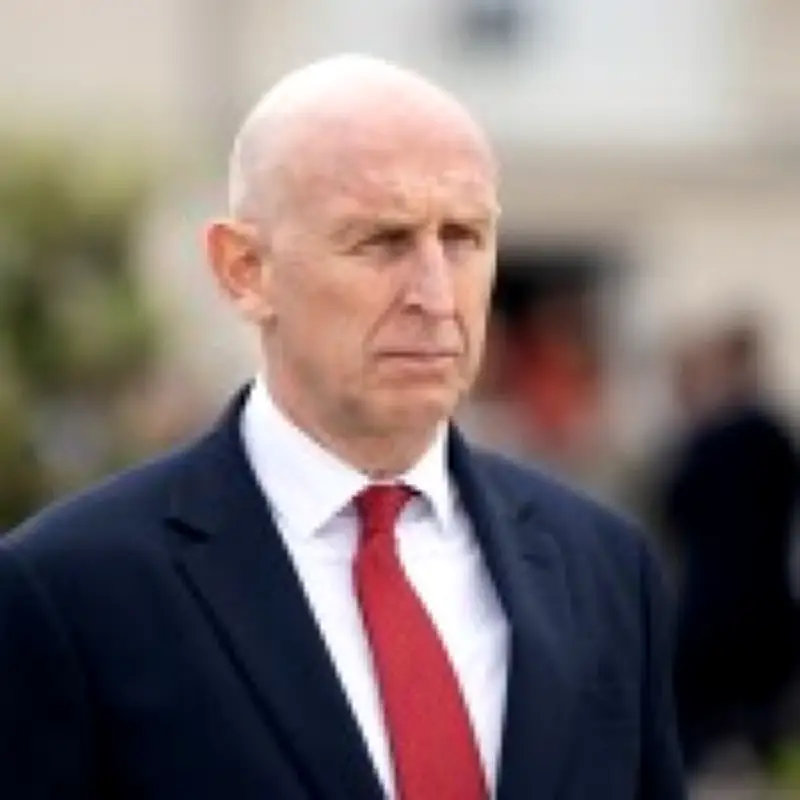
John Healey has resigned as Defence Secretary amid a major row over funding for the Armed Forces, turning a long-simmering argument over the Defence Investment Plan (DIP) into a full-blown crisis for Sir Keir Starmer’s government. Starmer has committed to publishing the plan before a Nato summit next month, following months of bitter negotiations between the Ministry of Defence and Rachel Reeves’ Treasury.
In a scathing letter to the Prime Minister, Healey wrote: ‘The excellent and extensive cross-government work that completed in January – overseen by you, me and the Chancellor – confirmed the scale of the challenge and the rising demands on defence. Since then, you have been unable, and the Treasury has been unwilling, to commit the resources that the nation needs to defend the country at this time of rising threats.’
Healey said the DIP financial settlement was first presented to him in full on Monday afternoon and ‘falls well short of what is required’. He wrote to Starmer: ‘You know what defence needs. You made the argument for this powerfully in your speech at the Munich Security Conference back in February. Without a DIP that meets the moment in this way, I am being forced to make decisions that would reduce the readiness of our Forces and increase the risk to personnel on operations, and could make the country less safe.’
His words were echoed by Armed Forces Minister Al Carns – who has not resigned – in an interview with Times Radio. Carns said the DIP was ‘not fit for purpose’ and said Starmer has ‘got to sort this out’. Tan Dhesi, the Labour MP who chairs the Defence Committee, said Healey was a ‘serious, committed and respected’ Defence Secretary and his resignation over the ‘inadequacy’ of the DIP was a ‘grave moment’. He added: ‘The government must take that warning with the utmost seriousness.’
The scathing accusation that the Prime Minister was risking leaving the country less safe with the investment plan was denied by Work and Pensions Secretary Pat McFadden. Speaking on a visit to the Netherlands, he said: ‘I haven’t read the letter, but I think the PM is both able to make changes and strongly committed to the defence of the country, and that’s everything I have seen in working with the PM since the election tells me that.’
Healey’s departure leaves Starmer without one of his most popular and widely respected ministers. It also turns the heat up considerably on a sore point for the PM, who has been keen to emphasise his government’s commitment to defending the country. Shadow Defence Secretary James Cartlidge said Healey had demonstrated his ‘integrity’ with his resignation. In a video posted on X, he said: ‘He was left with no choice – he had to resign given that the Prime Minister was offering him such a tiny amount of money for our Armed Forces at a time when we face war on two fronts.’
The DIP has been in the works for more than a year, since the Strategic Defence Review was published at the start of June 2025. Much of Westminster expected the plan to be published this week, but Starmer refused to commit to that timeline at Prime Minister’s Questions yesterday. He told Conservative leader Kemi Badenoch: ‘We’ve been working through the details to make sure that we get this right.’
Just two days ago, Healey gave a speech to the GMB union arguing that the investment plan would give a boost to British industry. The Defence Secretary said: ‘My argument is this, my approach is this: every pound that we spend on defence needs to work twice, first for national security, second for British industry, and British jobs.’ His resignation comes a day after he and Foreign Secretary Yvette Cooper met with their Australian counterparts for the annual AUKMIN security summit. Along with Cooper and Leader of the House of Commons Sir Alan Campbell, Healey was one of the longest-serving MPs in Starmer’s Cabinet. He was first elected at the 1997 election.