Italy Denies US Access to Sicily Airbase for Iran War Weapons Transport
In a significant diplomatic development, Italy has formally denied the United States military permission to use a strategic airbase in Sicily for aircraft transporting weapons destined for the ongoing conflict in Iran. This decision underscores growing tensions between Washington and some European allies regarding military cooperation in the Middle East.
Authorization Procedure Violation
According to sources within the Italian defense ministry, the denial stems from the United States' failure to adhere to established authorization protocols. The US reportedly requested permission for "some US bombers" to land at Sigonella Naval Air Station only after the aircraft were already en route to Sicily. This late request did not provide sufficient time for the Italian parliament to grant the necessary approval, as mandated by international treaties governing the use of US naval bases on Italian soil.
These treaties, established in the late 1950s, explicitly permit the bases to be utilized for logistical support and training exercises. However, they prohibit their use as transit hubs for aircraft carrying weapons for active warfare unless under emergency conditions. The current situation regarding Iran does not qualify as such an emergency under Italian interpretation.
Political and Public Backdrop
The office of Italy's Prime Minister, Giorgia Meloni, issued a statement attempting to downplay the incident, asserting that it has not caused "critical issues or frictions" with international partners. The statement emphasized that relations with the United States remain "solid and based on full and loyal cooperation," and that Italy evaluates each request for base usage meticulously on a case-by-case basis in full compliance with international agreements.
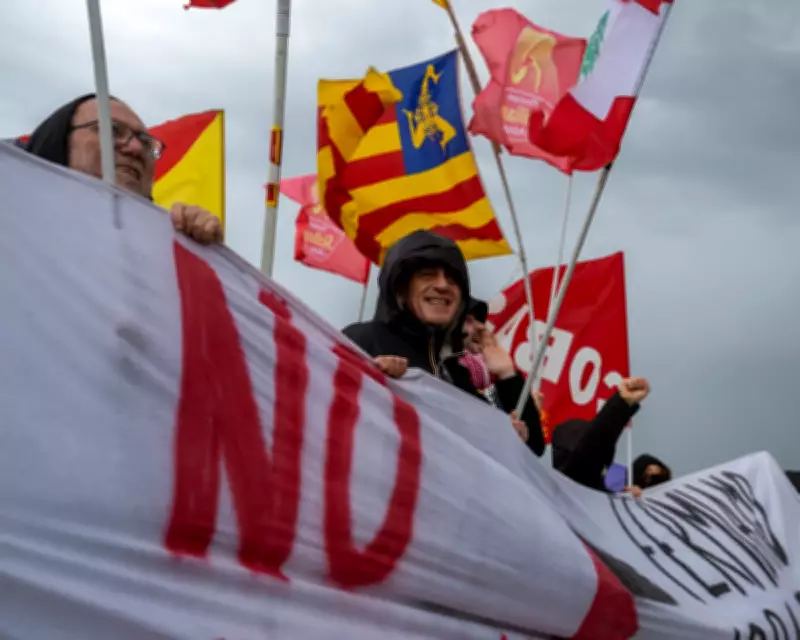
This stance occurs within a complex domestic political environment. Italy possesses a deeply ingrained anti-war culture, with opinion polls consistently revealing robust public opposition to the Iran conflict and significant disapproval of former US President Donald Trump. Meloni, who has cultivated a positive working relationship with Trump, has seen her own popularity affected by this association.
Opposition parties have intensified pressure on the government for weeks, urging a blockade on US utilization of Italian bases for involvement in the Middle East. Giuseppe Conte, leader of the Five Star Movement, argued that Italy has a "duty" to deny access and should extend this to denying all logistical support, claiming the US-Israeli actions in Iran violate international law.
Broker European Tensions and Local Opposition
The Italian move follows a similar stance taken by Spain, which recently closed its airspace to US aircraft involved in attacks on Iran. These actions signal rising unease among some European nations regarding the conflict. Adding to the transatlantic strain, Donald Trump publicly criticized France on his Truth Social platform for refusing overflight rights to US planes carrying military supplies to Israel, calling the country "VERY UNHELPFUL."
Locally in Sicily, anger has been mounting for weeks due to increased military activity at the Sigonella base since the conflict's onset. Tensions escalated further after the US Navy shared an Instagram photo showing a military helicopter landing in the UNESCO-listed Madonie natural park near Palermo during a training exercise. Sicilian politician Nuccio Di Paola of the Five Star Movement declared, "Sicily does not want and will not contribute to any war. Sicily is a land of peace and must remain so... we cannot allow Sicilians to be put at risk because of our country's subservience to other countries."
Prime Minister Meloni has previously expressed strong criticism of the US-Israeli military strikes, telling parliament they represent a dangerous trend of interventions operating "outside the scope of international law." However, she has also voiced security concerns regarding a potential nuclear-armed Iran with missile capabilities threatening Italy and Europe. While reiterating that Italy will not enter the war, her government has provided defensive military assets to Gulf nations.
This incident at Sigonella highlights the delicate balance European nations are attempting to maintain between honoring alliance commitments with the United States and adhering to domestic legal procedures, public sentiment, and interpretations of international law regarding military conflicts.