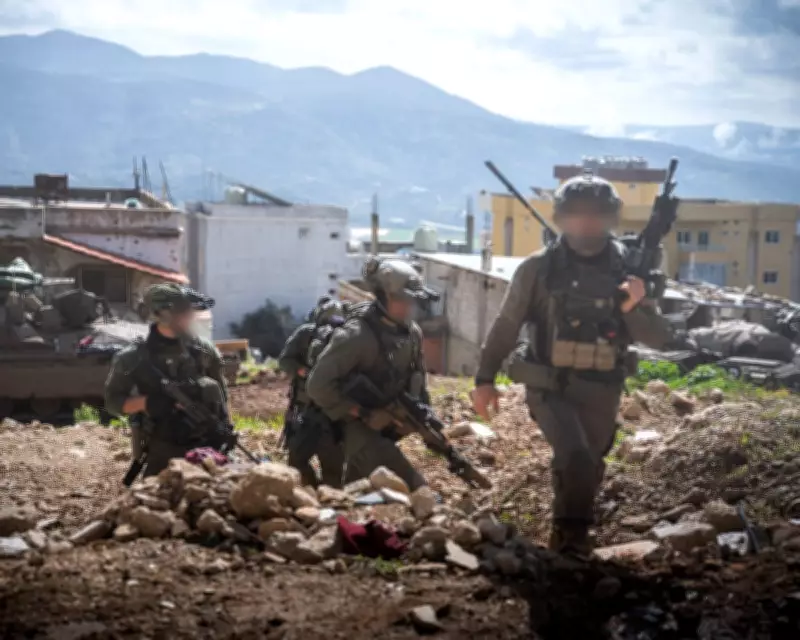
Israel's Southern Lebanon Occupation Plan Sparks International Alarm
Israel has declared its intention to occupy extensive areas of southern Lebanon and systematically destroy homes along the border, raising serious concerns about long-term forced displacement of approximately 600,000 residents. This controversial plan has drawn sharp criticism from human rights organizations, with Human Rights Watch warning that such actions could constitute war crimes under international law.
Expanding the Buffer Zone
Israeli Defense Minister Israel Katz announced on Tuesday that Israel would establish control over territory extending to the Litani River, approximately 19 miles from the Israel-Lebanon border, as part of an expanded buffer zone within southern Lebanon. Katz stated that this occupation would occur once fighting with Hezbollah concludes, with Israeli Defense Forces (IDF) taking control of the area up to the Litani River, including remaining bridges across the waterway.
The defense minister outlined a strategy to eliminate Radwan forces—the elite unit of the Iran-backed Hezbollah group—and destroy all weapons in the region. Most alarmingly, Katz declared that all homes near border villages would be demolished "in accordance with the Rafah and Beit Hanoun model in Gaza," referencing the Israeli military's complete destruction of those Gaza neighborhoods earlier in the conflict.
Human Rights Violation Concerns
Human Rights Watch has responded forcefully to these announcements, stating that similar declarations by Katz in recent days could amount to both forced displacement and wanton destruction—two actions explicitly defined as war crimes under international humanitarian law. The organization emphasized that such policies would violate fundamental protections for civilians during armed conflict.
Israeli military spokesperson Major Doron Spielman further escalated concerns during a Sunday interview with LBCI, claiming that "every home in southern Lebanon, the Shiite homes, are command centers." This characterization appears to provide justification for the planned widespread destruction of civilian infrastructure.
Military Operations and Displacement
The current Israeli military campaign in Lebanon began shortly after Hezbollah launched rockets at Israel on March 2, in retaliation for the killing of Iranian Supreme Leader Ayatollah Ali Khamenei. Since then, Israeli jets have conducted bombing raids across Lebanon while ground forces have advanced approximately 18 miles south of the Litani River.
Prime Minister Benjamin Netanyahu confirmed on Sunday that he has instructed the military to expand the buffer zone within Lebanon, though he did not specify the exact dimensions. Israeli troops have advanced rapidly through southern Lebanon, reaching the town of Bayada on Sunday—just 8 kilometers from the city of Tyre—significantly faster than during the previous conflict in 2024.
Regional Impact and Casualties
The conflict has already resulted in substantial human suffering and infrastructure damage. According to Lebanon's Ministry of Health, at least 1,268 people have been killed in Lebanon by Israeli attacks. Ten Israeli soldiers have died in southern Lebanon combat, while two civilians in northern Israel were killed by Hezbollah rocket fire.
More than one million people have been displaced by Israel's invasion of Lebanon, with over 80% living outside official state shelters. Medical facilities and critical public infrastructure—including bridges, water treatment stations, and power stations—have been damaged or destroyed by Israeli attacks throughout southern Lebanon.
UN Peacekeeper Casualties
The United Nations Interim Force in Lebanon (UNIFIL) has suffered significant casualties amid escalating violence. On Sunday, two Indonesian peacekeepers near Aadshit al-Qusayr in southern Lebanon were severely injured in an explosion near their base, with one later succumbing to his injuries. The following day, another explosion near a vehicle in Bani Hayyan killed two additional Indonesian peacekeepers.
UN Under-Secretary-General for Peace Operations Jean-Pierre Lacroix condemned what he called "unacceptable incidents" and demanded that "all acts that endanger the peacekeepers must stop." The European Union similarly condemned the attacks, while the UN Security Council prepared to hold an emergency session at France's request to address the situation.
Long-Term Consequences
Analysts warn that if southern Lebanon is permanently occupied and residents prevented from returning, Lebanon faces a looming social and political disaster. The country already struggled with widespread poverty before the current conflict began, and permanent displacement of hundreds of thousands could create unprecedented humanitarian and stability challenges.
The Lebanese army's withdrawal from Christian-majority towns of Rmeish and Ain Ebl on Tuesday—despite resident protests—signals the deteriorating security situation. These towns, previously spared from most Israeli strikes due to their proximity to UNIFIL positions, now face uncertain futures as Israeli troops advance.
As Israeli airstrikes hammered Beirut's southern suburbs on Tuesday and ground forces continued their advance, the international community watches with growing concern about potential violations of international law and the humanitarian consequences of Israel's occupation plans.