Iran has issued a chilling and direct threat to US President Donald Trump, broadcasting a menacing warning on state television as tensions between Washington and Tehran reach a dangerous new peak. The confrontation centres on the Islamic Republic's bloody suppression of widespread anti-regime demonstrations and Trump's repeated threats of potential military intervention in support of the protesters.
A Televised Threat and Soaring Tensions
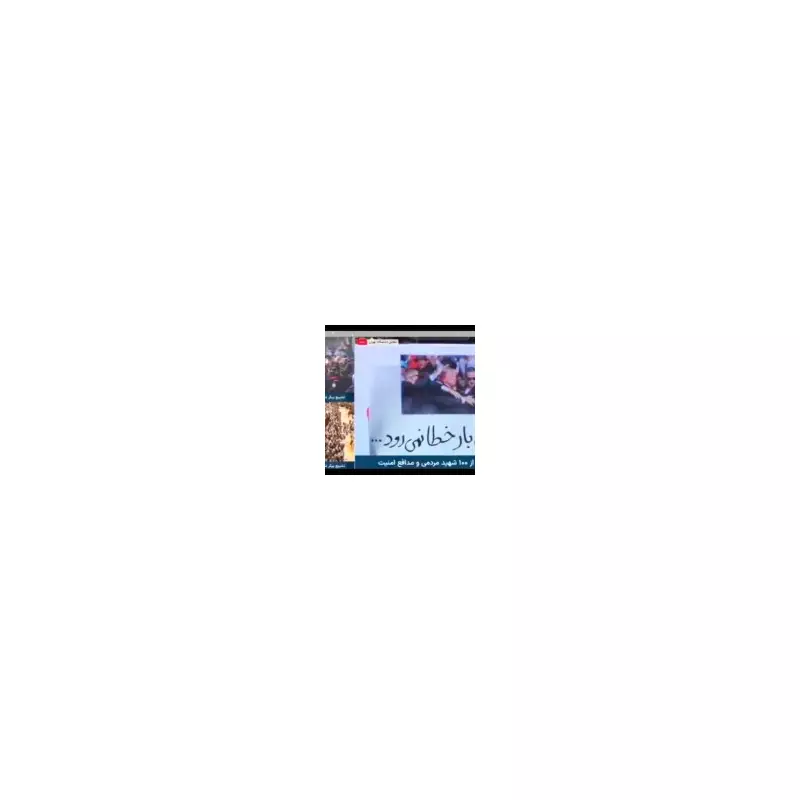
The stark warning was delivered on Wednesday, January 15, 2026. Iranian state TV aired footage of the failed assassination attempt against President Trump in 2024, overlaying it with the caption: 'This time, the bullet won't miss.' This broadcast represents a significant escalation in rhetoric, coming directly after Trump urged Iranian activists to 'keep protesting' and promised that 'help is on its way.'
The Iranian leadership, desperate to deter any American military action, is responding to what it perceives as an existential threat. Trump has openly threatened to intervene for days, though without providing specific details. In an interview with CBS News on Tuesday, he vowed to take 'very strong action' if Iran proceeds with executing protesters arrested during the unrest.
The Protester at the Centre of the Storm
The immediate flashpoint is the case of 26-year-old shopkeeper Erfan Soltani. He was widely believed to be the first protester sentenced to death since the current wave of unrest began last month, with expectations he would be hanged on Tuesday. However, Iran's judiciary has since been quoted as confirming he has not received a death sentence.
Authorities state that Soltani, currently held in the central penitentiary of Karaj, is charged with 'colluding against the country's internal security and propaganda activities against the regime.' Crucially, the judiciary adds that the death penalty does not apply to such charges if they are confirmed by a court. This clarification followed intense international pressure and Trump's explicit warnings.
Military Moves and Conflicting Signals
As the political situation deteriorated on Tuesday, the United States began pulling military personnel from key bases in the region. One Western military official told Reuters that all signals pointed to an imminent US attack, but noted that unpredictability is part of the Trump administration's strategy, stating it was a tactic to 'keep everyone on their toes.'
At the White House, however, President Trump presented a more cautious public posture. He told reporters he had been informed by 'very important sources on the other side' that the killing of protesters was subsiding and that he believed there was currently no plan for large-scale executions. He did not rule out future US military action, saying 'we are going to watch what the process is' and noting his administration had received a 'very good statement' from Iran.
Adding to the diplomatic messages, Iranian Foreign Minister Abbas Araqchi told Fox News on Wednesday that 'there is no plan for hanging at all' when asked about the protesters, asserting that 'hanging is out of the question.'
A Nation in Turmoil
Both Iran and its Western adversaries have described the recent unrest as the most violent since the 1979 Islamic Revolution. Iranian authorities claim the demonstrations, which began as legitimate protests over economic grievances, were hijacked by foreign enemies and 'terrorists' who attacked security forces and public property.
The crisis has led to the evacuation of the British embassy in Tehran following the exchange of threats between Iran and the US. The situation remains highly volatile, with a televised threat against an American president marking a dangerous new chapter in the long-standing hostility between the two nations. The world now watches to see if the rhetoric escalates into direct conflict or if diplomatic channels can avert a further crisis.