Iranian Forces Shoot Down Two US Military Aircraft in Escalating Conflict
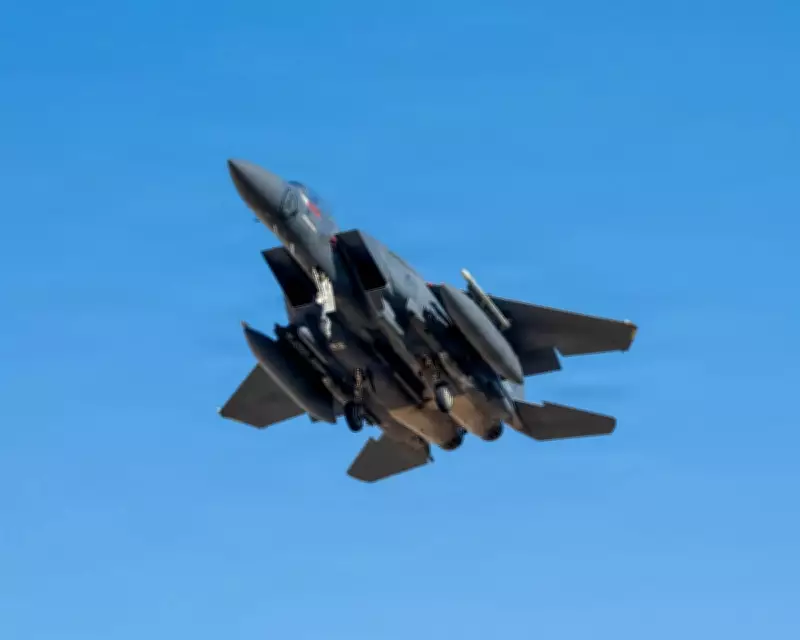
In a significant escalation of the US-Israel war with Iran, Iranian forces have successfully shot down two US military jets in recent days, directly challenging assertions from the Trump administration that Iranian air defenses were substantially degraded. The incidents involved an F-15E Strike Eagle and an A-10 Warthog ground attack aircraft, resulting in a high-stakes rescue operation that saved three pilots but highlighted the ongoing volatility in the region.
The downing of these aircraft marks a critical development, with the F-15E Strike Eagle believed to be the first US plane brought down by enemy fire during this conflict. This event underscores the persistent threat posed by Iranian military capabilities and raises questions about the accuracy of previous US intelligence assessments regarding Iran's defensive strength.
Timeline of Events: From Shootdowns to Rescue
April 3, 2026: Overnight, Iranian forces targeted and shot down an F-15E Strike Eagle belonging to the 48th Fighter Wing of the US Air Force in Europe. The aircraft, with two crew members onboard, crashed, and images of the wreckage quickly circulated on social media platforms. Simultaneously, an A-10 Warthog was struck by Iranian fire, though the pilot managed to eject over Kuwaiti airspace and was subsequently rescued, as reported by the Washington Post.
April 4, 2026: A complex search and rescue mission unfolded. One pilot from the F-15E was rescued seven hours after the crash with assistance from two US military helicopters. During this operation, one helicopter sustained small arms fire, wounding crew members, but it landed safely, and the injured received medical treatment. US officials remained silent regarding the status of the second airman, leading to speculation about whether he had ejected safely, was in hiding, had perished in the crash, or had been captured by Iranian forces.
US and Iranian forces raced to locate the second airman, identified as a seriously injured weapons officer from the F-15, who had hidden on a 7,000-foot ridge near Isfahan. Armed only with a pistol, he evaded Iranian forces while US MQ-9 Reaper drones provided support by targeting nearby Iranian troops. According to Air & Space Forces Magazine, Iranian forces came within 3 kilometers of his position. The downed pilot maintained contact with US forces using an encrypted radio, showcasing remarkable resilience under extreme duress.
The CIA reportedly executed a diversionary tactic, planting false information that the second airman had already been rescued and was being transported out of Iran. This maneuver utilized unique intelligence capabilities to locate the airman, described by an official as "the ultimate needle in a haystack." Following this, the Pentagon and White House authorized an immediate rescue mission. Two MC-130J special operations transport planes landed near the site, but due to a technical malfunction, they were destroyed by US forces to prevent capture by Iran. Subsequently, three other transport planes successfully extracted the airman and his rescuers from Iranian territory.
April 5, 2026: Former President Trump announced the successful rescue, hailing it as "one of the most daring Search and Rescue Operations in U.S. History." He described the operation as an "Easter miracle" and praised the rescuers for their brilliance and decisiveness. Trump noted that the US had initially kept quiet about the first pilot's rescue to avoid drawing attention to the second airman's predicament.
In response, Iran's military acknowledged the "so-called US military rescue operation," claiming it was foiled at an abandoned airport in Isfahan province. Spokesman Ebrahim Zolfaghari stated that two US C-130 transport planes and two Black Hawk helicopters were destroyed during the incident, though US reports attributed the destruction to a technical issue rather than Iranian action.
Implications for US-Iran Relations and Military Strategy
These incidents have profound implications for the ongoing conflict. The shootdowns demonstrate that Iranian air defenses remain a formidable force, contradicting earlier claims by the Trump administration about their degradation. This reality may necessitate a reassessment of US military strategies and intelligence operations in the region.
The successful rescue mission, while highlighting US special operations capabilities, also reveals the high risks involved in such endeavors. The use of drones, encrypted communication, and covert tactics underscores the evolving nature of modern warfare and the critical role of technology in combat and rescue scenarios.
As tensions continue to simmer, these events serve as a stark reminder of the fragile state of US-Iran relations and the potential for further escalation. The bravery of the pilots and rescuers involved stands in contrast to the geopolitical complexities that fuel such conflicts, emphasizing the human cost of military engagements in the Middle East.