
Iran Faces Escalating Conflict as U.S. Deploys Warplanes to Region
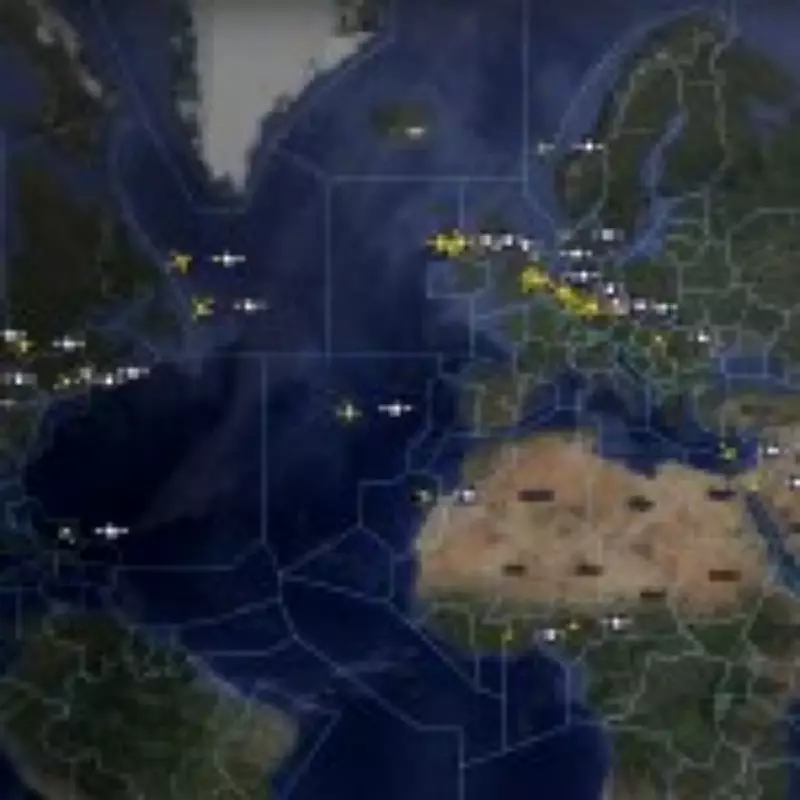
Just one day after issuing a stern warning to Iran to negotiate a deal, the United States is reportedly dispatching refuelling planes to strategic locations across the Middle East. Dozens of aircraft are en route as tensions between Iran and the U.S. reach a critical juncture following stalled nuclear talks. This move underscores a dramatic escalation in the longstanding geopolitical standoff.
High Probability of Military Action
A Trump adviser revealed to Axios that the former president is growing increasingly impatient, stating, 'The boss is getting fed up. Some people around him warn him against going to war with Iran, but I think there is a 90% chance we see kinetic action in the next few weeks.' Sources indicate that any potential conflict would likely involve a joint operation with Israel, amplifying regional instability.
Show of Force and Diplomatic Brinkmanship
Security expert Will Geddes explained to Metro that the influx of military equipment represents a clear show of force from Donald Trump, aimed at pressuring Ayatollah Khamenei to comply and step down. 'The big challenge is that the Ayatollah is not going to stand down,' Geddes noted. 'Khamenei has openly taunted Trump, threatening to send U.S. warships to the bottom of the sea if he attempts any action.'
He added, 'If there is any action—and though Donald Trump hasn’t given an attack order yet—we are going to see a monumental display of U.S. military strength against Iran.' This sentiment highlights the precarious balance between demonstration and actual engagement.
Potential Consequences of a U.S.-Iran War
Last month, the U.S. repositioned the USS Abraham Lincoln and several guided missile destroyers into the region, capable of launching sea-based attacks. Dr. Bamo Nouri, a professor in International Relations at the University of West London, warned that initiating a conflict would be straightforward but exceedingly difficult to control.
'An outright war would carry enormous and unpredictable costs for both sides,' Dr. Nouri explained. 'For Washington, military strikes could backfire by unifying Iran domestically, accelerating its nuclear programme rather than halting it, and pulling the U.S. into a prolonged regional confrontation. For Iran, direct war with the United States would threaten regime stability and risk devastating infrastructure losses.'
He emphasized that neither nation would benefit structurally from a full-scale war, describing the current situation as 'high-risk brinkmanship designed to shape negotiations rather than an imminent decision for all-out war.'
Strategic Preparations and Maritime Warnings
Geddes observed that the U.S. is likely mapping Iran to target regime assets, such as nuclear development capabilities and military installations, while minimizing civilian casualties. 'I don’t think we’ll see a ‘President Maduro’ situation here, but as with other dictators in the past—like Bashar al-Assad in Syria—we may see the Ayatollah being told: ‘Take your money and disappear,’ he speculated.
The U.S. is expected to wait until all regional assets are in place before taking action. A key indicator will be warnings issued to the maritime industry, particularly as Iran conducts military drills in the Strait of Hormuz, a vital shipping lane. Geddes noted that any military move would be preceded by advisories telling ships to 'hold tight.'
Iran's Defensive Measures and Self-Inflicted Risks
Recent satellite imagery reveals that Iran has constructed a concrete shield over a new facility at a sensitive military site, covered it with soil, and fortified tunnel entrances at nuclear sites previously bombed. These actions offer a glimpse into Iranian preparations amid the escalating tensions.
Geddes concluded, 'Ultimately, Iran is bringing it on themselves. In any negotiation—whether it’s international diplomacy or a kidnapping—there has to be a concession on both sides.' This statement underscores the critical need for diplomatic flexibility to avert a catastrophic conflict.




