
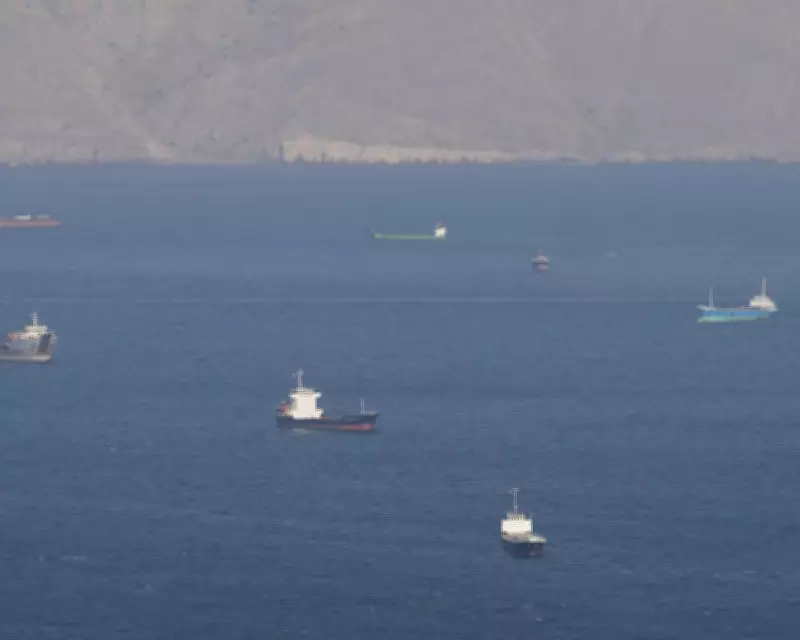
Iran Reverses Strait of Hormuz Reopening Amid US Blockade Standoff
In a significant escalation of regional tensions, Iranian authorities have announced the re-closure of the strategically vital Strait of Hormuz, just one day after briefly reopening the crucial shipping lane. This dramatic reversal comes in direct response to the United States' refusal to lift its naval blockade of Iranian ports, a move that Tehran has condemned as an act of aggression.
Military Confrontation and Tanker Incident
The Islamic Revolutionary Guards Corps (IRGC) reportedly fired upon a commercial tanker as it attempted to navigate through the strait on Saturday, according to reports from the United Kingdom's Maritime Trade Operations Centre. The incident occurred approximately 20 nautical miles northeast of Oman's Musandam coast, where two IRGC gunboats approached the vessel without prior radio warning and opened fire. Fortunately, both the tanker and its crew emerged from the encounter unharmed, though authorities continue to investigate the circumstances surrounding the attack.
Separately, Reuters has confirmed that an Indian-flagged crude oil carrier also came under attack while transiting the waterway, highlighting the immediate dangers facing commercial shipping in the region. These aggressive actions underscore Iran's determination to enforce its renewed restrictions on maritime traffic through one of the world's most important energy corridors.
Iran's Official Position and Demands
Iran's Khatam al-Anbiya joint military command issued a formal statement on Saturday declaring that the Strait of Hormuz has been restored to its "previous status" and is now "under strict management and control by the armed forces." This announcement effectively reinstates the closure that was first implemented on March 4th in retaliation for US-Israeli airstrikes targeting Iranian territory.
Deputy Foreign Minister Saeed Khatibzadeh elaborated on Iran's position during remarks at the Turkish diplomatic forum in Antalya, asserting that "the United States cannot impose their will to do a siege over Iran, while Iran, with good intention, is trying to facilitate safe passage through the Strait of Hormuz." The IRGC's navy command reinforced this stance through a social media post, warning that "any breach of commitments by the United States will receive an appropriate response."
Tehran has made clear that restrictions will remain in place until Washington guarantees "full freedom of navigation for vessels traveling from Iran to destinations and from destinations to Iran," creating a diplomatic impasse with significant global implications.
Geopolitical Context and Economic Impact
The timing of Iran's decision follows closely on the heels of former US President Donald Trump's declaration that the American blockade would "remain in full force" until a permanent peace agreement is reached with Tehran. Trump further suggested that the temporary ceasefire brokered by Pakistan, originally set to expire on Wednesday, might not be extended, adding another layer of uncertainty to an already volatile situation.
Despite these tensions, diplomatic channels remain partially open, with US and Iranian delegations expected to convene for a second round of peace talks in the near future. Egyptian Foreign Minister Badr Abdelatty expressed cautious optimism on Saturday, stating that "we hope to do so [reach an agreement] in the coming days" and emphasizing that "not only us in the region, but the whole world is suffering from the continuation of this war."
The economic consequences of the strait's closure are already being felt worldwide. Approximately 20% of global oil and liquefied natural gas shipments typically pass through this narrow maritime chokepoint, and its restricted access has driven energy prices upward across international markets. During the brief reopening window early Saturday, maritime tracking data indicated that at least eight oil and gas tankers managed to transit the strait before Iran reinstated its blockade.
This ongoing confrontation in the Strait of Hormuz represents a critical flashpoint in the broader US-Israeli conflict with Iran, with implications for global energy security, regional stability, and international diplomacy. The situation remains fluid as both sides maintain their positions, leaving commercial shipping vulnerable and the world watching for developments that could either escalate or resolve this dangerous standoff.




