
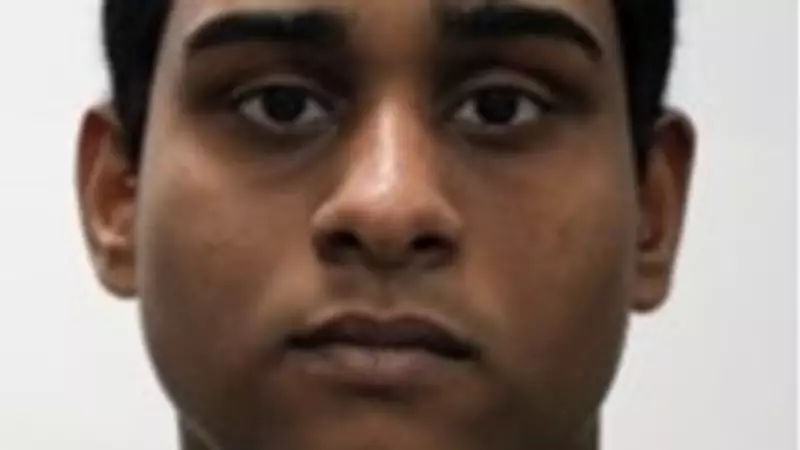
West London Teenager Admits to Terrorism Charges Following Violent Threats
A schoolboy from Uxbridge who identified with the "incel" online subculture has pleaded guilty to terrorism offences after threatening to carry out a Valentine's Day massacre at his school. Dihan Rahman, now aged 19, admitted possessing bomb-making videos and documents that could be used for terrorist purposes during a hearing at the Old Bailey.
Multiple Threats Against School Community
The former army cadet, who was 17 at the time of his offences, made numerous threats against his educational institution. These included plans to attack the school prom and releasing "doxing" material online to encourage harassment of female pupils. Doxing involves publishing private personal information to enable online harassment campaigns against targeted individuals.
Rahman specifically stalked a girl two years younger than himself after she rejected his advances, along with her friend and a teacher who investigated his behaviour. Even following his arrest, he continued to make threats from custody as part of what prosecutors described as a misogynistic campaign against women.
Disturbing Collection of Extremist Material
When teachers examined Rahman's phone following an incident in March 2024, they discovered a deeply concerning collection of extremist content. This included graphic videos of beheadings, dead bodies, and women being subjected to violence. The device contained images of historical figures including Adolf Hitler and Saddam Hussein alongside extreme political ideology.
Prosecutor Serena Gates told the court that Rahman had "embraced" extreme ideologies that included violent Islamist material alongside far-right content and incel ideology. Incel, short for "involuntary celibate," represents an online subculture that blames women for relationship failures and sometimes advocates violent retaliation.
Concerning Convergence of Extremist Ideologies
This case represents one of the first documented instances where extremists have found "common ground" through shared antisemitism. Rahman served as an administrator for the far-right Sturmjager Division on Telegram, a violent extremist group that attracts young members inspired by mass killers.
Simultaneously, his phone contained material supporting Hamas and the October 7 attacks on Israel, alongside graphic ISIS execution footage. This convergence of seemingly contradictory extremist ideologies presents particular challenges for counter-terrorism authorities.
Selfies Displaying Extremist Symbolism
Among the most disturbing discoveries were selfies taken by Rahman in his army cadet uniform. One showed him giving a Nazi salute with the caption "Heil Hitler," while another depicted him holding a noose with offensive language. The images included the numbers 1488, a numerical code representing white supremacist slogans.
Another photograph showed Rahman wearing a headscarf around his face while in army uniform, accompanied by text reading "kill yourself" and a separate image asking "Who's in for a valentines school shooting?"
Legal Proceedings and Sentencing
Rahman initially denied possessing bomb-making documents and videos, including instructions similar to those used by the Manchester Arena bomber. However, he changed his plea on the second day of his trial, admitting guilt to possessing two videos and one document useful for terrorism.
Judge Simon Mayo KC described the offences as "very serious" and requiring "appropriate punishment." He ordered a pre-sentence report before determining the length and type of sentence, with sentencing scheduled for May.
Growing Concern About Online Radicalisation
Chief Superintendent Helen Flanagan, head of operations for Counter-Terrorism Policing London, expressed concern about the growing trend of young people being drawn into extremist ideologies through online exposure. She praised the courage of Rahman's victims, particularly the two teenage girls targeted in his campaign.
This case highlights the complex challenges facing authorities as they combat the radicalisation of young people through online platforms, where diverse extremist ideologies can converge and reinforce each other in dangerous ways.




