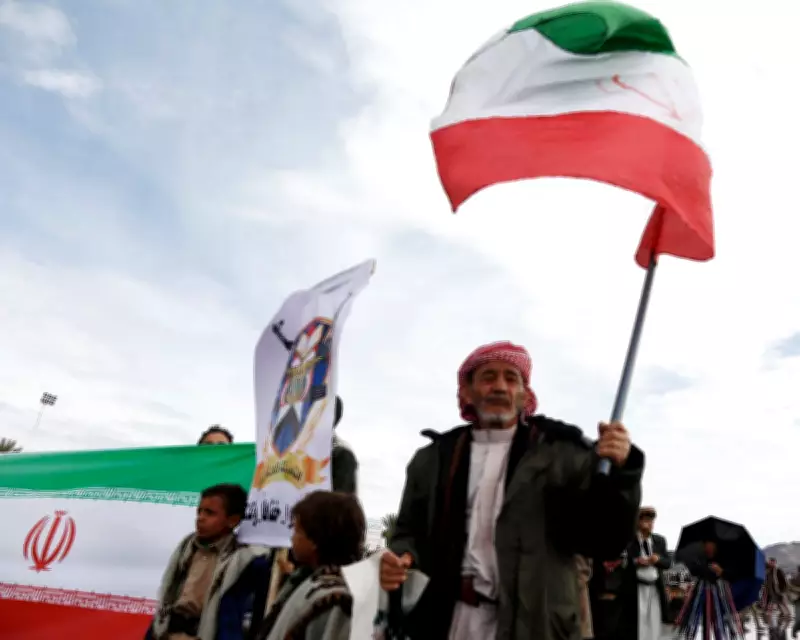
Houthi Forces Escalate Conflict with Missile Strikes on Israeli Military Sites
Houthi forces in Yemen have declared they fired ballistic missiles at what they described as 'sensitive Israeli military sites,' asserting that military operations will persist until the 'aggression' ceases on all fronts. This development marks a significant escalation in the regional conflict, as the Iran-backed group enters the fray with potential far-reaching consequences for Middle East stability and global trade.
Strategic Implications of Houthi Involvement in the Iran War
The true significance of the Houthis' entry into the Iran war hinges on whether the group intends to limit its actions to launching missiles and drones from a distance toward Israel or will leverage its strategic position near the Bab al-Mandab strait to effectively shut down the Red Sea to commercial shipping. If combined with Iran's influence over the Strait of Hormuz, such a move could devastate global trade, echoing Napoleon Bonaparte's observation that 'the policy of a state lies in its geography.'
The Houthis, a Shia sect that has controlled large parts of Yemen since 2014, including the capital, are known for their resilience and deep-seated animosity toward Israel. Despite suffering setbacks, such as the August 2025 Israeli strike that killed their prime minister and other key leaders, the movement has remained operational, with its leader Abdul Malik Al-Houthi evading capture. Although the Houthis have not previously fought directly on behalf of Iran, UN reports indicate that many of their weapons originate from Tehran.
Ceasefire Dynamics and Regional Tensions
A ceasefire mediated by Oman in May 2025 halted Houthi attacks on US shipping through the Bab al-Mandab, which had been ongoing since October 2023. This pause resulted from effective counterattacks by the US, sometimes with UK support, on Houthi missile launchers. The Houthis emphasized that the ceasefire did not apply to Israel, and sporadic attacks continued. One motive for the ceasefire was Iran's desire to build political momentum ahead of US-Iran nuclear talks in spring 2025. The Houthis extended the ceasefire to Israel in October 2025 when Israel agreed to a form of ceasefire with Hamas in Gaza, largely holding back even after the joint Israeli-US assault on Iran in the 12-day war last year.
However, major shipping carriers like Maersk have been slow to resume Red Sea traffic, opting for the more expensive and longer route around the Cape of Good Hope due to ongoing vulnerabilities. The Bab al-Mandab strait remains susceptible to Houthi attacks using drones, missiles, and small boats.
Economic and Political Ramifications
Farea Al-Muslimi, a Middle East specialist at Chatham House in London, warned that sustained disruption in the Red Sea could drive up shipping costs, increase oil prices, and strain an already fragile global economy, compounded by tensions in the Strait of Hormuz. Iran's strategy of activating allied groups across the region appears to be unfolding, potentially fueling perceptions in Yemen that the Houthis are overly attentive to Iranian interests.
The Houthis may proceed cautiously, partly due to potential financial incentives from Saudi Arabia. In southern Yemen, Saudi Arabia has recently subdued the southern separatist cause led by the Southern Transitional Council (STC), with the United Arab Emirates withdrawing under pressure from Riyadh. This leaves Saudi Arabia solely responsible for Yemen's future, a daunting task requiring deals with both former STC supporters and the Houthis. Although the STC has formally disbanded, it remains active, awaiting opportunities if Riyadh and the UN-recognized government falter.
Saudi Arabia is investing heavily in the new southern government, and the Houthis in the north may seek financial rewards in exchange for refraining from attacks on the south or disrupting Red Sea shipping. Ultimately, the Houthis' power stems from their ability to interdict ships rather than merely launching missiles at Israel, a tactic that could further destabilize Yemen after over a decade of civil war.
Warnings and Future Outlook
UN special envoy for Yemen, Hans Grundberg, cautioned that this escalation threatens to drag Yemen into a broader regional war, complicating conflict resolution, worsening economic impacts, and prolonging civilian suffering. This is not his first warning against escalation, and it is unlikely to be the last, underscoring the precarious nature of the situation as the Houthis' actions could reshape regional dynamics and global trade routes.