
Hong Kong's Press Falls Silent as Jimmy Lai Receives 20-Year Sentence
The once vibrant and outspoken media landscape of Hong Kong has responded with either silence or outright celebration to the 20-year prison sentence handed down to Jimmy Lai, the pro-democracy media tycoon and founder of Apple Daily. This muted reaction from press associations and local outlets underscores the profound chilling effect that Hong Kong's national security law has had on critical voices and journalistic freedom in the city.
A Landmark Case Under the National Security Law
Jimmy Lai, a 78-year-old British citizen, was convicted on Monday of sedition and colluding with foreign forces under the controversial national security law imposed by Beijing in 2020. His sentence is the harshest yet meted out under this legislation, exceeding even the punishments given to mainland China's most prominent dissidents. Lai's newspaper, Apple Daily, was a popular pro-democracy publication that was forced to close in 2021 amid a broader crackdown on dissent in Hong Kong.
International condemnation has been swift, with the United States, the United Kingdom, the European Union, and the United Nations all calling for Lai's release and denouncing the sentence as politically motivated. However, within Hong Kong itself, the response from the media community has been notably restrained or supportive of the authorities.
Press Associations Withhold Comment
Hong Kong's press associations, which historically championed media freedom, have largely refrained from commenting on Lai's sentencing. Selina Cheng, the chair of the Hong Kong Journalists Association (HKJA), stated plainly, "I'm not free to speak my mind on the Apple Daily sentencing." The HKJA has previously faced government accusations of "whitewashing" Lai and has been targeted by Chinese state media.
The Foreign Correspondents' Club of Hong Kong (FCC) declined to comment on the sentence given to one of the city's most influential media figures. An analysis by Hong Kong Free Press revealed a dramatic decline in the number of statements issued by the FCC in support of press freedom since the national security law came into effect. Similarly, other press bodies, including the Beijing-backed Hong Kong Federation of Journalists, the Hong Kong News Executives Association, and the Hong Kong Press Photographers Association, published no statements regarding Lai's case.
Ronson Chan, a former chair of the HKJA, described the collective silence as "abnormal" and suggested it represents a "manipulation by the authority" to dissociate the sentencing from broader press freedom issues.
Local Media Outlets Celebrate the Verdict
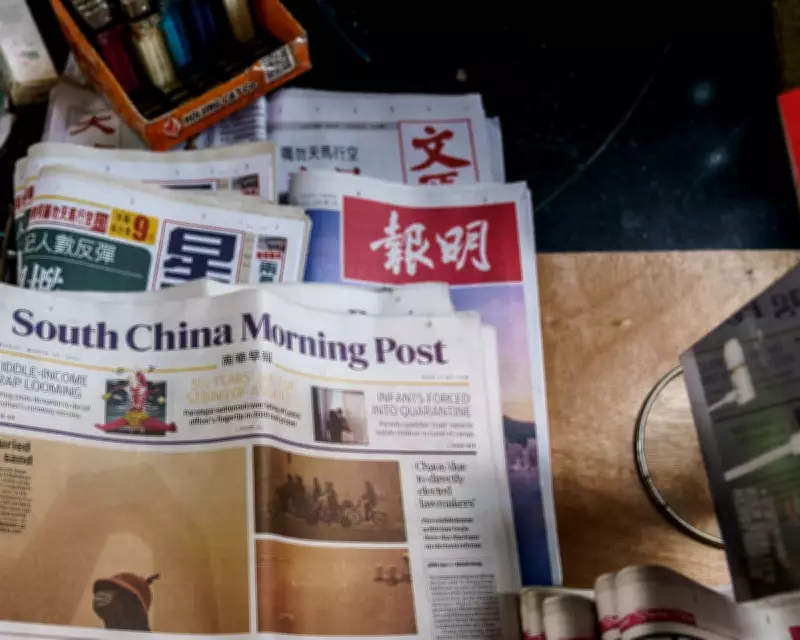
In contrast to the associations' silence, many of Hong Kong's local media outlets have openly celebrated the sentencing. The South China Morning Post, which is owned by the Chinese tech giant Alibaba, published an editorial arguing that Lai's case demonstrates the "robust" rule of law in Hong Kong and that the sentence reflects "the gravity of his crimes."
Pro-Beijing outlet HK01 praised the sentencing, claiming it "marks the end of that politically chaotic period." Meanwhile, the state-owned newspaper Ta Kung Pao declared that "the anti-China and pro-chaos forces represented by Jimmy Lai have been forever nailed to the pillar of historical shame."
Experts Warn of a Climate of Fear
Press freedom advocates have voiced grave concerns about the deteriorating environment for journalists in Hong Kong. Aleksandra Bielakowska, advocacy manager for Reporters Without Borders (RSF), noted that since the enactment of the national security law, media organisations and journalists have faced "unprecedented pressure from the authorities," including judicial harassment, surveillance, threats, and online abuse.
Beh Lih Yi, Asia-Pacific director of the Committee to Protect Journalists, stated bluntly, "We need to be clear-eyed: it is the Chinese and Hong Kong authorities that have created a repressive climate of fear. Five years since the Beijing-imposed national security law, Hong Kong's once vibrant free press is a ghost of its former self." This assessment is reflected in RSF's press freedom index, where Hong Kong has plummeted to 140th out of 180 territories surveyed.
Beijing Reinforces Its Stance
Amidst the international outcry and local silence, China's State Council published a white paper titled "Hong Kong: Safeguarding China's National Security Under the Framework of One Country, Two Systems." The document detailed Beijing's "unrelenting fight" for national security in Hong Kong and emphasised the authority of the central government, asserting that its rule "serves China's fundamental interests, benefits the residents of Hong Kong, and meets the interests of external investors."
The stark contrast between the international condemnation and the subdued or supportive local response highlights the profound transformation of Hong Kong's media environment. The case of Jimmy Lai serves as a potent symbol of how the national security law has effectively muzzled critical voices, leaving Hong Kong's once free press operating in a climate of caution and fear.




