Germany has taken a decisive step towards rebuilding its armed forces, with parliament voting to reintroduce a form of voluntary military service. The move marks a significant cultural shift for a nation that suspended mandatory conscription over a decade ago, but it is meeting fierce resistance from the very generation it aims to recruit.
Protests and Placards: A Generation Voices Its Opposition
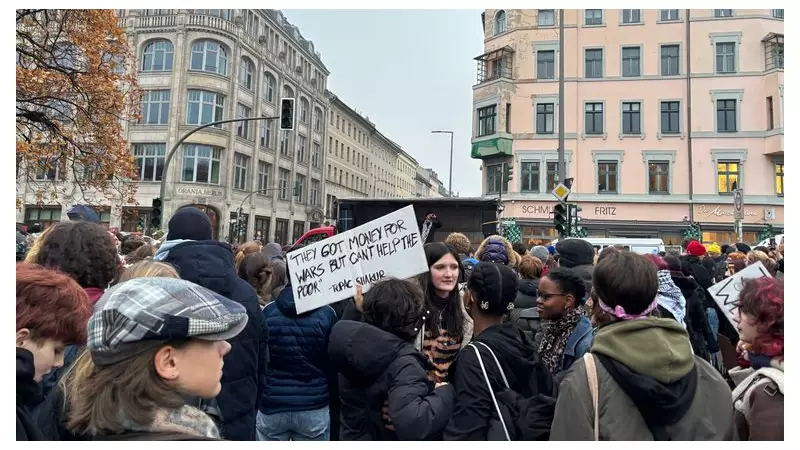
Across German cities, students gathered to demonstrate against what they fear could be a precursor to full-scale conscription. In Berlin, young people held signs with messages like "peace is power" and "You can't have our lives if we don't eat your lies". The protests drew not only teenagers and those in their twenties but also parents, with one mother's placard reading simply: "You can't have my son".
The core of the new plan, set to begin in January 2026, will see all 18-year-olds sent a questionnaire assessing their fitness and willingness to serve. While completion is mandatory for men and voluntary for women, the scheme includes a crucial caveat: if volunteer numbers are too low, parliament could trigger mandatory conscription during war or national emergencies.
This possibility horrifies many protestors. "None of us want to die for a country that doesn't really care about us," said a young man named Levi, criticising the government's record on climate and social issues. His sentiment was echoed by 17-year-old Sara, who declared, "I would not be willing to die for any country" and stated she would leave Germany if attacked.
Geopolitical Drivers and a Reluctant Youth
The policy change is a direct reaction to heightened security fears following Russia's invasion of Ukraine. NATO warnings that Russia could attack a member state within four to five years have spurred Germany into action. Defence Minister Boris Pistorius argues the plan, which includes mandatory medical exams for all 18-year-old men from 2027, is essential for preparedness, ensuring the state knows "who is operationally capable as a homeland protector" without delay.
Chancellor Friedrich Merz has stated his ambition to build the strongest army in Europe. With current troop numbers at approximately 184,000, the goal is to increase this by over 80,000 in the coming decade. To attract volunteers, incentives include a monthly wage exceeding €2,000 (around £1,750).
Despite these offers, a survey this year found a staggering 81% of Gen Z respondents would not fight for Germany. This contrasts sharply with older generations, who show more support for conscription. At the Berlin protest, 17-year-old Valentin was a rare voice of reluctant acceptance, saying he would fight only "when we are attacked", not if Germany were the aggressor.
A Wider European Trend and the Road Ahead
Germany is not alone in reassessing its military manpower. Last month, France announced a new military service for over-18s. While ten EU countries already have compulsory service, others like Belgium and the Netherlands are, like Germany, exploring voluntary models.
The German legislation still requires final approval from parliament's upper house later this month before its anticipated January start. As the debate continues, the stark generational divide highlights the profound challenge of convincing a sceptical youth of the need for national defence in an increasingly unstable world.