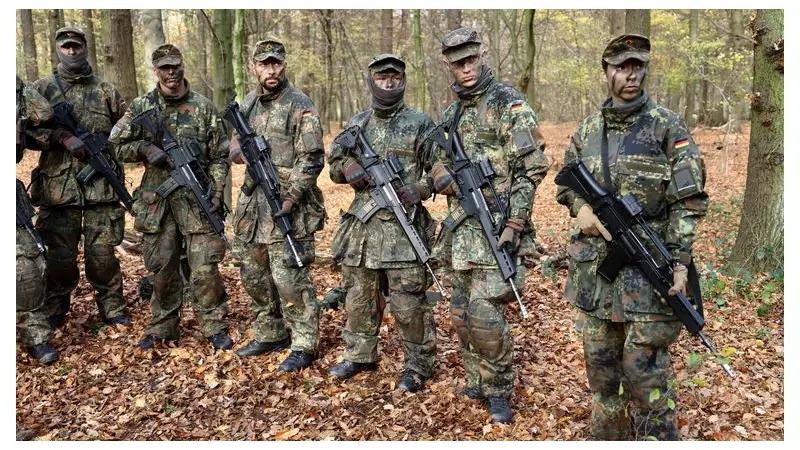
In a landmark and contentious decision, the German parliament has passed a new law that fundamentally reshapes the nation's approach to military recruitment, marking a significant shift in defence policy.
The Dual-Track System Explained
The legislation, approved by the Bundestag on Friday 5 December 2025, establishes a dual-track system. The primary aim is to attract young recruits through a more financially attractive, voluntary military service programme. However, the bill contains a critical contingency: if voluntary enlistment numbers prove insufficient, it allows for the introduction of needs-based conscription.
This potential conscription would require a separate parliamentary vote. The process could involve a random selection system if more citizens are eligible than the Bundeswehr requires. As part of the new framework, all 18-year-olds in Germany will receive a request each January asking about their interest and willingness to serve.
Responding to this request will be mandatory for men. Furthermore, in a move not seen since conscription was suspended in 2011, all men born after 1 January 2008 will undergo phased medical evaluations as capacity allows.
Ambitious Expansion Goals for the Bundeswehr
The law sets clear and ambitious expansion targets for the German armed forces. The goal is to grow the Bundeswehr to up to 260,000 active soldiers by 2035, a substantial increase from the current level of approximately 183,000. The legislation also aims for a reserve force of at least 200,000 personnel.
German Defence Minister Boris Pistorius defended the bill before lawmakers, stating that "our allies are looking at Germany." He argued the nation has become a "pacesetter for defence in Europe" and that the new law represents "a further decisive step for our defence capability."
Domestic Protests and Wider European Context
The decision has not been met without opposition. Young people have already staged protests in Berlin, and political opponents are urging further action. Desiree Becker of The Left Party called for young people to "strike against the reintroduction of conscription" and to inform themselves about the right to conscientious objection.
This German policy shift occurs within a broader European context of reassessing military readiness. It follows recent announcements by French President Emmanuel Macron, who unveiled a new military service plan for 18 and 19-year-olds, though France insists it is not reintroducing full conscription, which ended in 1996.
The new German law signifies a profound change in the country's post-Cold War defence posture, directly linking national security strategy to the demographic challenge of recruiting a new generation of soldiers.