The German Bundestag has formally approved a controversial new model for military service, a move that has ignited protests from thousands of school pupils across the nation. The legislation, passed on Friday, mandates the obligatory screening of all 18-year-old men for potential service in the armed forces, effective from 1 January.
Protests and Political Pushback
As MPs debated the bill, coordinated "school strike" demonstrations took place in approximately 90 towns and cities. Inspired by climate protest tactics, pupils missed classes to voice their opposition, despite warnings from education authorities that their absences could impact final grades.
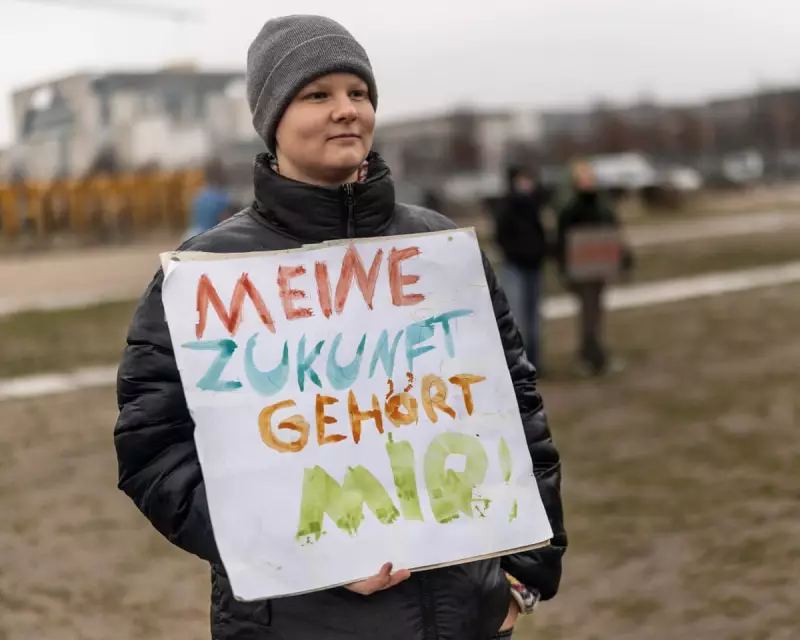
In Berlin's Kreuzberg district, 17-year-old protester Alicia explained her stance: "I’m striking against conscription and in opposition to the rearmament that’s taking place, not least as I don’t think the government is doing enough to secure peace through diplomatic means." Her sign, reading ‘My future belongs to me,’ captured the sentiment of many young demonstrators.
In parliament, Siemtje Möller of the Social Democratic Party (SPD) dismissed the protesters' fears as "pure populism." She sought to reassure young people, stating, "We are neither deciding today that you will be obliged to serve in the armed forces, nor that we will be drawing lots to send you to Ukraine as cannon fodder."
The Details of the New Service Model
The approved model stops short of full conscription, a measure favoured by some conservative politicians. Instead, it institutes a compulsory assessment process. Defence Minister Boris Pistorius framed the law as "a critical step towards our ability to defend ourselves," adding that Germany's allies were watching closely.
He issued a stark warning: if the new system fails to attract sufficient volunteers, parliament will be forced to debate the reintroduction of full conscription. The government's goal is to expand the Bundeswehr to a total force of 460,000, comprising 260,000 active soldiers and 200,000 reservists. This is a significant increase from the current 182,000 active personnel and fewer than 50,000 reservists.
The vote passed by 323 votes to 272, with one abstention. Opposition came from both the far-right Alternative for Germany (AfD) and the far-left Die Linke.
Cross-Party Criticism and Historical Context
Criticism of the bill came from across the political spectrum, albeit for different reasons. Desiree Backer of Die Linke urged young people to resist what she called a law that was "anything but voluntary," highlighting the compulsory questionnaire for 18-year-olds.
From the AfD, Rüdiger Lucassen criticised financial incentives—such as higher pay and funding for driving licences—designed to attract recruits. He argued for a patriotism-driven service, stating, "The German soldier must know what he is fighting for... fight for their country, not for a government." Critics immediately noted the problematic nature of his comments, given their failure to reference the atrocities committed by German soldiers during the Nazi era.
The vote marks a pivotal shift since 2011, when Germany, under Angela Merkel, suspended the conscription model that had been in place since 1956, aiming to create a smaller, professional army for foreign missions.
The military service vote preceded another crucial piece of legislation concerning the German state pension, which also saw intense debate focused on intergenerational fairness. After a rebellion by 18 young MPs within the conservative party, the pension reform passed with a promise of a future commission to propose more extensive changes.