France is set to introduce a new voluntary military service programme targeting young citizens aged 18 and 19, as European nations strengthen their defence capabilities in response to mounting security concerns, particularly from Russia.
A New Generation Ready to Serve
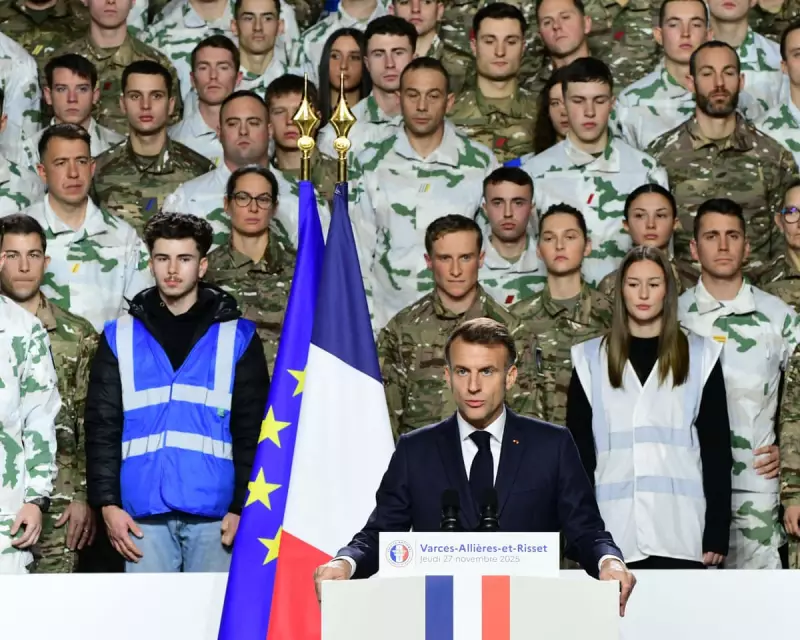
During a visit to a mountain infantry brigade in Varces-Allières-et-Risset on Thursday, French President Emmanuel Macron revealed plans for a 10-month voluntary service scheme scheduled to begin by mid-2026. Macron emphasised that this initiative would help France respond effectively to what he described as "accelerating threats" on the global stage.
The French president expressed confidence in the younger generation, stating he had witnessed a "thirst for engagement" among French youth. "There was a young generation 'ready to stand up' for their nation," Macron told troops during his Alpine visit.
Programme Details and Benefits
The proposed military service will be open to both men and women, primarily targeting 18- and 19-year-olds, though individuals with specific qualifications such as engineering or medical skills could participate up to age 25. Participants will receive a minimum monthly payment of €800 (£700), alongside food and accommodation provisions, and a substantial 75% discount on rail travel throughout their service.
Macron specifically assured that volunteers would be deployed "only on national soil", addressing potential concerns about overseas deployment. The programme represents a significant financial commitment, with Macron acknowledging the €2 billion price tag as "a significant and necessary effort" for national security.
European Defence Shift
This move aligns France with nearly a dozen other European nations, including Germany and Denmark, who have implemented similar programmes. Macron described the plan as "inspired by practices of our European partners ... at a time when all our European allies advance in response to a threat that weighs on us all."
The announcement comes amid broader European defence concerns, with nations traditionally reliant on US security guarantees now reassessing their positions due to Donald Trump's shifting priorities and Russia's increasingly aggressive posture. Military service is increasingly viewed not only as a method to bolster active armies with recruits but also to create a substantial pool of potential reservists for potential future conflicts.
The French armed forces currently maintain approximately 200,000 active military personnel and 47,000 reservists, with projections aiming to increase these numbers to 210,000 and 80,000 respectively by 2030. The new voluntary service programme expects to attract 3,000 volunteers in its inaugural year of 2026, rising to 10,000 by 2030, with Macron expressing ambition to reach 50,000 participants by 2036, depending on "evolving threats."
Political Reactions and Context
The announcement follows controversial remarks from General Fabien Mandon, France's armed forces chief, who recently stated that France needed to steel itself for possible future losses against Russian aggression. While Macron has sought to distance himself from the more alarming aspects of Mandon's comments, the general's warning that France must "accept losing its children" highlighted the seriousness with which French military leadership views the current security landscape.
Political reactions to the new voluntary service have varied significantly. Clémence Guetté of the leftwing La France Insoumise party questioned the priority, stating "France isn't at war and this can't be the priority for young people." In contrast, Sébastien Chenu, an MP for Marine Le Pen's far-right National Rally party, described the initiative as "going in the right direction."
Macron was careful to emphasise that this does not represent a return to the compulsory conscription abolished by President Jacques Chirac in 1997. "We cannot return to the time of conscription," Macron stated, describing the new model as "a hybrid army model correspond[ing] to the threats and risks ahead, bringing together national service youth, reservists, and the active army."
After completing the 10-month programme, participants will have multiple pathways available, including returning to civilian life, joining the reservist forces, or pursuing a permanent career within the armed forces.