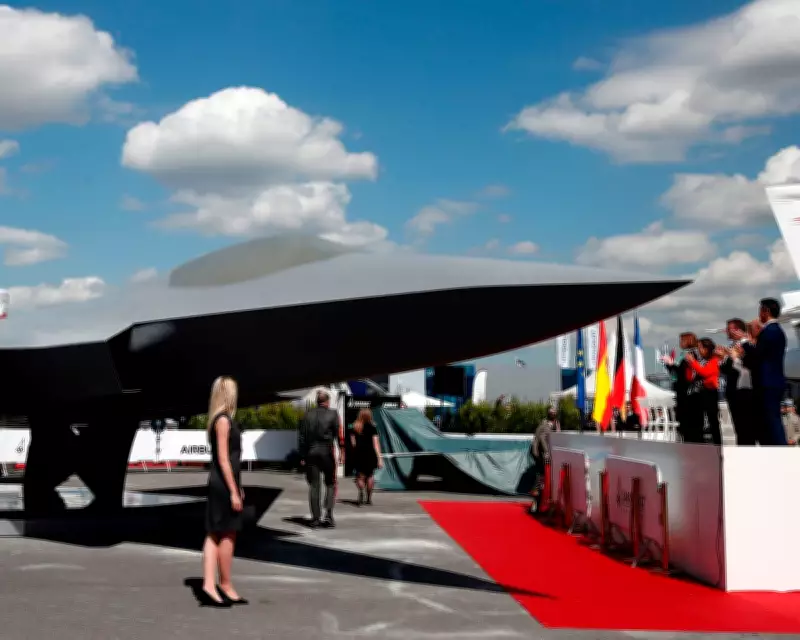
Franco-German Future Fighter Jet Project FCAS Implodes Amid Leadership Dispute
The ambitious €100bn Future Combat Air System (FCAS) programme, designed to create a next-generation fighter jet for Europe, is on the brink of collapse as France and Germany fail to agree on who should lead the project. Announced with great fanfare in 2017 by French President Emmanuel Macron and then-German Chancellor Angela Merkel, with Spain joining in 2019, FCAS was intended to replace existing fighters by 2040, featuring stealth capabilities, a swarm of drones, and a real-time combat communications cloud. However, deep-seated disagreements over technical requirements and corporate control have brought the initiative to a standstill, raising concerns about European defence capabilities at a time of rising threats from Russia.
Technical and Political Rifts Deepen
German Chancellor Friedrich Merz recently declared that the FCAS programme no longer works for Germany, framing the issue as a technical rather than political dispute. France requires a jet capable of carrying nuclear weapons and launching from aircraft carriers, needs that Germany does not share. These differences highlight a broader misalignment in defence strategies between the two nations. A former senior French official, speaking anonymously, noted that the project was conceived at a high political level without adequate consultation within defence ministries, stating, "We do not have the same way of doing war, Germany and France." This lack of coordination has exacerbated tensions, with the programme now facing an uncertain future.
Corporate Conflicts and National Interests
At the heart of the dispute is a power struggle between Dassault Aviation, France's premier jet maker, and Airbus's German-based defence arm. Dassault, led by CEO Éric Trappier, insists on leading the fighter component, leveraging its success with the Rafale jet, which has secured export orders into the mid-2030s. Trappier has been vocal about Dassault's independence, telling reporters, "If they [the Germans] want to do it on their own, let them do it on their own. We know how to do everything from A to Z." This stance has frustrated partners, with the former French official describing Dassault as having a poor collaborative spirit. Meanwhile, Airbus teams in Germany have resisted working with Dassault, viewing them as competitors rather than partners, further complicating cooperation.
Shifting Power Dynamics in European Defence
The collapse of FCAS reflects a growing rift between France and Germany on defence matters. Germany's defence spending is set to surge to €150bn by 2029, nearly double France's budget, following Russia's invasion of Ukraine and a loosening of its debt brake. This shift has emboldened Germany to challenge France's traditional leadership role in European defence. Defence analyst Francis Tusa observed, "France has 60 years of being the accepted leader. Suddenly Germany is saying: 'We don't have to be deferential.'" However, Germany lacks experience in building fighter jets from scratch, making a solo venture akin to a "Manhattan Project" in complexity, according to Tusa.
Potential Outcomes and European Fragmentation
If FCAS fails, Europe could face a fragmented defence landscape with multiple competing fighter programmes. Options include Germany joining the British-Italian-Japanese Global Combat Air Programme (GCAP), known as Tempest, or pursuing separate national jets. Airbus CEO Guillaume Faury has proposed a "two-fighter solution," where France and Germany develop distinct jets but integrate them through shared drone and cloud systems. He emphasised, "If mandated by our customers, we would support a two-fighter solution and are committed to playing a leading role in such a reorganised FCAS delivered through European cooperation." Despite this, the project's future remains precarious, with Macron publicly advocating for its survival while acknowledging the challenges.
Broader Implications for European Security
The stakes are high for Europe, which spent €381bn on defence last year but struggles to convert that into cohesive military capability. With Donald Trump urging Europe to bolster its own security and Russia posing an increasing threat, the failure of FCAS could undermine efforts to create a unified European defence union. The former French official pessimistically noted that the project, born with Macron, might die with him, especially if his potential successor, Marine Le Pen's National Rally party, takes a softer stance on Russia and abandons the initiative. As Europe grapples with these divisions, the dream of a next-generation fighter jet hangs in the balance, highlighting the urgent need for collaboration in an era of geopolitical uncertainty.