
The Fall of El Mencho: A Turning Point in Mexico's Cartel Conflict
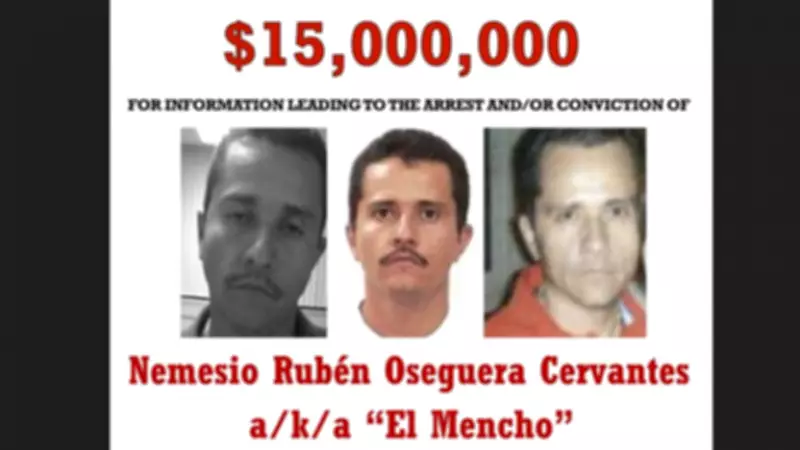
In a dramatic military operation on Sunday, Mexican forces killed Nemesio Ruben Oseguera Cervantes, the notorious drug lord known as 'El Mencho', in Tapalpa. This event has ignited a wave of retaliatory violence across Mexico, underscoring the deep-rooted challenges in combating organized crime. El Mencho, aged 59, was the founder of the Jalisco New Generation Cartel (CJNG), which rapidly evolved into one of Mexico's most dangerous and fastest-growing criminal organizations.
From Prison to Power: The Rise of a Drug Kingpin
Originally from Michoacan, Oseguera Cervantes had been entrenched in drug trafficking since the 1990s. His criminal career included a nearly three-year stint in a U.S. prison after a 1994 conviction for conspiracy to distribute heroin in California. Upon his release, he returned to Mexico, where he continued his illicit activities, facing multiple indictments from U.S. courts since 2017. At the time of his death, he was one of Washington's most wanted fugitives, with a $15 million reward offered for his capture.
The operation that led to his demise represents a significant victory for U.S. President Donald Trump, whose administration provided crucial intelligence support. Trump has consistently prioritized tackling drug flows, particularly fentanyl, into the United States, even imposing tariffs on countries like Mexico, China, and Canada citing this issue as an emergency justification.
The CJNG's Rapid Expansion and Innovative Tactics
Founded in 2009, the Jalisco New Generation Cartel quickly became a dominant force, operating in at least 21 of Mexico's 32 states and maintaining a presence across nearly the entire United States, according to the Drug Enforcement Administration (DEA). The group's growth was fueled by trafficking cocaine, methamphetamines, fentanyl, and people into the U.S., coupled with aggressive recruitment efforts, including online campaigns.
CJNG gained notoriety for its innovative and brutal methods, such as using drones and improvised explosive devices. In 2015, the cartel made headlines by downing a military helicopter in Jalisco, resulting in fatalities. The U.S. Department of State has described the organization as expanding through extreme violence, corruption, and extortion, transforming from a regional entity into an international crime syndicate.
Power Vacuum and Escalating Violence
El Mencho's death has created a significant power vacuum, with no clear successor emerging to lead the cartel he built over 16 years. This absence could hinder CJNG's rapid expansion and make it more vulnerable to rival groups, particularly the Sinaloa cartel. However, Sinaloa is currently embroiled in its own internal power struggle following the transfer of its leader, 'El Mayo' Zambada, to the U.S. in 2024.
The military operation involved a shootout where federal forces killed four cartel members and wounded three others, including Oseguera Cervantes, who later died during air transport to Mexico City. Three soldiers were injured, and two suspects were arrested, with rocket launchers seized at the scene. Historically, the removal of cartel leaders has led to splintering and increased violence, a pattern criticized by Mexican President Claudia Sheinbaum, who has opposed the 'kingpin' strategy for fostering factional wars.
Nationwide Fallout and International Repercussions
In the aftermath of El Mencho's killing, cartel members unleashed chaos across Mexico, torching vehicles and blocking roads in 20 states. In Guadalajara, Mexico's second-largest city, residents barricaded themselves indoors, and schools were closed in multiple states as security forces were placed on high alert. Neighboring countries, such as Guatemala, reinforced border security, while airlines canceled flights and the UK government advised Britons in parts of Jalisco, including Puerto Vallarta, to stay indoors and travel only during daylight hours.
This incident highlights the ongoing struggle against cartels, with El Mencho's death serving as both a tactical win and a catalyst for further instability. As Mexico grapples with the repercussions, the future of its drug war remains uncertain, with violence likely to persist in the power vacuum left by one of its most infamous kingpins.




