
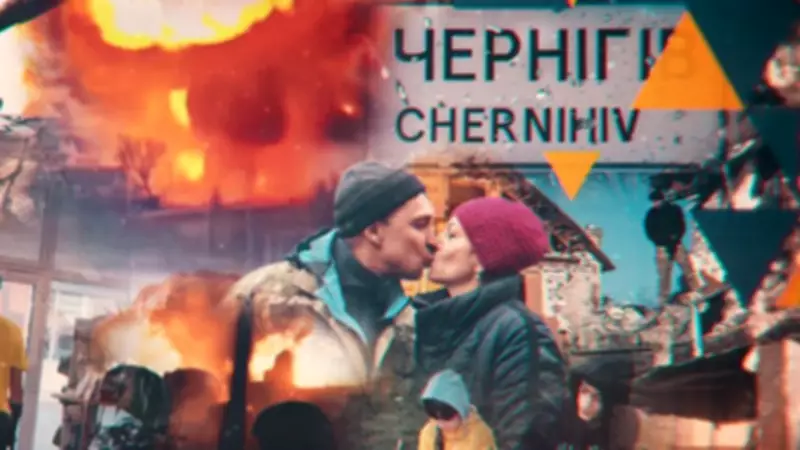
Chernihiv's Unbreakable Spirit: The Hero City That Stalled Russia's Advance
When Russian forces invaded Ukraine on February 24, 2022, they expected to capture Chernihiv within days as part of their lightning advance toward Kyiv. Instead, they encountered a city that would become a symbol of Ukrainian defiance and resilience.
The Siege That Shook a Nation
Just 90 miles north of the capital, Chernihiv found itself surrounded by approximately 30,000 Russian troops within hours of the invasion beginning. The Russian plan was straightforward: take Chernihiv quickly, then press onward to Kyiv within three days. What they encountered was anything but straightforward.
Against overwhelming odds, approximately 2,000 Ukrainian troops from the 1st Tank Brigade mounted a defense that would last for weeks. The city's resistance became a pivotal moment in the early stages of the war, ultimately earning Chernihiv the official designation as one of Ukraine's Hero Cities from President Volodymyr Zelenskyy.
Life Under Siege: Survival in the Basements
For civilians like Tetiana Mosich and her family, the invasion came without warning. With no time to escape their home just outside Chernihiv, Tetiana found herself sheltering in the basement with her 13-year-old son and six-year-old daughter while her husband, Sasha, joined the city's defenders.
"A rumor spread that Russians were walking around the houses," Tetiana recalls. "I couldn't get out. There was such a panic. I didn't know what was going on."
For more than a month, the family survived without water or power, eating jars of tomatoes and pickles that the children hated, supplemented by bread a neighbor threw over their fence. They would only emerge from the basement when they thought it was safe enough to cook on a fire outside.
The psychological toll was immense. "It was very scary when our neighbor's garage, three houses away from us, was hit twice by shelling," Tetiana says. "Our dog was injured. I was overwhelmed. My son dragged him into the cellar and pulled out the shrapnel." The family's German shepherd still bears a scar on his cheek from the incident.
Veterans Rise to the Challenge
When Russian forces blocked the motorway out of Chernihiv in March 2022, trapping civilians inside, Yurii Vietkin made a life-changing decision. Previously a major in the army before returning to civilian life, the 58-year-old came out of military retirement to join the resistance.
As part of the 1st Tank Brigade, Yurii found himself on the frontline of Chernihiv's defense. "We held the enemy, defending our city of Chernihiv," he says. His service came at a terrible cost. On March 5, during clearing operations against enemy forces, his group came under mortar fire. "My leg was torn off. One person was killed, another was wounded. I was saved by the guys."
Yurii's left leg was amputated in a military hospital, but his journey was just beginning. After receiving a prosthetic leg in Munich, he returned to Chernihiv and established a theater dedicated to helping veterans. "Why should I be ashamed that I have no limb? Putin should be ashamed of it," Yurii declares. "Others should not turn away. They should see that war is brutal, but we are standing."
Families Torn Apart by War
Ruslan Ivanov was driving when the war started. "I saw that Kyiv was being bombed, rockets, explosions," he remembers. "People were in panic. I stopped, left my car and immediately went to protect Kyiv." At the time, Ruslan lived with his family in Chernihiv while working as an art director at a film studio in Kyiv.
Days after enlisting with the 114th Territorial Defence Brigade, Ruslan managed to speak to his wife, who delivered shocking news: their 16-year-old son, Dima, had joined the Territorial Defence as a paramedic. "I said to him, 'Dima, why did you go to war? Why?'" Ruslan recalls. "And he asked me: 'Why did you go to war? Did you ask us?' I said I understood. We wished each other good luck."
Ruslan's own war experience reached a horrific climax in 2023 near Bakhmut. After five days of constant counter-attacks, artillery, mortars, cluster munitions and FPV drones, a 120mm shell hit the position next to him. Venturing out to help a wounded comrade, Ruslan and another soldier, Ihor, were caught in an explosion.
"I was wounded in my arm, my neck, my legs," Ruslan describes. "Both of his legs were badly wounded." Despite putting a tourniquet on Ihor's legs, Ruslan watched his comrade die in his arms. With his own arm hanging, bones visible through his jacket, Ruslan prepared to continue fighting with one hand. "I said, Oleh, load the weapon and let's go. I'll shoot with one hand."
More than 12 hours after being injured, reinforcements finally arrived. Ruslan's arm was later amputated.
The Devastating Toll on Chernihiv
The siege of Chernihiv left deep scars on both the city and its people. According to the Armed Conflict Locations and Events Database, 198 conflict events were recorded in Chernihiv during the first year of the war, including strikes, artillery fire, explosions and armed clashes. At least 249 civilians were killed, and the siege destroyed 70% of the city.
Though attacks decreased after the siege was broken, Chernihiv has remained a regular target for Russian forces. Over four years of war, the city has lost cultural institutions and landmarks including the Museum of Antiquities, the National University of Technology, and Hotel Ukraine, which had welcomed visitors for more than 60 years.
Last year alone, Russia pummeled the city with 58 air and drone strikes - an average of nearly five attacks per month.
Life in a Perpetual Warzone
For residents like Tetiana, now a mother of three after having another child since the war began, daily life remains dominated by fear and uncertainty. She sleeps in her clothes at night so she can immediately rush her children into the basement during attacks. She regularly schools them at home for their safety.
"I can't send Sashka to kindergarten, because they are constantly in the basement there," she explains, referring to her youngest child.
Yurii Vietkin feels the city's wounds as personal injuries. "I really love this city," he says, remembering the parks and fountains that once made Chernihiv a place to "rest your soul" in peacetime. "Now, it is very painful. It hurts me very much to look at these ruins, especially when they are in the city centre."
No End in Sight, But Resolve Remains Strong
With peace talks between Russia and Ukraine stalled, residents see little hope for a quick resolution. Tetiana doesn't believe the war will end soon and worries about her family's future, particularly as her eldest son wants to join the army.
Ruslan shares this grim assessment, believing Russia would find any excuse to resume fighting even if a temporary peace were achieved. "If you ask people in Chernihiv, we will fight to the end," he states firmly. "Many houses were destroyed. But people here believe in our victory. You can't drive them out or break them."
The veteran community maintains its readiness. "We talk among ourselves as veterans, amputees, discharged, disabled," Ruslan explains. "If it happens again, we'll go again. We plan where we meet, where we go, what we do. I say 'I'll shoot, you load my weapon.'"
Despite the suffering, Ruslan captures the enduring spirit of Chernihiv: "People of Chernihiv don't give up." This resilience, born from weeks of siege against overwhelming odds, continues to define the Hero City and its people as the war enters its fifth year.




