Will Bombing Iran Back to the ‘Stone Ages’ Achieve Any War Objectives?
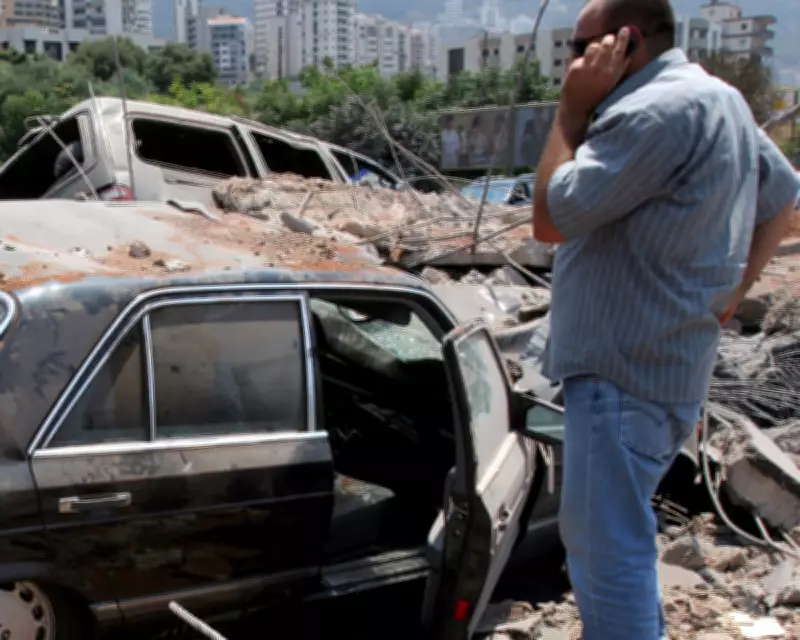
Donald Trump’s recent threats to target Iran’s bridges and power plants follow a similar playbook to recent conflicts, raising questions about the effectiveness of such strategies. During Israel’s 2006 war against Hezbollah in Lebanon, Israeli jets bombed the Jiyeh power station north of the coastal city of Sidon, creating a towering column of black smoke visible for miles and turning sand to glass.
The plant’s damaged storage tanks leaked an estimated 15,000 tonnes of oil into the eastern Mediterranean, marking the largest spill in that sea. Israel also bombed the country’s motorway bridges, destroying spans and cratering roads. The result was a ceasefire agreement to end the war, which was as half-baked as it was over-optimistic.
Short-Term Gains, Long-Term Resilience
Israel declared victory, as it does after each of its conflicts, but Hezbollah survived, rearmed quickly, and lived to fight another day. As the deadline approaches on Trump’s threat to bomb Iran back to the “stone ages,” the question arises not only of the morality and legality of such a campaign but also of its utility.

On Easter Sunday, Trump threatened in an expletive-laden post that Iran would face “Power Plant Day, and Bridge Day, all wrapped up in one,” adding “you’ll be living in Hell” unless the Strait of Hormuz reopened. On Monday, Trump doubled down, posting on Truth Social: “A whole civilisation will die tonight, never to be brought back again. I don’t want that to happen, but it probably will.”
Historical Precedents of Infrastructure Bombing
Even if Trump pushes back his deadline once again, recent history does not suggest that strikes on infrastructure—widely seen as war crimes—are likely to force Iran onto a new path. More recent than Lebanon is the experience of Ukraine under four years of sustained Russian bombardment, after Moscow’s own illegal war of aggression.
That culminated this year in Kyiv’s worst winter of blackouts as Russia hammered the country’s heating and power plants, but failed to force Ukraine to concede. Indeed, the history of such bombing campaigns—going back to the Second World War—is highly contested, including the British decision in 1942 to move to a policy of “area bombing” aimed at undermining the morale of the “enemy civil population.”
The Delusion of Easy Victory from the Air
Despite the promise by the head of the British bomber command Sir Arthur “Bomber” Harris in late 1943 that he could bring about the collapse of Germany within four months, it was the allied destruction of the Luftwaffe, not the targeting of industrial and residential targets, that would prove more significant.
The US Rolling Thunder air campaign against North Vietnam from 1965 to 1968, though far more constrained in the scope of its targets, was not much more successful in persuading Hanoi to withdraw its intervention in the south. By 1967, the US defence secretary Robert McNamara was telling a closed session before the Senate armed services subcommittee on preparedness that there was “no basis to believe that any bombing campaign … would by itself force Ho Chi Minh’s regime into submission, short, that is, of the virtual annihilation of North Vietnam and its people.”
Expert Analysis on Trump’s Threats
Writing in the Interpreter this week, the former Australian general and theorist of modern war Mick Ryan unpacked some of the problems with Trump’s current threat. “The Islamic republic of Iran, whose political identity is built around resistance to American coercion, is unlikely to respond differently. ‘Bridge and Power Plant Day’ is unlikely to change the Iranian regime’s strategic calculus and would not reopen the strait of Hormuz. It would, however, give the Iranian government its most powerful propaganda tool of the war,” he said.
Danny Citrinowicz, a senior researcher in the Iran and the Shi’ite axis program at Israel’s Institute for National Security Studies, was also sceptical over whether such pressure from Trump could be successful. “The United States lacks a credible military option that can force Iran into submission,” Citrinowicz posted on X. “The assumption that pressure alone can break Tehran is not strategy, it is wishful thinking.”

In summary, while Trump’s threats echo past military strategies, historical evidence from conflicts in Lebanon, Ukraine, and beyond suggests that bombing civilian infrastructure often fails to achieve long-term strategic goals, instead bolstering resistance and propaganda efforts.