
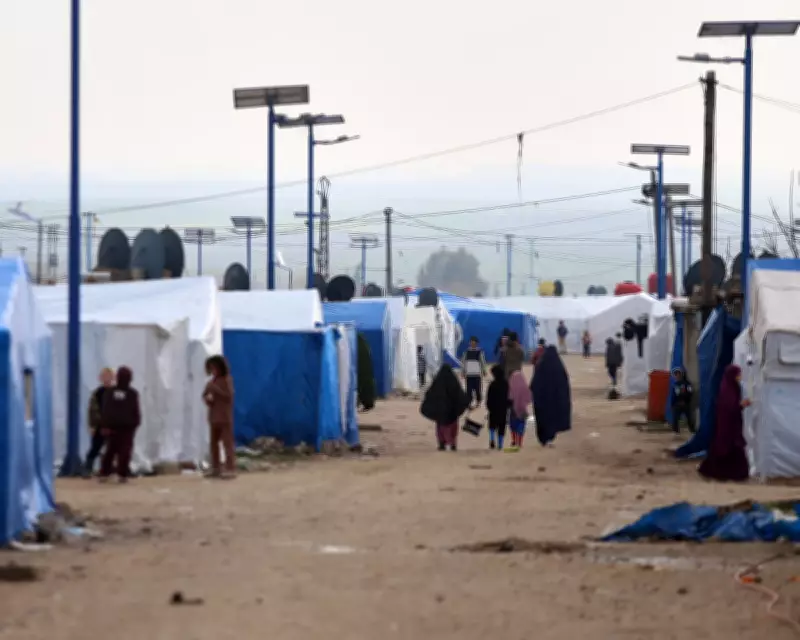
Australian Woman Barred from Returning from Syrian Camp for Up to Two Years
In a significant development concerning the repatriation of Australian nationals from conflict zones, one adult among a group of 34 Australian women and children detained at the al-Roj camp in Syria has been issued a temporary exclusion order. This order effectively bans the individual from entering Australia for a period of up to two years, as confirmed by Home Affairs Minister Tony Burke in a statement on Wednesday afternoon.
Security Assessments and Repatriation Challenges
The remaining members of the cohort have not been assessed by intelligence agencies as meeting the necessary legal threshold to warrant similar exclusion orders. This potentially clears the way for the wives and children of Islamic State fighters to re-enter Australia, provided they can arrange their own travel back to the country. The group was released from the al-Roj camp by Kurdish authorities on Monday night, but they were forced to return due to poor coordination between their relatives and the Damascus government, according to a camp official speaking to Agence France-Presse.
Prime Minister Anthony Albanese has maintained that his government is not providing any assistance or facilitating the repatriation of these individuals. "We are providing no assistance to these people, and won't provide any assistance to these people, but we won't breach Australian law," Albanese stated during a press conference. He emphasized that any actions taken, including reports of the group possessing Australian passports, are merely the implementation of existing Australian laws.
Political and Legal Scrutiny
Shadow Home Affairs Minister Jonno Duniam has raised questions about the decision to issue a temporary exclusion order to only one person in the group. "If the Minister is claiming that only one of the cohort is deemed risky enough to warrant a Temporary Exclusion Order, then this raises more questions than answers," Duniam said in a statement. He suggested that all members should be subject to such orders, given their shared history of traveling to a declared area to support a listed terrorist organization.
Professor Donald Rothwell, an international law expert at the Australian National University, expressed concerns about the children of the woman subject to the exclusion order. He noted that these children might have to travel with other women in the group or remain with their mother, which could complicate their ability to leave Syria and potentially affect the revocation of the exclusion order in the future.
Uncertainties and Ongoing Developments
The Guardian has reported that the repatriation effort was not organized by the Australian government, and it remains unclear whether the group has access to their travel documents. Media reports have indicated that a worker at the al-Roj camp claimed to have seen Australian passports in the possession of the group. Minister Burke has stated that he is not aware of the movements of Dr. Jamal Rifi, a Sydney doctor allegedly assisting the group, and has only seen such information in media reports.
Albanese reiterated the government's commitment to following security advice and upholding the law to ensure the safety of Australians. "These people chose to go overseas to align themselves with an ideology which is the caliphate, which is a brutal, reactionary ideology that seeks to undermine and destroy our way of life," he said. While acknowledging the unfortunate situation for the children involved, Albanese placed the responsibility on the decisions made by their parents.




