
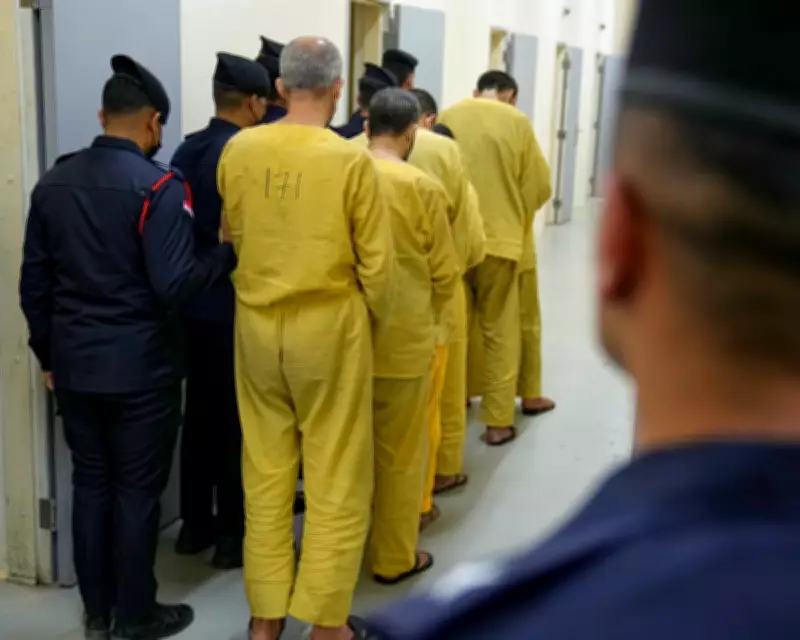
Australian Suspected IS Fighters Transferred to Iraq, Face Death Penalty Risks
Iraqi security forces have taken custody of more than 5,700 alleged former Islamic State militants from Syria, including a group of Australian men who now potentially face charges that could result in the death penalty. The mass prisoner transfer, confirmed by Iraq’s national centre for international judicial cooperation, involves detainees from 61 countries, with unconfirmed reports indicating that 13 Australians are among the cohort.
Legal and Diplomatic Uncertainties Surround Detainees
The Australian Department of Foreign Affairs and Trade (Dfat) has acknowledged awareness of the transfer but has not disclosed the number of citizens involved or whether assistance is being provided. Under Australian law, authorities are prohibited from offering legal support in cases where the death penalty may be imposed, unless assurances are given that it will not be carried out. This situation complicates efforts to address the fate of these individuals, as Iraq has a history of executing terrorism convicts by hanging, ranking as the fourth-highest executioner globally in 2024.
Human Rights Concerns and International Criticism
International law experts, including Ben Saul, the UN special rapporteur on counter-terrorism and human rights, have condemned the transfer as "utterly irregular," comparing it to post-9/11 extraordinary renditions. Saul emphasized that the lack of legal process means the detainees include a mix of civilians, victims, and potential terrorists, not all of whom may be guilty of crimes. He argued that Australia, with its robust judicial system, should take responsibility for its citizens rather than leaving them in a "legal black hole" of indefinite detention.
Background and Ongoing Issues
The transfer occurred shortly before 34 Australian women and children were forced back to a Syrian detention camp after being released by Kurdish authorities. Meanwhile, reports have surfaced about Australians previously presumed dead, such as Mustafa Hajj-Obeid, who was found alive in a Syrian prison. The Iraqi government has not commented on the transfer, but US forces stated the operation aims to prevent an ISIS resurgence in Syria. This development highlights ongoing challenges in handling foreign fighters and the complex interplay of security, human rights, and international law.




