Senior Australian defence officials have told a Senate hearing that United States submarines potentially armed with nuclear weapons could dock at the nation's ports, despite a longstanding ban on such weapons. This admission appears to contradict previous assurances from the government that only conventionally armed vessels would visit under the Aukus security pact.
Strategic Ambiguity and Treaty Obligations
During a tense Senate estimates hearing, defence department officials stated there was "no impediment" to visits by nuclear-armed US submarines. They argued such visits would not breach Australian or international law. This stance hinges on the US policy of "strategic ambiguity", where it neither confirms nor denies if specific vessels or aircraft are carrying nuclear warheads.
This policy already applies to US B-52 bombers that land at RAAF Base Tindal. Defence Secretary Greg Moriarty told senators, "We respect the United States position of neither confirming nor denying." The officials clarified that the South Pacific Nuclear Free Zone Treaty (Treaty of Rarotonga) prohibits the "stationing" of nuclear weapons, but not visits by "dual-capable" platforms capable of carrying both conventional and nuclear arms.
Contradicting Ministerial Assurances
The evidence presented to the Senate directly challenges a key promise made by Foreign Minister Penny Wong. In a 2023 speech to the National Press Club, she stated, "The US has confirmed that the nuclear-powered submarines visiting Australia on rotation will be conventionally armed."
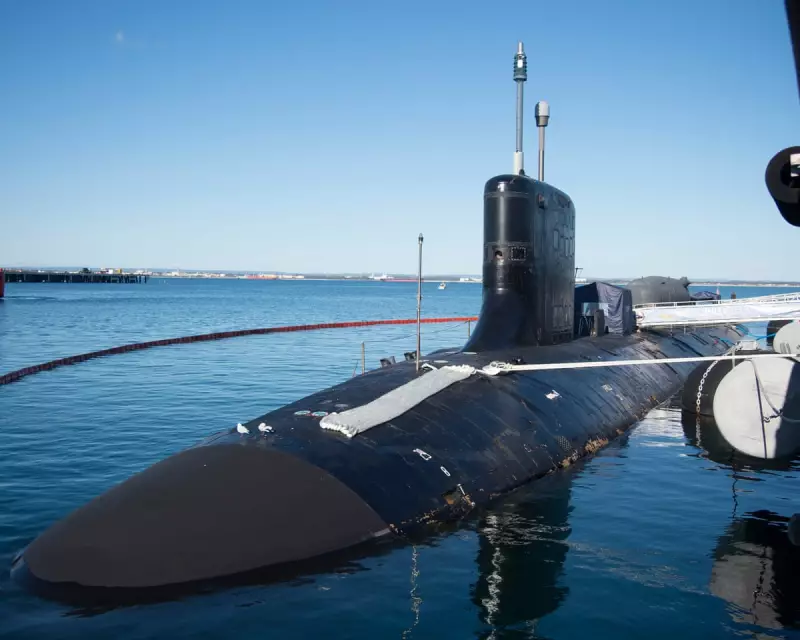
Under the Aukus agreement's first pillar, US Virginia-class submarines are scheduled to begin rotating through Australian ports like HMAS Stirling near Perth from 2027. This rotation is a precursor to Australia acquiring and building its own nuclear-powered, conventionally armed submarines.
New Weapons and Growing Concerns
Adding to the controversy, the US Congress in 2024 approved funding for a new submarine-launched nuclear cruise missile (SLCM-N), the first new US nuclear weapon since the Cold War. Vice-Admiral Johnny Wolfe has indicated this weapon is intended for integration onto Virginia-class submarines.
Anti-nuclear campaigners argue the government's position undermines Australia's non-proliferation commitments. Gem Romuld, Australian director of the International Campaign to Abolish Nuclear Weapons, said the foreign minister's commitment was now "dead in the water". She urged the government to sign the UN Treaty on the Prohibition of Nuclear Weapons.
Greens Senator David Shoebridge sharply questioned the "don't ask, don't tell" approach, asking if nuclear-armed submarines would be permitted to float off Fremantle without the Australian government seeking confirmation.
Legal Arguments and Future Implications
Defence officials, including Assistant Secretary Bernard Philip, maintained that Australia would comply with its treaty obligations, which the US understands. "The United States does not station nuclear weapons in Australia," he stated, distinguishing between "stationing" and "visiting".
They labelled the scenario of a Virginia-class submarine visiting with nuclear weapons "hypothetical", as the new SLCM-N missile is still in development. However, the Senate testimony has ignited a fierce debate about sovereignty, transparency, and the risks of Australia becoming what critics call a "launchpad for nuclear war".
The Labor party's platform commits to signing the nuclear weapon ban treaty "in government", but it has not yet done so. With 74 countries now party to that treaty, but none of the nine nuclear-armed states, the Aukus revelations place Australia's diplomatic stance under intense scrutiny.