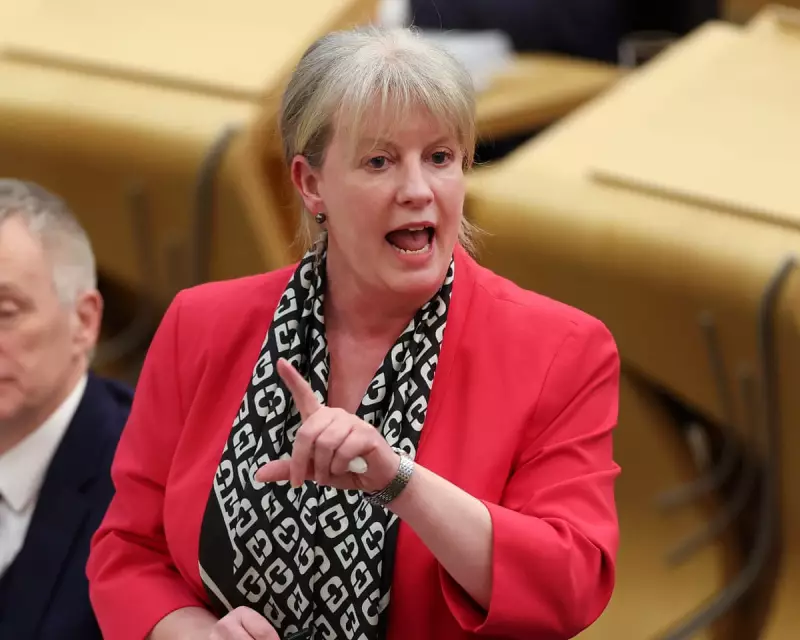
With the Holyrood elections just four months away, the Scottish government has unveiled a budget package that includes a modest tax cut for the nation's lowest earners. Finance Secretary Shona Robison announced a series of measures funded by reserves, spending cuts, and increased borrowing, aimed at bolstering the Scottish National Party's position ahead of the May vote.
Tax Changes and Election Pledges
The centrepiece of the announcement is a 7.4% increase in the income tax thresholds for those earning under £33,500 a year. This move, which will take effect from April, translates to a tax cut of around £11 annually for the lowest earners. Robison stated that this adjustment means 55% of Scottish taxpayers will take home up to £40 more per year than if they resided elsewhere in the United Kingdom.
However, the policy comes at a cost of £50 million to the devolved government's finances in the next financial year. Alongside the tax change, Robison confirmed several future pledges: increasing the Scottish child payment to £40 a week for under-ones from 2027, raising air passenger duty on private jets from 2028, introducing higher council tax rates for properties valued over £1 million from 2028, and boosting college funding by 10%.

"This is a government that wants what is best for Scotland," Robison declared. "My message to the people of this country is clear – thanks to our cost-of-living commitments, you will be better off in so many ways because you live in Scotland."
Widespread Criticism and 'Tepid' Response
The budget faced immediate and sharp criticism from opposition parties and independent institutes. The Institute for Public Policy Research (IPPR) Scotland labelled it a "tepid" offering that failed to adequately address child poverty, the climate crisis, and economic growth.
Stephen Boyd, director of IPPR Scotland, argued: "Yet again, short-term politically driven tax changes with minimal real impact are prioritised over the development of a serious, long-term strategy." The Institute of Chartered Accountants of Scotland (Icas) accused the government of merely "tinkering" with an overly complex tax system.
Scottish Labour, which plans to cut taxes for middle earners to rectify a quirk creating a 50% tax rate for some, was scathing. Finance spokesperson Michael Marra said: "We are all paying the price for SNP incompetence. The SNP’s abject failure to grow Scotland’s economy leaves us all poorer."
The Devil in the Detail
Experts highlighted significant concerns buried within the budget's finer details. The Institute for Fiscal Studies warned that the announced 0.7% increases for NHS and social care would be insufficient, forcing Robison to raid other budget areas.
David Phillips of the IFS criticised officials for "burying" key figures in annexes, a move he called unacceptable in an election year. Meanwhile, João Sousa of the University of Strathclyde's Fraser of Allander Institute pointed out that, compared to last year's plans, day-to-day spending has actually been cut by £480 million, with one-off funds used to prop up the finances.
"The devil was very much in the detail and in what wasn’t said," Sousa noted, highlighting a significant spending cut effective in under three months.
The budget also confirmed that employees earning over £35,000 will continue to pay more than their counterparts in the rest of the UK. Furthermore, the thresholds for higher tax rates will be frozen from April for three years, a measure the Scottish Fiscal Commission predicts will draw over a million people into the three highest tax bands by 2030 and raise an extra £200 million by 2028/29.
Commission chair Prof Graeme Roy cautioned that the budget's success hinges on "ambitious" efficiency savings and cuts to the public sector workforce, the delivery of which will shape public services beyond the May election.
While the tax cut for lower earners aims to make good on previous SNP claims about Scottish tax advantages—claims recently challenged by HMRC data—analysis suggests that when inflation is accounted for, only those earning under £32,000 will be slightly better off than other UK taxpayers.

Housing charity Shelter welcomed a £34 million increase for social housing but warned the plan to build 36,000 homes still falls 26,000 short of the government's 2032 target. Director Alison Watson stressed the real-world costs of this shortfall: "Failing to build the social homes we need means rising homelessness, rising child poverty, rising costs for councils, health boards and the taxpayer."