Night-time doping tests authorized by Paris judge
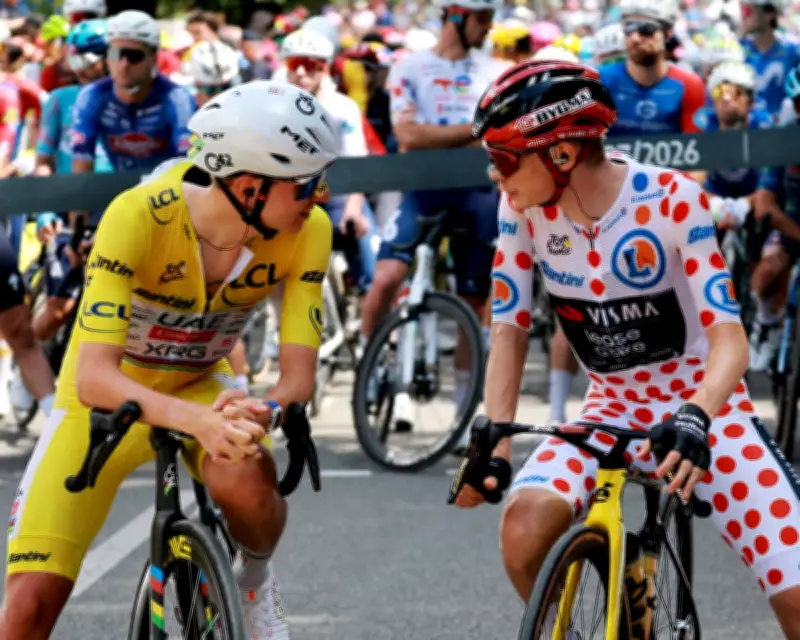
A Paris judge authorised the night-time doping tests of the Tour de France leader, Tadej Pogacar, and his nearest rival, Jonas Vingegaard, in the early hours of Sunday morning. The Paris prosecutor’s office confirmed on Monday that the International Testing Agency (ITA) petitioned the “Paris judge specialising in liberty and detention matters … to authorise the anti-doping tests that took place overnight between July 18 and 19”.
Tests outside normal window
Vingegaard and Pogacar were subjected to unexpected nocturnal doping controls, outside the normal window of 6am to 11pm, before stage 15, as the peloton headed to Plateau de Solaison in the Savoyard Alps. Vingegaard was tested at 2am on Sunday by the ITA, while Pogacar’s unexpected wake-up call came at 5am. Pogacar described Vingegaard’s 2am test as “inhuman” and suggested that it “ruined” his longstanding rival’s sleep and could have been a factor in the crash on Sunday, in which he broke his collarbone, and forced him to quit the Tour.
Vingegaard's reaction
Before the stage start on Sunday, Vingegaard said: “I was sleeping very well. It’s good that they test, but when it’s affecting performance and your sleep, I don’t think it’s so good.” Under the anti-doping regulations of the International Cycling Union (UCI) which delegated its anti-doping programme to the ITA in 2021, the UCI must have “serious and specific suspicions that the rider may be involved in doping activities” to conduct tests between 11pm and 6am. The judges responsible for liberty and detention (JLD) “have concurrent jurisdiction to rule on requests for night-time anti-doping tests”, the Paris public prosecutor’s office told AFP.

Widespread condemnation
The timing of the tests was widely condemned by leading riders and team staff, including Remco Evenepoel, now second overall in the Tour, and Vingegaard’s teammate Matteo Jorgenson, who said it showed “a complete lack of respect” towards the riders. The ITA said it was “conscious that night-time testing may be disruptive to riders’ rest and recovery. Due consideration has therefore been given to minimise as much as possible the impact testing activities have on riders. However, the ITA, on behalf of the UCI, has the responsibility to ensure the effectiveness of the cycling anti‑doping programme and the integrity of cycling races.”
Other teams affected
It is now also believed that up to five teams, including Pogacar’s UAE Team Emirates XRG and Vingegaard’s Visma Lease-a-bike, have been subject to nocturnal testing during this year’s Tour. While not specifying numbers, the ITA confirmed to the Guardian that “other teams also have been subjected to ‘night-time’ or early morning testing”. Night-time testing was introduced primarily to combat the use of micro-dosing of performance-enhancing products, a practice which allows only a short window for detection.
Support from former rider
Jonathan Vaughters, now manager of the EF-Education EasyPost team currently riding in the Tour, and a former teammate to Lance Armstrong who was stripped of seven Tour wins for doping, supported the nocturnal tests. Vaughters, posting on X, said: “Two am testing is one of the very effective ways to prevent peptide (EPO, HGH) and testosterone micro dosing. If [the] UCI had tested us in 2001 at 2am? We’d all have been suspended and saved the sport 25 years of drama.”
Outcome pending
The Tour ends in Paris on Sunday evening but there is no known timescale for the publication of results. The ITA added that the “outcome of these controls, as any other conducted by the ITA, would be published according to our public disclosure policy, only in the case of an apparent anti-doping rule violation”.