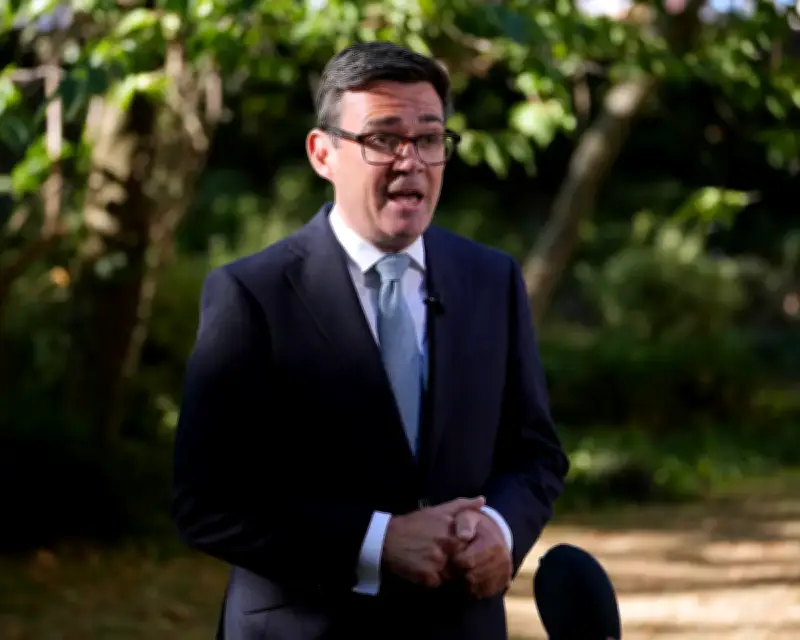
Andy Burnham has expressed anger at water companies for treating customers as a "bottomless source of funding" after the regulator Ofwat approved proposals for billions of pounds in extra spending, which will push bills higher for millions of households.
In a statement, Burnham said that companies must not be allowed to treat bill payers like a "blank cheque." His comments came after Ofwat gave the green light for 13 companies in England and Wales to spend an additional £3.4bn on repairs and infrastructure, on top of the £104bn programme already approved.
Extra Spending and Bill Increases
Ofwat's approval on Thursday allows five companies—Southern Water, Thames Water, Severn Trent, Wessex Water, and South East Water—to increase bills more than originally planned before 2030. The remaining firms will add the costs to bills in the 2030s. The extra spending includes £1.2bn to safeguard water services and assets, £477m for housebuilding and datacentre development, and £34m to reduce toxic chemicals in drinking water.
The approval follows requests from companies to spend £4.3bn on top of what was agreed in 2024 due to unforeseen costs. Ofwat allowed £3.4bn of that. This comes as water bills are already set to rise by 36% on average over the second half of the decade under the £104bn investment plan. The new spending will add further pressure, with Southern Water customers facing an extra £80 on their bills, Thames and Severn Trent customers an extra £8, Wessex Water customers £11, and South East Water customers £1.
Political Reaction and Calls for Public Ownership
Burnham, who is also the mayor of Greater Manchester, repeated a promise to study "how we can give the public more control and help keep bills as low as possible." His team has already been examining the possibility of taking Thames Water into public ownership, as the company struggles with overwhelming debt.
The Ofwat proposals have sparked renewed calls for nationalisation. Clive Lewis, a Labour MP, said: "I'll bet you these projects will never see a large chunk of that money. We pay for the system through our bills. Yet almost a third of them go to returns for investors and creditors. We pay for the infrastructure, for the debt, for the profits. And they keep asking for more. The only way to end this is public ownership."
Tim Farron, the Liberal Democrat environment spokesperson, criticised Ofwat as "merely a rubber stamp for failure," adding that hard-working families are "being forced to cough up another £3.4bn to fix a broken water network that greedy executives have neglected for decades." He called for Ofwat to be scrapped, saying: "It is a total disgrace to reward this environmental vandalism. There must be no more blank cheques for failure."
Industry and Environmental Concerns
Cliff Roney, a GMB union activist and former water worker, said any bill hike from Thames Water would be "an insult," noting that the company spills sewage and leaks millions of litres of water while senior management enjoy "golden handshakes and bonuses." He added: "The only way to stop the betrayal of consumers and water workers is to renationalise our water."
Amy Fairman, head of campaigns at River Action, said Ofwat "waving through yet more water bill hikes is an insult" given the lack of investment over 30 years while tens of billions went to investors. She said: "We got leaks, pollution and soaring bills."
The extra spending also supports the government's growth agenda, including £477m to enable housebuilding and datacentre development. The government has promised to build 1.5m new homes and has set out ambitions for AI growth zones, raising questions about water and energy resources.
Helen Campbell, executive director for delivery at Ofwat, defended the decision, saying it allows companies to deliver "without delay." She added that Ofwat will track performance to ensure companies are "delivering the expected improvements for customers and the environment. If they don't, expenditure can be clawed back."
Environment secretary Angela Eagle acknowledged the frustration of households, saying: "I know that households across the country are watching every pound and I share their frustration that years of underinvestment and toothless regulation has led to this."