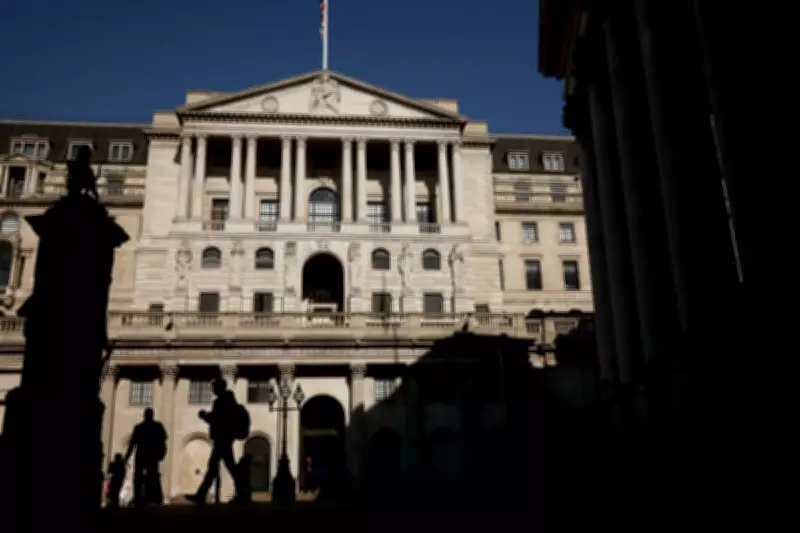
Bank of England Faces Critical Decision on Interest Rates Amid Iran Conflict
The Bank of England is poised to make a significant "judgment call" on interest rates, with potential cuts later this year if the war in Iran concludes and the Strait of Hormuz reopens swiftly, according to a leading City economist. Kallum Pickering, chief economist at Peel Hunt, has outlined a scenario where the Bank could implement two rate reductions by year-end, contingent on a resolution to Middle Eastern trading disruptions.
Market Pricing and Economic Assumptions
Pickering, who serves on City AM's Shadow Monetary Policy Committee, expressed skepticism about current market expectations, which suggest a single rate hike. He described this pricing as "odd," despite growing optimism for a peace deal that would reopen the Strait of Hormuz. The blockade has escalated global fuel shortage risks, impacting trade routes.
He noted that traders are shifting toward a "more balanced view" of inflation and growth risks, adjusting forecasts from three hikes to one. "One hike – what is the point in that? Chances are, this is among the least likely paths," Pickering remarked, highlighting the uncertainty in financial markets.

Dilemma for the Monetary Policy Committee
The Monetary Policy Committee (MPC) faces a complex dilemma with "two prevailing views" on monetary policy. On one hand, a reopening of the Strait of Hormuz, possibly through negotiations between Trump administration officials and Iranian leaders, could pave the way for rate cuts. On the other, a prolonged conflict might force the MPC to take "drastic action," including significant rate hikes, to curb inflation spikes.
External MPC member Megan Greene emphasized at a Washington event that the Bank must make a timely "judgment call," as waiting for "definitive data" could be too late. She pointed to downside risks to UK economic growth and upside risks to inflation expectations, which could drive wage growth higher.
Geopolitical Developments and Economic Pressure
President Trump has indicated that US-Iran talks could resume shortly, following a US blockade on Iranian ports. Vice-president JD Vance is expected to lead further discussions, according to reports. Both US and Iranian officials have considered imposing a toll on ships in the Strait, though Gulf countries and European allies oppose such measures.
Markets remain cautious, with Brent crude oil prices edging up since a recent ceasefire announcement. Thomas Pugh, chief economist at RSM, warned of "pressure" on the Bank to hike rates, citing higher UK inflation compared to other regions and vulnerability to a wage-price spiral.
Upcoming MPC Meeting and Outlook
Bank of England governor Andrew Bailey has sought to temper expectations of further rate hikes. The MPC's next meeting on 30 April will include the release of the latest monetary policy report, offering insights into economists' views on energy price shocks and their potential impact on the UK economy. This decision will hinge on geopolitical outcomes and domestic economic indicators, shaping the Bank's approach in a volatile global landscape.