Japan Issues Diplomatic Warning Over Planned 'Comfort Women' Statue in New Zealand
The Japanese embassy in New Zealand has issued a stark warning that diplomatic relations between the two nations could be seriously jeopardized if plans proceed to erect a statue in Auckland commemorating the thousands of women forced into sexual slavery by Japan during the Second World War. This controversial proposal has reignited long-standing historical tensions and raised questions about how nations memorialize difficult chapters of history.
The Statue and Its Symbolic Meaning
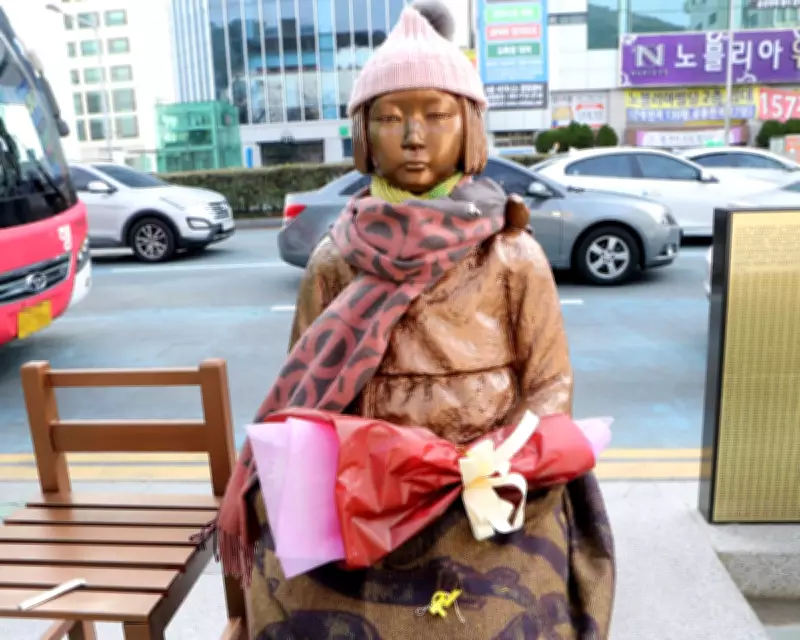
The bronze statue in question depicts a seated girl positioned next to an empty chair, a powerful symbol representing the estimated 200,000 women who were coerced or deceived into working in Japanese military brothels between 1932 and 1945. These women, euphemistically referred to as "comfort women," came predominantly from Korea but also included victims from China, Southeast Asia, Japan itself, and Europe.
The statue was gifted to New Zealand by the Korean Council for Justice and Remembrance, a non-governmental organization dedicated to preserving the memory of wartime sexual violence survivors. If approved by local authorities at an upcoming meeting on April 28th, the monument would be installed in the Korean cultural garden at Barry's Point reserve in Auckland.

Japan's Diplomatic Objections
In a formal submission to Auckland council, Japanese ambassador Makoto Osawa expressed serious concerns that "needlessly stirring up interest" in this historical issue could become a significant burden not only for Japan-South Korea cooperation but for Japan-New Zealand relations as well. The ambassador specifically noted that New Zealand government funding for water and electricity infrastructure at the garden in 2015 could create the impression of official support for the statue's installation.
A spokesperson from the Japanese embassy, speaking anonymously to media outlets, warned that similar statues have created division and conflict within Japanese and Korean communities in other countries. The spokesperson further suggested that Japanese cities might sever sister-city relationships with New Zealand counterparts if the statue proceeds, citing the precedent of Osaka ending its 60-year relationship with San Francisco after that city accepted a similar monument.
The Historical Context and Ongoing Disputes
The "comfort women" issue has strained Japan-South Korea relations since the first survivor publicly shared her story in the early 1990s. The initial "peace statue" honoring these women was erected in Seoul in 2011, followed by dozens more appearing internationally, each prompting Japanese calls for removal.
Japan maintains that the matter was "finally and irreversibly" settled through a 2015 agreement between then-Prime Minister Shinzo Abe and former South Korean president Park Geun-hye. Under this arrangement, Japan provided 1 billion yen (approximately US$9 million) in humanitarian funds to a foundation supporting survivors, while South Korea agreed not to raise the issue in international forums. However, Park's successor Moon Jae-in effectively dissolved the fund in 2018, arguing it failed to consider survivors' feelings and public sentiment.
Successive Japanese administrations have refused to provide official recompense, insisting all compensation claims were resolved under a 1965 bilateral peace treaty. While Japan's embassy in New Zealand states it has no intention of denying or underestimating the women's experiences, it characterizes the statue as part of an "anti-Japan" movement seeking to sensationalize the issue.
Community Response and Supporters' Perspective
The proposal has generated significant community response, with Auckland council receiving 672 submissions on the matter. According to official figures, 51% of individual submitters strongly opposed the statue, while 13 out of 21 organizations also expressed opposition. Japanese residents in New Zealand accounted for 36% of submitters, with Korean residents comprising 34%.

Supporters argue the statue serves as an important memorial to highlight wartime sexual violence and honor survivors' humanity. Rebekah Jaung, chairperson of the Aotearoa New Zealand Statue of Peace committee working to install the monument, expressed shock that Japan "would so blatantly try to silence a monument honouring women on the other side of the world."
"Every one of the girls and women who were taken, and their families, have their own heartbreaking story," Jaung emphasized. "Many survivors have legacies of reclaiming their power through activism. The statue represents a small way to unite and share their stories."
New Zealand's Position and International Implications
A spokesperson for New Zealand's Ministry of Foreign Affairs confirmed that Japan has made formal representations to the government regarding the statue. While acknowledging the sensitivity of the issue, the spokesperson noted that statues and monuments in public spaces remain matters for local government and communities to decide.
This controversy emerges against a backdrop of similar international disputes. In 2020, Japan reacted angrily to statues in South Korea appearing to depict former Prime Minister Abe prostrating himself before a young woman. More recently in 2025, a peace statue was removed from Berlin following years of diplomatic dispute over its presence.
The Japanese embassy maintains that such monuments "actually have brought division and conflict to communities in other countries, instead of reconciliation between Japanese people and Korean people." As the April 28th decision date approaches, this memorial has become more than a local planning matter, evolving into a significant test of diplomatic relations and historical memory between nations.