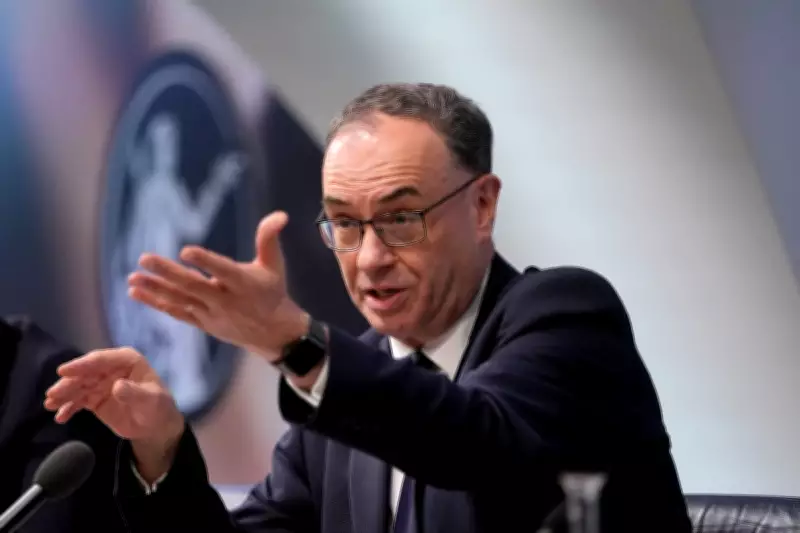
Bank of England Governor Bailey: March Rate Cut Remains 'Open Question'
Bank of England Governor Andrew Bailey has declared that a potential interest rate reduction in March constitutes an "open question" for monetary policymakers, as they anticipate continued weakness in the jobs market over the coming months. Appearing before the Treasury Select Committee on Tuesday, Bailey revealed he had not observed sufficient evidence to justify an interest rate cut during the Bank's previous meeting earlier this month.
Monetary Policy Committee Divided on Rate Decision
Bailey's comments are expected to significantly influence City traders, given the governor's history as the swing voter in most of the Bank's recent interest rate decisions. "We are seeing some softening of the labour market," Bailey stated, adding that a key consideration is whether the recent decline in headline inflation will translate into inflation expectations and subsequently affect wage bargaining processes.
"For the moment, we are still a little way off the next meeting, it is a genuinely open question," Bailey emphasized during the parliamentary hearing. Other Monetary Policy Committee members present included external members Alan Taylor and Megan Greene, alongside the Bank's chief economist Huw Pill.

Hawkish Concerns About Inflation Expectations
Pill and Greene adopted notably more hawkish positions regarding interest rates, with Greene expressing particular concern that a projected fall in inflation to two percent this year might not adequately influence long-term inflation expectations and price-setting behaviors. "Bearing down on those inflationary pressures remains necessary while there is still work to do," Greene asserted, suggesting that maintaining higher interest rates could help prevent inflation from rebounding.
Chief economist Huw Pill cautioned MPC members against being misled by Chancellor Rachel Reeves' Budget measures that removed energy subsidies from household bills. "It's important that we are not beguiled by the achievement of two per cent headline CPI inflation in the spring off the back of a lot of one-off fiscal measures," Pill warned, reiterating his previous calls for a more "cautious" approach to potential rate cuts.
Structural Changes in UK Labor Market
Pill attributed the ongoing decline in the UK jobs market to longer-term structural trends rather than Reeves' tax policies specifically. He suggested the UK is experiencing a period of "unhoarding" where companies are deliberately choosing not to expand their workforce. Multiple factors have contributed to this structural transformation:
- Post-Brexit immigration policy changes
- Unwinding effects from the Covid furlough scheme
- Significant fluctuations in economic activity rates
"From my perspective, we are getting to a point where the labour market is showing signs of stabilisation," Pill noted. However, he argued that Reeves' modifications to employers' national insurance contributions, combined with efforts to equalize the minimum wage for young adults with the national living wage, have contributed to a sharper increase in youth unemployment, which currently stands at approximately 16 percent.
The divided perspectives within the Monetary Policy Committee highlight the complex balancing act facing UK policymakers as they navigate between controlling inflation and supporting economic growth, with the March interest rate decision remaining genuinely uncertain.