
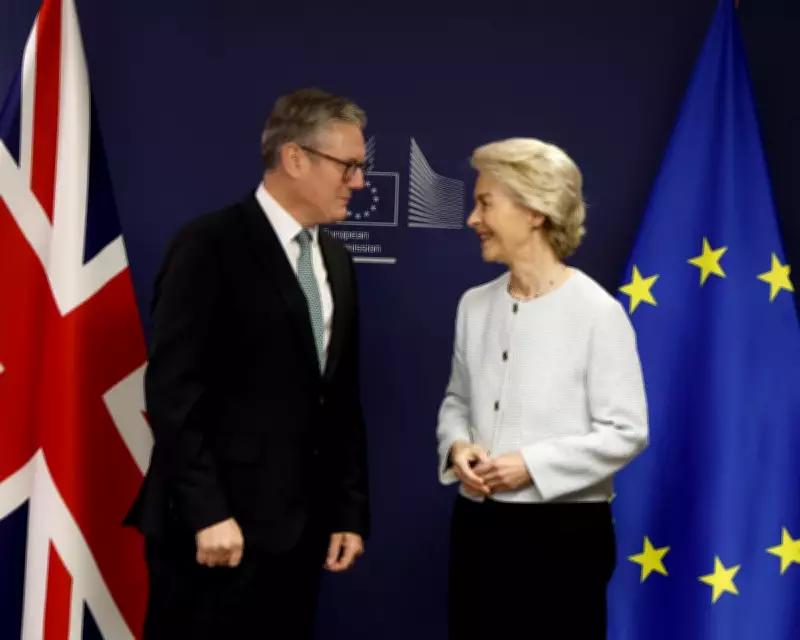
UK Government Seeks to Align with EU Rules Through New Legislation
The Labour government, led by Prime Minister Keir Starmer, is preparing to introduce a groundbreaking bill that could allow the United Kingdom to adopt European Union single market rules without the need for a full parliamentary vote. This move is part of a broader strategy to reset diplomatic and economic ties with the EU, following the announcement of a 'reset' deal in May last year.
Dynamic Alignment and Henry VIII Powers
Ministers are planning to use so-called Henry VIII powers, named after the 1539 law that permitted the monarch to rule by decree, to enable dynamic alignment with the EU. This would allow the government to implement evolving single market rules quickly if deemed in the national interest, without facing comprehensive parliamentary scrutiny each time. The legislation is expected to be introduced before the summer and will initially bring into force trade deals on food and drink and emissions trading with the EU.
Under this framework, negotiators could seek to adopt EU regulations across various sectors, including automotive and farming, using secondary legislation. Parliament would have the authority to approve or reject such measures but could not amend them, likely leading to a 'rubber-stamp' process rather than detailed debates and votes.
Economic and Political Implications
Government sources argue that this approach will add billions to the UK economy, help mitigate the costs associated with recent global conflicts, and boost sluggish productivity. They emphasize that the EU remains the UK's largest trading partner, with nearly half of total trade in 2024. The move is seen as a pragmatic step to reduce trade barriers and undo some of the economic damage caused by Brexit, which the Office for Budget Responsibility estimates could reduce long-run productivity by 4% and cut exports and imports by 15%.
However, critics, including Professor Anand Menon, director of the thinktank UK in a Changing Europe, warn that this could amount to 'integration with the EU by stealth,' as the UK would follow EU rules without the voting or veto rights of membership. Opposition parties, such as the Conservatives and Liberal Democrats, have expressed concerns about reduced parliamentary oversight and plan to challenge the bill, particularly in the House of Lords.
Government's Stance and Future Outlook
Ministers maintain that the legislation will not breach red lines on rejoining the customs union, single market, or returning to freedom of movement. They assert that any disputes over regulations will be resolved by an independent tribunal, not an EU court. The government is prepared to face opposition from hard Brexit advocates, including Nigel Farage's Reform UK, who are expected to criticize the move as treasonous.
Prime Minister Starmer has highlighted the need for a deeper partnership with the EU on trade and defence, citing instability from global conflicts and the economic damage of Brexit. A government spokesperson stated that Parliament will play its full constitutional role in scrutinizing the legislation, which aims to deliver a food and drink trade deal worth £5.1 billion annually, supporting British jobs and reducing red tape for businesses.




