
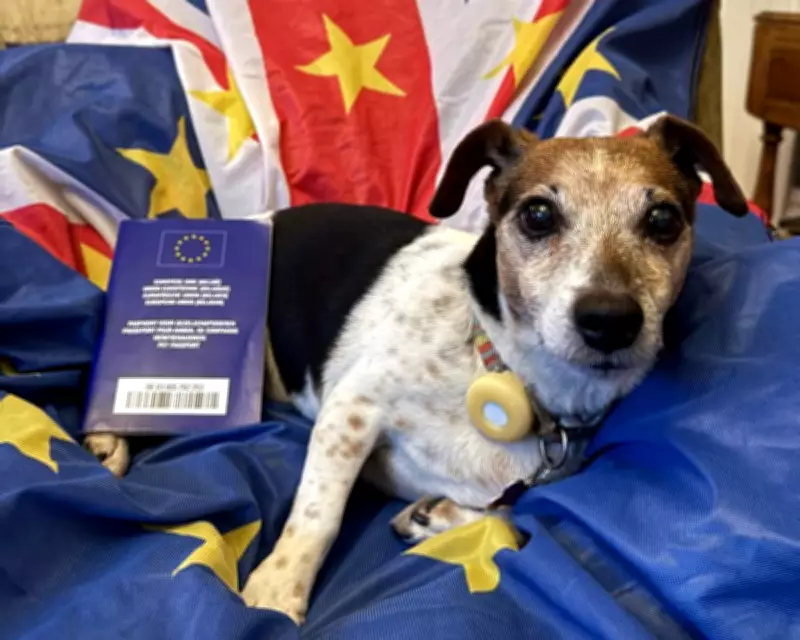
British Pet Owners Warned Against EU Passport 'Dodge' Post-Brexit
British pet owners planning to travel to the European Union with their animals have been issued a stern warning: attempting to bypass the expensive animal health certificate system by using a cheaper pet passport obtained abroad could backfire severely. This caution comes as social media platforms buzz with reports of owners exploiting this loophole, particularly within the motorhome and "van life" communities.
The Shift from Pet Passports to Animal Health Certificates
Before Brexit, taking a cat, dog, or ferret to the EU was relatively straightforward under the Pet Travel Scheme. Animals required a microchip, rabies vaccination, a pet passport, and for dogs, tapeworm treatment. However, since 2021, the process has become more cumbersome and costly, with pet passports replaced by the animal health certificate (AHC). This document must be issued within ten days before entry to the EU and remains valid for four months for onward travel within the EU and re-entry to Great Britain.
Northern Ireland maintains a slightly simpler process with pet travel documents, and pet passports are still available for residents there. But for those in Great Britain, the AHC is now mandatory, leading some to seek alternatives.
The Temptation of EU Pet Passports
Dr. David Nicholl, a consultant neurologist from Hagley, Worcestershire, exemplifies this trend. He obtained an EU pet passport for his jack russell, Lily, in Belgium, citing it as much cheaper and less hassle than the AHC system. "[There is] loads of hassle and [it is] very expensive with the existing system," he noted, adding that the passport does not display the owner's address, which has caused no issues in his travels.
Despite such anecdotes, experts urge caution. Dr. Elizabeth Mullineaux, senior vice-president of the British Veterinary Association, emphasizes that EU guidance strictly limits pet passports to owners resident in the EU. "Any British residents trying to use this as a cheap or easy alternative should be aware of the risks of getting caught out when pets are being moved between the EU and Great Britain," she warns.
Legal Risks and Enforcement
The European Commission confirms that EU pet passports are only valid for pets habitually residing with their owner in an EU member state. A spokesperson stated that passports issued to residents of Great Britain, regardless of the owner's nationality, are no longer valid for travel from Great Britain to the EU. This applies to passports issued before or after the Brexit transition period.
"Enforcement of this legislation is with member state competent authorities. The use of invalid documents may lead to refusal of entry of the animal at the EU borders," the spokesperson added, highlighting the potential for legal complications and travel disruptions.
Cost Implications and Industry Response
The AHC requirement has introduced significant costs, with prices varying widely across the UK. Some vets charge over £250 for a single animal, though discounts are available for additional pets. Practices near ports and the Channel Tunnel, such as in Folkestone, Kent, offer lower rates, with AHCs as cheap as £99 for one pet and £124 for two. For returning customers with unchanged details, fees can drop to £69 and £94, respectively.
Dr. Mullineaux explains that AHCs are more onerous and time-consuming for vets than pet passports were, contributing to higher costs. "Where costs differ from practice to practice or from one region to the next, it simply reflects that no two businesses are the same," she says, citing variations in staffing, fees, and overheads.
In response to pricing concerns, the Department for Environment, Food and Rural Affairs notes that the Competition and Markets Authority is in the final stages of an inquiry into veterinary services, including potential anti-competitive pricing.
Future Changes and Recommendations
There is hope on the horizon. Chris Theobald, a senior policy manager at Guide Dogs, reveals that the UK and EU have agreed to rejoin the pet passport scheme, though a date remains unconfirmed. This follows advocacy from organizations like Guide Dogs, aiming to simplify travel for pet owners.
For now, British pet owners are advised to comply with the AHC system to avoid risks. As the landscape evolves, staying informed through official channels is crucial for ensuring smooth and legal travel with beloved pets across borders.




