
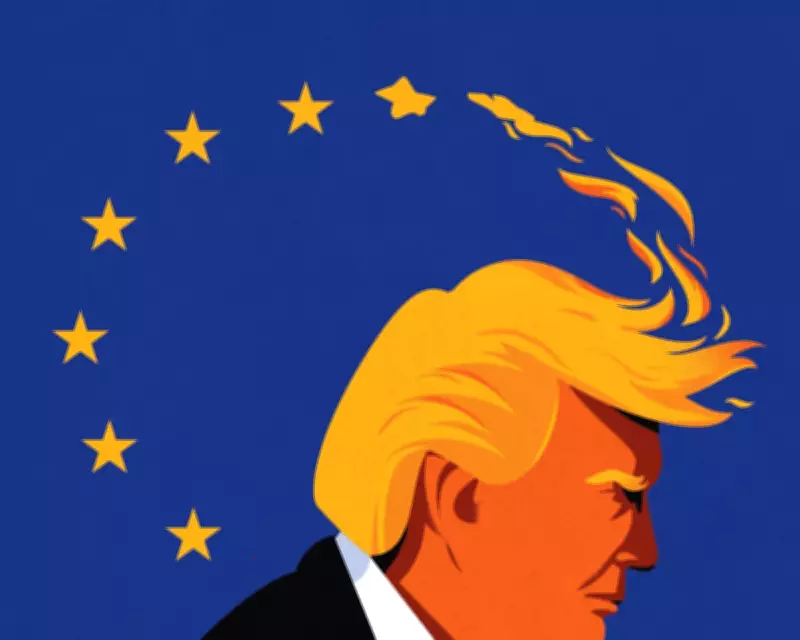
Trump's Impact on UK-EU Relations a Decade After Brexit
In a surprising twist of global politics, the era of Donald Trump is inadvertently fostering a renewed closeness between Britain and the European Union. As the United Kingdom marks ten years since the Brexit referendum, Trump's confrontational approach and public disparagements are fueling a significant shift in British public opinion toward rebuilding European ties.
The Global Context and Economic Pressures
International tensions, including conflicts in the Gulf region, are exacerbating economic uncertainties worldwide. Michael O'Leary, CEO of Ryanair, has warned that a jet fuel shortage triggered by the Iran war could lead to widespread flight cancellations, making domestic travel options like Cornwall more appealing despite rising costs. This instability underscores the fragility of global supply chains and the need for cooperative international strategies.
Keir Starmer, leader of the Labour Party, has emphasized during a subdued local election campaign that the coming months will be challenging, highlighting how American actions in the Gulf could precipitate a global economic downturn. In response, Starmer and Shadow Chancellor Rachel Reeves argue that aligning more closely with Europe is essential for Britain's national security and economic resilience in these volatile times.
Public Opinion and Political Shifts
Recent YouGov polling indicates that 63% of Britons would now vote to rejoin the EU if a referendum were held tomorrow. This sentiment is particularly strong in urban areas facing elections, suggesting a pragmatic reassessment of Brexit's outcomes. The anniversary of the Brexit vote has become a focal point for remainers, while many who advocated for leaving prefer to downplay the milestone.
Trump's behavior has alienated traditional allies, including European nations. His derogatory comments about Emmanuel Macron's marriage and criticism of Britain's military capabilities have strained transatlantic relations. These incidents reveal a deeper rift, with the U.S. appearing increasingly isolated under his leadership. Even Giorgia Meloni of Italy, once considered a Trump ally, recently declined a U.S. request to use a Sicilian airbase, signaling growing European independence.
Strategic Recalibrations and Future Prospects
The Greenland crisis earlier this year demonstrated that European nations cannot rely solely on the U.S. for protection, prompting them to strengthen intra-European defense collaborations. This has blurred distinctions between EU and non-EU members, fostering a collective approach to security. Concurrently, the threat of a recession originating in Washington is encouraging further European unity.
In Britain, the government's struggle to address immigration concerns has inadvertently boosted support for alternative parties like the Greens. Labour's long-term strategy involves mitigating the economic damage of a hard Brexit, which is estimated to have reduced GDP by up to 8% and investment by 18%. Policies such as a youth mobility scheme for under-25s and alignment with EU food regulations are gaining traction, even among former Brexit supporters, indicating a gradual reconciliation with European norms.
Challenges and Opportunities Ahead
Despite these positive trends, significant hurdles remain. Trade competition between the UK and EU persists, and potential resource scarcities—from oil to medicines—could test international cooperation. However, the current crisis appears to be strengthening European solidarity rather than fragmenting it.
While rejoining the EU in its current form is not immediately feasible, the momentum for constructing a new, closer partnership is building. Political courage will be crucial to seize this opportunity. Britain has learned through experience the value of stable relationships, and with shifting global dynamics, there is a growing consensus that fostering stronger ties with Europe is not just desirable but necessary for future prosperity and security.




