
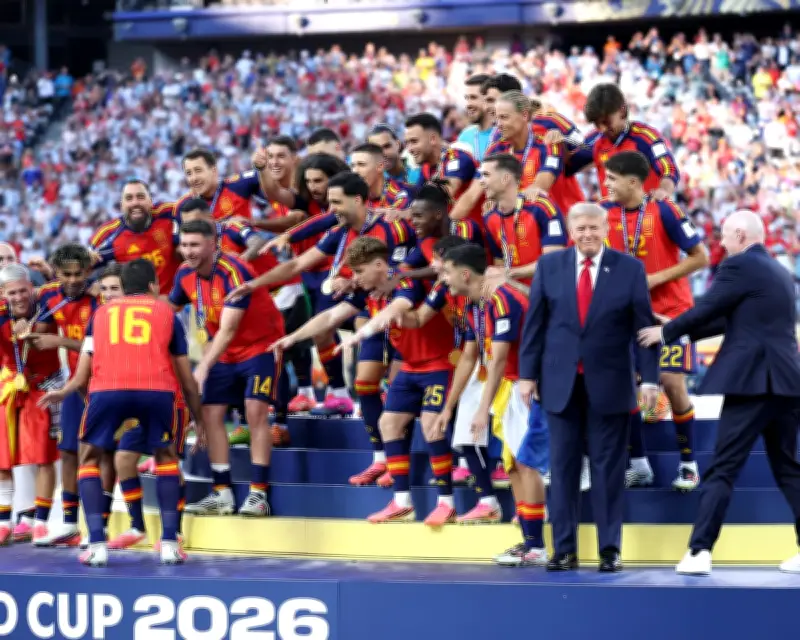
The 2026 World Cup final concluded with a surreal scene: Donald Trump and Gianni Infantino presenting the trophy to Spain's Rodri, lingering awkwardly for a team photo as golden glitter fell on a bobbly pitch. The tournament, nurtured to indulge the cult of the individual, ended with a collective triumph for Spain, yet the event itself felt like a fever dream where football was a sideshow.
Excess and Controversy Define the Tournament
The World Cup, held across the US, Canada, and Mexico, was marked by unprecedented scale and controversy. FIFA's revenue hit $15bn, significantly exceeding projections. The Folarin Balogun affair, where a suspension was lifted after political interference, caused incalculable damage to trust in FIFA's mechanisms. Trump, who has sought solo host status for the US, and Infantino sat together behind reinforced glass, embodying the sport's remote and bulletproof leadership.
Mixed Footballing Moments
Despite the controversies, the tournament offered genuine footballing highlights. Cape Verde's goalkeeper Vozinha had a story for the ages. Lionel Messi, Erling Haaland, Kylian Mbappé, and Jude Bellingham delivered star performances. However, the final itself was one of the worst on record, with Argentina and Spain niggling through a slog until Ferran Torres confirmed Spain's supremacy. Mexico's Estadio Azteca was the best venue, yet it hosted no matches beyond the last 16.
Fan Experience and Future Implications
Fans paid up to $1m for pitchside seats, but the atmosphere was often lacking. Tom Cruise's pre-match speech was drowned out by Argentina's fans. Beyond the stadiums, cities like Kansas City and Houston welcomed visitors with genuine hospitality. Infantino's lust for bigger events has legitimized a 64-team tournament as a discussion point. As Trump and Infantino departed, a tearful Messi stood before Argentina's fans, marking an era's end for football's greatest player.




