
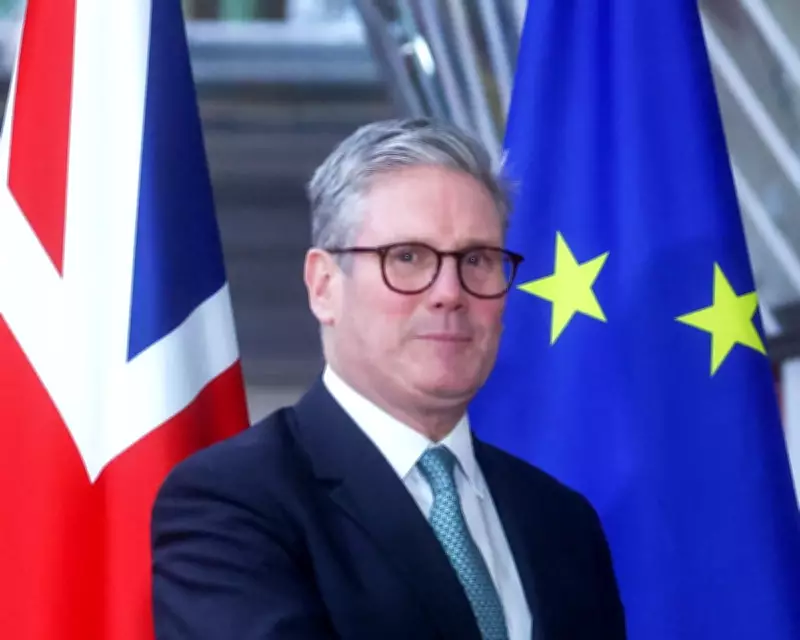
Starmer's EU Alignment Bill Grants Ministers Broad Powers Without Full Parliamentary Scrutiny
Prime Minister Keir Starmer has unequivocally expressed his ambition to significantly deepen Britain's economic ties with the European Union. This commitment is now taking legislative form through a new government bill that would implement a food and drink trade agreement with the EU while granting ministers extensive authority to align UK standards with evolving single market regulations.
The Dynamic Alignment Mechanism
The proposed legislation introduces what officials term a "dynamic alignment mechanism." This provision would empower the government to swiftly adopt new EU rules across various economic sectors whenever it determines such alignment serves the national interest. Crucially, this process would not require full parliamentary scrutiny for each individual change, allowing for rapid implementation without the delays of traditional legislative procedures.
Beyond merely executing the existing food and drink agreement, the bill contains provisions that would enable ministers to make broader economic adjustments based on future negotiations with Brussels. This means the government could modify regulations in response to evolving EU standards without introducing separate legislation for every modification, creating a more flexible framework for ongoing alignment.
Parliamentary Scrutiny Concerns
The legislation raises significant questions about parliamentary oversight. While the bill itself must pass through Parliament in the conventional manner, once enacted, the government could utilize secondary legislation to implement further changes. This approach employs so-called Henry VIII powers—named after a 1539 law that permitted the monarch to rule by decree—which allow ministers to approve regulations without comprehensive parliamentary examination.
Although Parliament retains the right to vote on secondary legislation, its options are limited to approval or rejection without amendment. In practice, such measures often receive minimal debate and are frequently approved through streamlined procedures, effectively reducing parliamentary input on substantial regulatory changes.
Political Landscape and Implementation Challenges
With Labour's substantial majority in the Commons, passage of the bill appears likely in the lower house, though the House of Lords may present obstacles. The legislation is anticipated to feature in the king's speech in May, but final details remain contingent on ongoing negotiations with the EU regarding the food and drink agreement specifics. This parallel process adds complexity to the legislative timeline.
The Liberal Democrats may propose amendments to make the bill more favorable toward EU integration, potentially including provisions for a customs union, which could trigger dissent within Labour ranks. Meanwhile, both the Conservative Party and Reform UK have voiced opposition to the legislation, pledging to repeal it should they regain power.
Rationale and Potential Implications
Government sources justify the broad powers by arguing they would position the UK as a more reliable negotiating partner for the EU, which remains cautious following the turbulent parliamentary maneuvers of the Brexit era. They compare the mechanism to existing practices where agencies like the Food Standards Agency update regulations without individual votes, though such agencies operate under specific legislative mandates.
Starmer has publicly defended the initiative, asserting that closer European relations are "in the UK's best interest." However, even pro-EU parliamentarians may hesitate to grant the government such extensive authority over critical sectors—including automotive, defense, agriculture, and pharmaceuticals—without robust parliamentary oversight, given the potential local economic impacts.
The bill represents a significant step toward Starmer's vision of enhanced EU-UK economic cooperation, but it simultaneously sparks debate about the balance between efficient governance and democratic accountability in post-Brexit Britain.




