
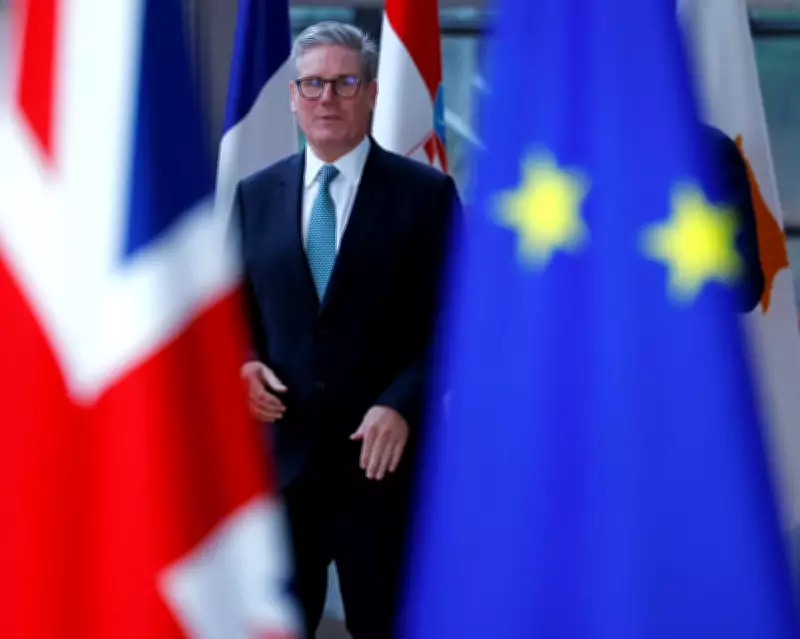
Starmer Advocates for Stronger UK-EU Ties in Response to Global Instability
Prime Minister Keir Starmer has announced a significant push for an ambitious new partnership between the United Kingdom and the European Union, emphasizing the need to strengthen security and reduce living costs in a dangerous world. This move comes as former US President Donald Trump continues to threaten withdrawing the United States from NATO, describing the alliance as a paper tiger and criticizing European nations for their stance on the US-Israeli strikes against Iran.
A Strategic Pivot Towards Europe
Starmer highlighted that Brexit has inflicted deep damage on the UK economy, and he intends to seize the opportunity to repair this harm through enhanced cooperation with the EU. At a press conference, he stated that the opportunities to bolster security and cut the cost of living are too significant to ignore, signaling a clear reorientation towards Europe and away from the United States under current geopolitical pressures.
He emphasized that Britain's long-term national interest necessitates a closer relationship with the EU, focusing on economic and security cooperation. Starmer plans to explore ties beyond the agreements made at the Lancaster House summit last May, aiming for a partnership that reflects shared values, interests, and a collective future in navigating global challenges.
Defence and Economic Cooperation at the Forefront
The Prime Minister outlined plans to strengthen cooperation with the EU on defence, security, energy, and the economy. He expressed ambition for greater involvement in the single market, which he believes is crucial for the UK's economic interests. A summit scheduled for June or July in Brussels will serve as a platform for these discussions, with Starmer aiming for it to be more than a stocktake event, but rather a deliberate effort to deepen collaboration.
However, talks have faced obstacles, such as disputes over EU citizens receiving home fees at UK universities and visa caps, slowing progress on initiatives like youth mobility and sanitary and phytosanitary deals. Despite this, the UK is considering a dynamic alignment framework similar to Switzerland's recent agreement with the EU, covering sectors like food, energy, health, and science to boost economic growth and resilience.
Navigating Political Pressures and Criticisms
Starmer asserted that he will not be swayed by Trump's NATO comments, committing to act in the British national interest regardless of external pressures. He reassured the public that the UK would not be dragged into wider conflicts, focusing instead on pragmatic partnerships with Europe.
His approach has drawn criticism from the Conservatives and Reform UK, though the Conservatives have not directly opposed the ambition for closer EU ties. Meanwhile, some EU diplomats have welcomed Starmer's positive tone on economic cooperation, while expressing frustration over the lack of specifics in UK proposals, particularly regarding defence initiatives like the Safe European defence program.
Future Prospects and Challenges
Experts like Anand Menon of Britain in a Changing Europe note that while Starmer's speech opens the door for closer defence cooperation with Europe, there remains uncertainty about what substantive agreements can be achieved. The EU's insistence on clear, acceptable terms poses a challenge, but Starmer's government is exploring sectoral regulatory alignment to enhance exports in areas like medical devices and chemicals, with financial services remaining off the table for now.
In defence, discussions are focused on bolstering collective European capabilities, given the UK's reliance on the US for nuclear deterrence and France's independent nuclear arsenal. The EU has proposed ideas such as a standing military force and a European security council including the UK, but concrete programs are limited in the short term.
Overall, Starmer's call for an ambitious UK-EU partnership marks a pivotal moment in post-Brexit relations, driven by the need to address global instability and economic pressures, with a summer summit poised to shape the future of European cooperation.




