
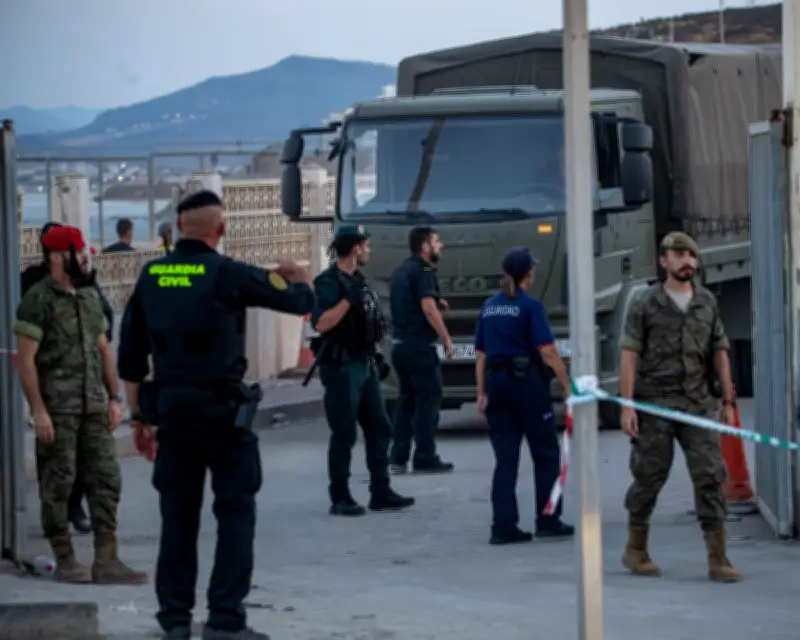
Spain has announced it will impose temporary border checks on travelers arriving from Italy, a direct response to Rome's decision to reinstate controls on visitors from Spain following a mass migration event in Ceuta. The Spanish Interior Ministry confirmed the reciprocal measure will take effect at midnight on Saturday and remain in place until 7 September, citing “the persistent irregular migration pressure” that Italy itself has referenced as justification for its own checks.
Escalating Diplomatic Spat
The move comes after Spain issued a stern warning to Italy, threatening countermeasures unless Rome lifted its border checks promptly. Italy, however, rebuffed the demand, escalating a rare public disagreement between two EU and NATO allies. The tension stems from the unprecedented influx of migrants from Morocco into Spain's North African enclave of Ceuta on 30-31 July, which saw tens of thousands of people cross the border in a deadly rush.
Italian Prime Minister Giorgia Meloni's office responded defiantly, stating: “Italy does not accept ultimatums or impositions from abroad regarding national security and border control.” The statement added that the decision would only be reconsidered when there is certainty that no security or terrorism risks exist for Italy, no new wave of migration is occurring, and no irregular migrants are heading toward European territory. Italy's checks, initially announced on 31 July, apply to third-country nationals arriving from Spain via maritime and air entry points.
Background: The Ceuta Crisis
The diplomatic row is rooted in the events of late July, when an estimated 72,000 people entered Ceuta from Morocco, with around 70,000 having since returned, according to official Spanish figures. Spanish authorities report 80 deaths during the crossings, though Moroccan human rights groups, including the Moroccan Association for Human Rights and the European Coordination for Human Rights in Morocco, claim at least 141 deaths have been recorded and the toll may rise. Morocco's interior ministry has acknowledged 11 deaths on its side of the border, with all but one resulting from drowning.
The crisis prompted several EU leaders, including Meloni, to call for Spain's suspension from the Schengen visa-free travel zone, despite such a move being legally impossible under EU treaties. Spain's foreign minister, José Manuel Albares, criticized Italy's initial border checks as “unfair, contrary to the EU's interests and discriminatory for the Spanish population.” He further described the measure as “a torpedo fired at the hull of European unity” and urged Italy to treat Spaniards like other European citizens.
Reciprocal Measures and Future Outlook
Spain's interior ministry announced the reciprocal border checks within hours of Italy's refusal to back down. The Spanish government has warned against “creating rifts and sterile conflicts driven by internal electoral motives” and expressed hope that “pro-European sentiment, common sense and good faith prevail.” Meanwhile, Italian authorities have pledged to “do their utmost to ensure maximum ease of movement for Spanish and European citizens” unaffected by the checks.
Spanish police have been monitoring online rumors and social media about potential new migrant arrivals in Ceuta in mid-August, but authorities have not explicitly confirmed expectations of a repeat of the late July rush. The situation in Ceuta remains dire for those who stayed, including hundreds of unaccompanied children, who face severe shortages of food, water, and shelter.
This episode highlights the ongoing challenges posed by irregular migration to the EU's internal solidarity and border policies. While both nations are key allies, the dispute underscores the political sensitivity of migration issues, particularly for governments with hardline stances. The temporary border checks are set to last until 7 September, but the underlying tensions may persist well beyond that date.




