
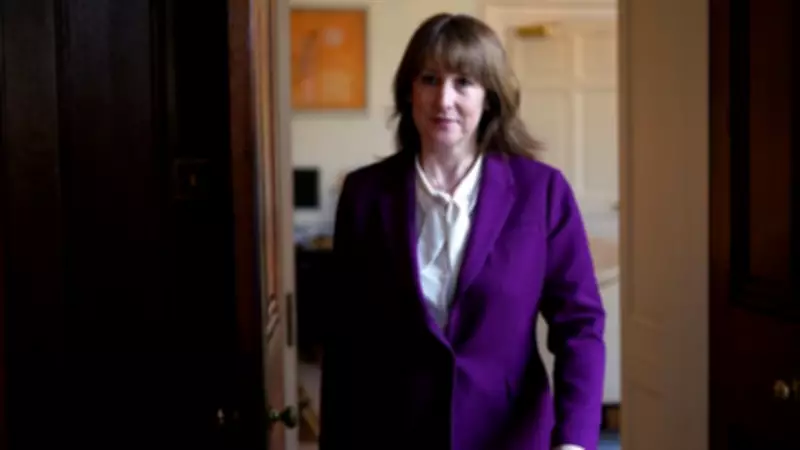
Chancellor Advocates for Enhanced European Union Partnership in Major Economic Address
Chancellor Rachel Reeves is poised to declare that forging a "deeper relationship with the European Union" represents a critical component for revitalizing the British economy, during her highly anticipated annual Mais lecture scheduled for Tuesday afternoon. This significant address comes amid accusations from political opponents that the chancellor is attempting to "row back on Brexit," as she prepares to outline how strengthened ties with Europe can serve as a powerful driver for economic growth.
Three Pillars for Future Growth
In her prepared remarks, Ms. Reeves will emphasize that Britain possesses the agency to shape its own destiny in an evolving global landscape. "In this changing world, Britain is not powerless," she will assert. "We can shape our own future. Our method is stability, investment, and reform - through an active and strategic state." The chancellor will identify three primary growth opportunities for the nation in the coming decade.
"Today, I am making three big choices on the greatest growth opportunities for Britain in the decade to come: growth in every part of Britain, AI and innovation, and a deeper relationship with the EU," Ms. Reeves will announce. This tripartite strategy aims to address both domestic regional disparities and international technological competitiveness.
Substantial Financial Commitments to Technology
Supporting her vision for innovation, the chancellor will commit a substantial £500 million to bolster the most promising artificial intelligence companies operating within the United Kingdom. Additionally, a further £1 billion investment will be directed toward the development of commercial-scale quantum computers, signaling a major governmental push into next-generation computing technologies.
On the subject of artificial intelligence, Ms. Reeves will deliver a forceful argument for national leadership. "AI is the defining technology of our era," she will state. "The choice is this: we can bury our heads in the sand and leave it to other countries - whose values may differ from ours - to shape and own this technology. We can leave it to the market alone, and let the balance of risk and reward be determined by a super-wealthy few. Or we can chart our own course." Her objective is for the UK to achieve the fastest rate of AI adoption among the G7 group of advanced economies.
Economic Context and International Engagement
This policy announcement arrives against a backdrop of concerning economic indicators. Recent data revealed that the UK economy experienced zero growth in January, with a modest increase of only 0.2% over the three-month period leading to January. The Office for Budget Responsibility (OBR) has concurrently revised its growth forecast for 2026 downward to 1.1%, a reduction from the previous estimate of 1.4%.
Ministers are also contending with the economic repercussions of the ongoing conflict involving Iran, which poses a significant threat of escalating energy prices and reigniting inflationary pressures should the hostilities persist. Ms. Reeves addressed these concerns directly, stating the situation is "certainly not good for the British economy."
In a move underscoring her commitment to European engagement, the chancellor met with Ireland's Finance Minister, Simon Harris, on Monday. Their discussions centered on the practical steps necessary to deepen economic cooperation between the UK and the European Union.
Political Opposition and the Legacy of the Mais Lecture
The chancellor's published comments have already ignited a fierce political response. Shadow Chancellor Mel Stride criticized the approach, stating, "It's no secret that Reeves and Starmer have wanted to row back on Brexit since day one - and we can expect to hear more detail on Labour's plan to drag us closer to the EU at the chancellor's speech. Labour are desperate to blame anyone but themselves for their economic failures."
The annual Mais lecture stands as the City of London's premier banking and finance event, hosted by City, University of London. Ms. Reeves previously delivered this lecture in 2024 while serving as Shadow Chancellor. The event has a prestigious history, featuring past speakers such as former Prime Minister Rishi Sunak, former Chancellor George Osborne, former Bank of England Governor Mark Carney, and Odile Renaud-Basso, President of the European Bank for Reconstruction and Development.




