
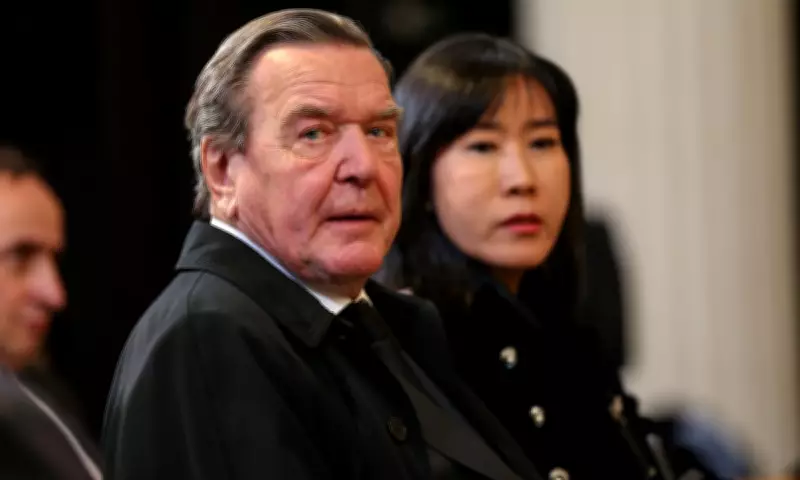
Russian President Vladimir Putin has proposed that former German chancellor Gerhard Schröder act as a mediator in the Ukraine war, an idea met with skepticism in Berlin. German officials reacted cautiously to Putin's surprise suggestion, saying they had “taken note” of his comments but viewed them as part of “a series of bogus offers” from Russia, government sources told AFP. One source said a real test of Moscow's intentions would be to extend the current three-day truce.
Schröder's Controversial Role
Schröder, 82, has remained close to Putin long after leaving office, standing apart from most Western leaders since Russia invaded Ukraine in 2022. He previously held key roles in Russian energy projects, including work on the Nord Stream gas pipelines and a seat on the board of Russian oil firm Rosneft, which he gave up in 2022. Putin on Saturday said he thinks the Ukraine war is winding down and nominated Schröder as a potential key negotiator to help end the conflict.
Mixed Reactions in Germany
Michael Roth, a former lawmaker from Germany's Social Democratic Party (SPD) and chair of the foreign affairs committee, said a mediator “cannot be Putin's buddy,” in an interview with Tagesspiegel. He stressed that any mediator must above all be accepted by Ukraine. “Neither Moscow nor we can decide that on Kyiv's behalf.” Others within the party, however, have been more open to Putin's suggestion. Quoted by Der Spiegel, the SPD's foreign affairs spokesperson in parliament, Adis Ahmetovic, said the proposal needs to be “carefully considered” with European partners. SPD lawmaker Ralf Stegner argued that “if we don't want Putin and (US President Donald) Trump to decide Ukraine's future” alone, Europe should seize every possible chance – however small.
Ceasefire Under Strain
Meanwhile, the US-mediated ceasefire between Russia and Ukraine appeared under serious strain on its second day on Sunday. Both sides have accused the other of violating the deal through weekend attacks. Three people were killed in Russian drone strikes on areas near the frontline, and more than 200 battlefield clashes had taken place since early Saturday, Ukrainian officials said. Russia's defence ministry said it had downed 57 Ukrainian drones over the past day and “responded in kind” on the battlefield. The US envoy Steve Witkoff and Jared Kushner will visit Moscow “soon enough” to continue talks with Russia, news agency Interfax reported Kremlin adviser Yuri Ushakov as saying on Sunday.
Russia-Armenia Tensions
Russia has accused Armenia of providing Volodymyr Zelenskyy with “a platform for anti-Russian remarks,” in a further sign of a chill in relations between traditional allies Moscow and Yerevan. On a visit to Yerevan last week, Zelenskyy said Russia feared “drones may buzz over Red Square” in Moscow during the annual parade on 9 May. “The main thing for us is that Armenia does not adopt an anti-Russian stance,” the Kremlin spokesperson Dmitry Peskov said, adding that Russia was awaiting an explanation from Yerevan on the matter.
Latvian Defence Minister Resigns
Latvia's defence minister resigned on Sunday, after the recent incursion of two Ukrainian drones into its territory, hitting oil storage facilities. Minister Andris Spruds's decision followed a call for his resignation from Latvia's prime minister, Evika Silina, who stated he had “lost (her) trust and that of the public.” Silina said anti-drone systems had not been deployed quickly enough to counter Thursday's incursion. On Thursday, two drones crossed over the Russian border into Latvia. A fire broke out, but was quickly brought under control. The Ukrainian foreign minister Andriy Sybiga said that the drones had flown into Latvia as a result of “Russian electronic warfare.” This article was amended on 11 May 2026 to correct a misspelling of the first name of Andris Spruds.




