
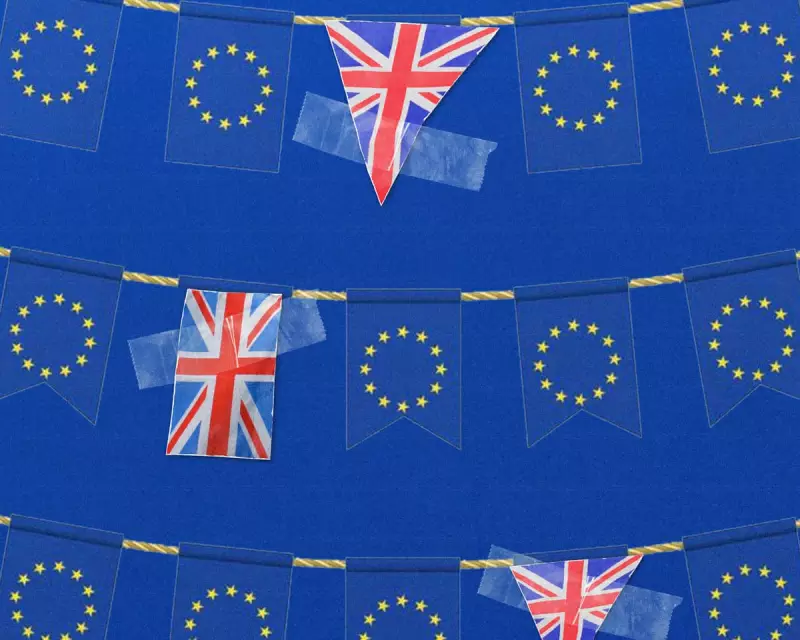
Behind closed doors in Whitehall, a once-unthinkable idea is gaining traction as the Labour government desperately searches for economic growth. Informal discussions have begun across government about the possibility of the United Kingdom rejoining the European Union's customs union, viewed by senior figures as a 'big lever' to stimulate the economy.
The Unspoken Issue Returns
The political landscape has shifted dramatically since Sir Keir Starmer, as Labour leader, established firm 'red lines' ruling out any return to the customs union or single market. That position helped neutralise Brexit as a divisive issue after years of bitter political warfare. However, the cold reality of economic stagnation has prompted a quiet reassessment.
Ministers and advisers are now citing House of Commons analysis suggesting that rejoining the customs union could increase GDP by 2.2%. Before the recent budget, the Prime Minister's own economic adviser, Minouche Shafik, reportedly suggested it could be one of the most effective growth tools available.
'The people raising the question in No 10 are right to do so. It's the only idea around that would radically raise growth at the next election,' one cabinet source told The Guardian. Another senior figure added: 'It's a very live question. The customs union is one of the big levers that we could pull.'
Starmer's Evolution and Cabinet Divisions
Sir Keir's personal journey on this issue is significant. Back in early 2018, as shadow Brexit secretary, he nearly resigned from the shadow cabinet over attempts to sideline his customs union plans. After the tumultuous Brexit wars, he ultimately whipped Labour MPs to support Boris Johnson's deal and later set his red lines.
Recently, however, the Prime Minister has changed his tone. In a Guardian article, he wrote that 'the botched Brexit deal significantly hurt our economy' and promised closer trading ties. In speeches, he has argued the public must be 'grown up' about closer relations requiring 'trade-offs'.
This shift is reflected in his cabinet. The promotion of Nick Thomas-Symonds, a close Starmer ally and advocate for closer EU ties, to full cabinet rank overseeing EU negotiations was seen as telling. Pro-European ministers including David Lammy, Peter Kyle, Liz Kendall, Bridget Phillipson and Wes Streeting are believed to favour moving further.
Justice Secretary David Lammy inadvertently highlighted the internal debate on a podcast this week. When repeatedly asked if the UK should rejoin the customs union, he eventually responded: 'That's not currently where we are... But you can see countries like Turkey with a customs union seemingly benefiting and seeing growth in their economy.'
The Political Calculus and Economic Imperative
The driving force behind these tentative discussions is pure economic necessity. Chancellor Rachel Reeves began highlighting Brexit's economic costs last summer, blaming it for productivity downgrades. While she supports pushing the EU relationship 'as far as possible', she is reportedly reluctant to embark on another major internal battle by breaking manifesto promises on red lines.
Some ministers are more impatient. 'We want growth. We know this is the single best way of getting it. We could do it now and hopefully start to see the benefits this side of an election,' one cabinet minister argued. They suggested Labour could then challenge figures like Nigel Farage at the next election to either 'continue with our economic recovery, or to halt it in its tracks'.
Public opinion appears to be shifting. Polling suggests people are 'far less rigid about the red lines' now. 'The public has moved on from Brexit but the Westminster bubble hasn't,' one senior government figure observed.
Significant Hurdles Remain
Despite the growing internal debate, formidable obstacles stand in the way of any imminent policy change. Downing Street sources insist Sir Keir remains committed to the 'fundamental architecture' of the Brexit deal, describing an 'iterative' process with Brussels that will 'stop short' of customs union membership in this parliament.
Practical and political challenges are substantial. Rejoining would mean surrendering the UK's independent trade policy, potentially jeopardising deals with the US and India. The UK would lose control over setting its own tariffs. Furthermore, the EU's political landscape has hardened, with France and Germany facing domestic turbulence that could make them reluctant partners.
'Any UK government that tried to rejoin could find the EU instantly turning round and saying we don't want you,' warned one senior government aide. Recent negotiations over joining the EU's £131bn defence fund collapsed after France demanded a £5.7bn budget contribution.
For now, the Prime Minister appears cautious. 'Keir keeps hinting at it, dipping his toe in the water, then getting scared and rowing back from it,' a cabinet minister expressed with frustration. Yet the economic imperative continues to drive the conversation in private corridors across Westminster, setting the stage for what could become a defining debate of the next election campaign.




