
EU's New Entry/Exit System Sparks Travel Disruption and Legal Questions
The implementation of the European Union's new Entry/Exit System (EES) has plunged British travelers into a state of chaos, with severe delays at border controls leading to missed flights and mounting frustration. As the Summer travel season approaches, experts warn that navigating EU borders could become increasingly costly and time-consuming for non-EU nationals.
Biometric Registration Requirements Cause Border Bottlenecks
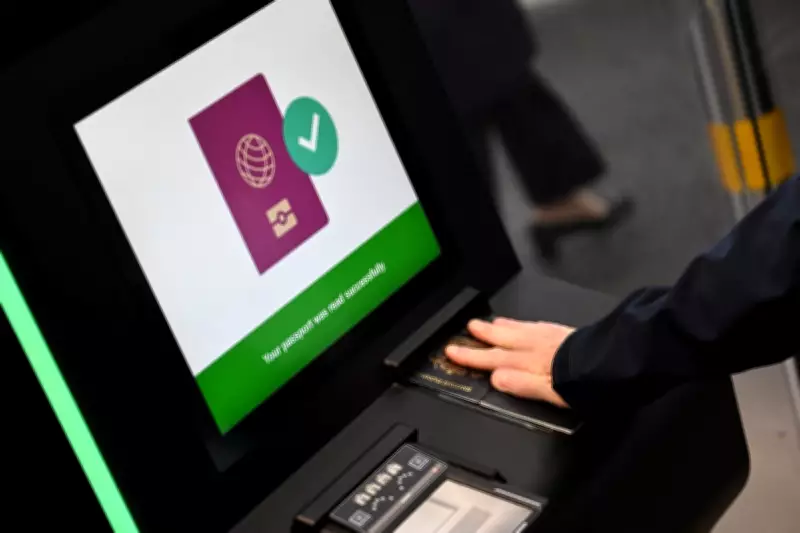
The EES mandates that non-European Union citizens, including British travelers following Brexit, must register biometric information when entering the Schengen free travel zone. This process involves facial scans and fingerprint collection, with digital records valid for three years once completed. However, the system's rollout has been marred by significant operational challenges.
Reports from multiple European airports indicate widespread problems including extensive queues, staffing shortages, and technical failures at registration kiosks. The situation has become so dire that over 100 passengers missed their Easyjet flight from Milan's Linate airport to Manchester on Sunday, trapped in what travelers described as a "nightmare" passport control queue.
Airlines Respond to Unprecedented Border Delays
Easyjet confirmed it held the affected flight for nearly an hour to accommodate delayed passengers, but ultimately had to depart when crew members reached their safety-regulated operating limits. The airline emphasized that border control issues fall outside their operational control, stating that affected customers have been offered free flight transfers.
Despite these measures, some stranded passengers reported being forced to pay over £1,000 for last-minute alternative flights to return home, highlighting the financial impact of the border disruptions.
Legal Liability and Passenger Rights in Question
The central question emerging from this travel chaos concerns legal responsibility. Airlines typically bear liability for delays caused by operational issues within their control, including mechanical problems, crew scheduling, and technical failures. However, visa system complications and border control delays generally fall outside airline responsibility.
Key legal considerations include:- Airlines may offer courtesy accommodations like flight transfers, but passengers have no automatic right to compensation for border-related delays
- Travel insurance policies vary significantly, with many requiring passengers to allow "reasonable time" for security procedures
- Passengers ultimately bear responsibility for arriving at airports with sufficient time to complete all required procedures
Industry Warnings and Travel Recommendations
Aviation industry organizations have issued stark warnings about the situation. According to ACI Europe (representing airports) and Airlines for Europe (A4E), initial reports show passenger waiting times reaching two to three hours at border control during peak periods.
Olivier Jankovec, director general of ACI Europe, and Ourania Georgoutsakou, managing director of A4E, jointly stated: "While we will continue to closely monitor developments in the coming days, it is already evident that greater flexibility is immediately needed."
With 29 European countries expected to implement the EES system—including popular Summer destinations like Spain, Portugal, and France—travel experts anticipate worsening delays as tourist numbers increase.
Practical Advice for Affected Travelers
Industry professionals recommend several strategies for navigating the new border reality:
- Arrive at airports significantly earlier than previously required, especially at busy hubs like Malaga and Porto
- Proceed directly to EES registration kiosks rather than lingering in duty-free areas
- Allow extra buffer time for all travel connections and itineraries
- Review travel insurance policies carefully to understand coverage limitations
- Monitor airline communications for updates on border situations
Easyjet has joined other carriers in urging border authorities to "make full and effective use of the permitted flexibilities for as long as needed while EES is implemented, to avoid these unacceptable border delays for our customers." As the system continues its rollout, travelers face a new landscape of European travel with increased complexity and uncertainty.




