
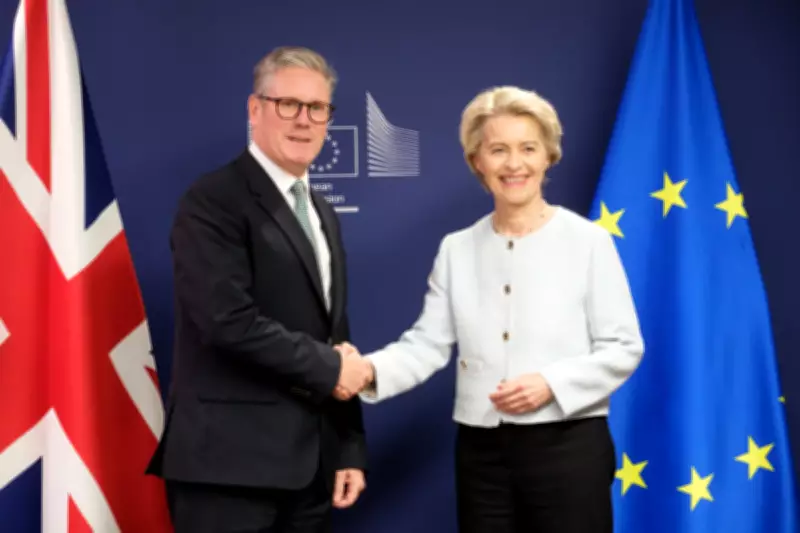
The UK government is quietly pursuing dynamic regulatory alignment with the European Union's Sanitary and Phytosanitary (SPS) rules, a move that critics say amounts to a profound constitutional and economic blunder. Under this arrangement, the UK would automatically adopt EU regulatory changes into domestic law, permanently surrendering its rule-making independence.
Economic Impact: A £15bn Opportunity Cost
According to modelling by the Competere Foundation, dynamic alignment will inflict a net opportunity cost on the UK of £15bn, equivalent to a 0.5% loss of GDP over five years. While the government claims the deal will save £5bn by reducing border friction, this ignores the fact that customs processes remain in place, and the larger costs of anti-competitive regulation on GDP per capita.
Three Pillars of Prosperity at Risk
National prosperity relies on robust domestic competition, secure property rights, and open trade regimes. The EU's hazard-based, precautionary approach restricts innovation and protects incumbent monopolies, costing its 27 member states €39bn annually. By aligning dynamically, the UK imports these distortions and destroys its post-Brexit regulatory headroom.
Global Trade Relations Jeopardized
The EU's SPS regime is heavily criticized by the US, Australia, and New Zealand at the WTO. Dynamic alignment would inherit these trade disputes and breach commitments under the CPTPP, which requires SPS measures to be based on objective science. It also risks damaging relations with the US, potentially putting £11bn of UK pharmaceutical exports at risk of tariff retaliation.
Democratic Deficit and Constitutional Strain
Defenders of alignment point to non-EU nations like Norway, but Norway has never prevented a single damaging agricultural rule. The EU submitted 147 WTO SPS notifications in 2024 alone, making proper parliamentary scrutiny impossible. The arrangement also bypasses the Sewel Convention, automatically binding devolved nations without their consent.
A Better Path Forward
The UK holds significant leverage as the EU's largest agrifood export customer, absorbing 23% of all such exports. Instead of dynamic alignment, the UK should pursue a Mutual Recognition Agreement (MRA) similar to those the EU has with New Zealand and Canada, or unilaterally recognize EU standards for imports, as it already does for medicines.
Shanker Singham, chairman of The Growth Commission and CEO of Competere Group, argues that the government must abandon dynamic alignment and focus on expanding global trade under Mutual Recognition and Equivalence frameworks. This is the only viable path for a sovereign, pro-growth economy and the only way to avoid a £15bn mistake.




