
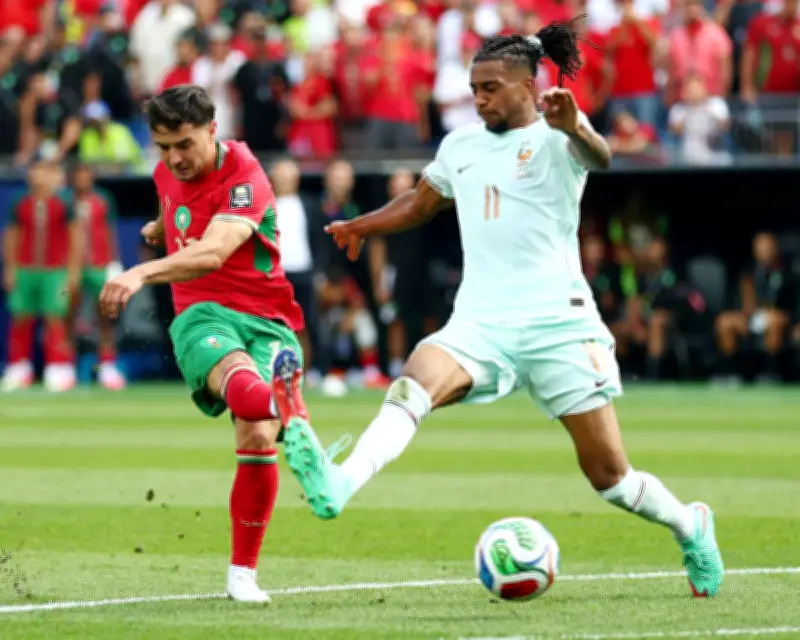
Diaspora players set new record at 2026 World Cup
Nearly a quarter of all players at the 2026 World Cup represented countries other than their birthplace, according to tournament data. Of the 1,248 squad members, 23.6% were born in a different nation from the one they played for, surpassing the previous high of 16.5% set in 2022. This marks a 7.1 percentage point increase over four years, reflecting the growing complexity of nationality in international football.
France's Michael Olise, born in London, epitomized this trend. He set up seven goals during the tournament, breaking Pelé's record for most assists at a single World Cup. Olise, eligible for France, Algeria, Nigeria, and Great Britain, said: “Nationality says where you come from. And I actually come from four countries: France, Algeria, Nigeria and Great Britain. I consider myself very lucky to possess these four parts, which all enrich me.”
Goals and contributions from diaspora players
Players born abroad contributed 70 goals either scored or assisted, with an additional 19 both set up and converted by such players. This output was proportionally consistent with their squad representation, accounting for similar shares of minutes played, goals, and assists. In a 48-team, 104-match tournament, these numbers underscore the diaspora's impact.
All three host nations benefited from diaspora talent. Colombia-born Julián Quiñones scored the tournament's opening goal for Mexico in a 2-0 win against South Africa and added three more goals, including in both knockout matches. Malik Tillman, born in Germany, recorded two goals and an assist for the USA. After setting up a goal against Paraguay, he was replaced by Gio Reyna, who was raised in England. Meanwhile, Jonathan David, born in the USA, scored a hat-trick for Canada in their first-ever World Cup victory.
France leads as source of diaspora talent
France was the largest exporter of players, with 74 French-born footballers appearing for other nations. The next five largest combinations of one country providing players for another all involved French-born talent. Curaçao had the highest single-nation dependency, with 25 of their 26 players born in the Netherlands.
In total, there were 140 distinct birthplace-team combinations where the two countries differed. Siblings also illustrated the trend: Nico Williams scored the winning goal in the final for Spain, while his brother Iñaki only reached the last 32 with Ghana. The Doué brothers, both born in Angers, France, play for France (Désiré) and Côte d'Ivoire (Guela). Harry Souttar (Australia) and John Souttar (Scotland) chose different paths despite both being born in Aberdeen.
A symbol of borderless football
Nestory Irankunda, born in Tanzania, represents Australia and plays for Watford. The 20-year-old scored the opening goal in a win against Turkey in Canada before facing the USA in Seattle. His performances have reportedly attracted interest from Sporting, hinting at a move to Portugal. Irankunda's journey epitomizes how the 2026 World Cup crossed borders like never before.
As the tournament concluded, the data confirms that nationality in football has never been so complex, nor more readily blurred in international competitions.




