
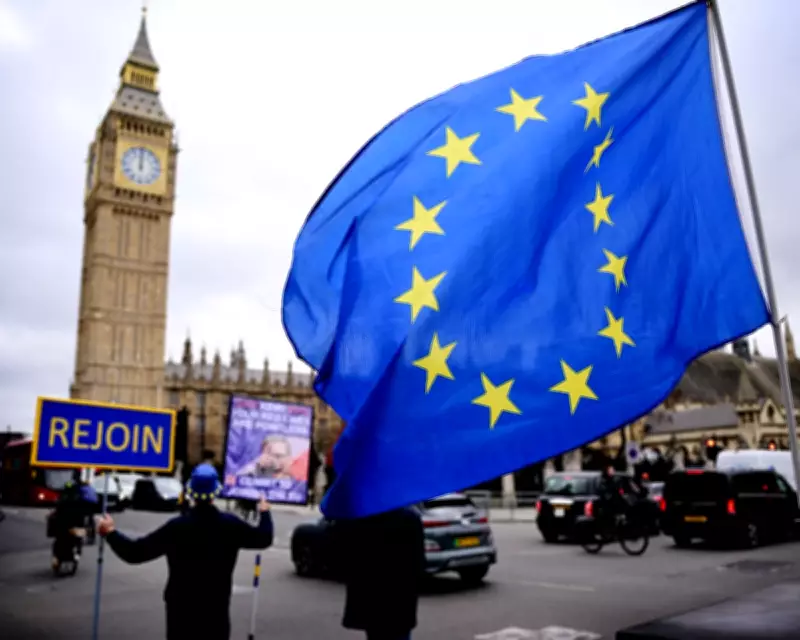
A Brexit protest in Westminster last month serves as a backdrop to a renewed debate on the UK's relationship with Europe. As the 10-year anniversary of the 2016 referendum approaches, Labour's emerging leadership contest is reopening the EU debate. Tom Baldwin argues that reversing Brexit requires a more European voting system first.
The Connection Between Electoral Reform and Brexit Reversal
Electoral reform and reversing Brexit are more connected than many realize. With four-fifths of Labour voters and an even higher proportion of party members wanting to reverse the 2016 decision, the prospect of a leadership contest is transforming melancholic reflection into active debate.
Labour Leaders' Stances on Europe
Keir Starmer recently made a belated nod to party desires by stating he wants to put the UK back at the heart of Europe, though his exact meaning remains unclear. Wes Streeting called for full EU re-entry, while Andy Burnham rowed back from earlier hopes of rejoining, perhaps mindful of the upcoming Makerfield byelection where a majority supported Brexit a decade ago.
The Reality of EU Negotiations
Any hesitancy is understandable given the smouldering consequences of Brexit, which have burnt through five prime ministers. Labour leaders cannot repeat the Conservative error of assuming the UK could dictate terms. The EU proved more effective in negotiations, and support for rejoining falls when polls mention replacing the pound or accepting free movement.
However, the EU's intransigence may not continue indefinitely. Roberta Metsola, European parliament president, stated Britain is not a supplicant but a former member deserving of special treatment. Paul Adamson noted that no one knows what's possible because no one has really tried.
The Structural Flaw in British Democracy
The real obstacle is not EU hostility but the UK's lack of lasting consensus. The revolving door at Downing Street and the risk of Nigel Farage becoming prime minister undermine stability. The narrow 2016 majority has disappeared due to demographic changes; a December 2025 estimate suggests leave would lose by 8 million votes. Even northern working-class seats like Makerfield would now back remain.
First-Past-the-Post and Instability
The bigger difficulty is how Britain determines power. First-past-the-post elections, once seen as providing strong government, now fuel instability as the vote splits among five or six parties. This system could allow Farage to become prime minister with barely a quarter of the national vote.
Britain's vote spread resembles European multiparty democracies, but unlike the proportional representation used by most EU states, the UK maintains an antiquated system. Electoral reform is less favored by Reform supporters but remains popular among the public and Labour voters.
Pathways to a European Approach
Burnham has consistently backed electoral reform, even knowing it might prevent Labour from repeating its 2024 victory. A less point-scoring, more problem-solving politics could avoid the mistakes of David Cameron, who let EU policy be driven by Tory internal dynamics. Electoral reform might enable a viable pro-business centre-right party not addicted to self-harm, persuading the EU that Britain can find stable consensus to reverse Brexit.
There are many maybes in this debate. But if Britain wants to get back into Europe before another decade passes, both leaders and the electoral system must become more European.




