
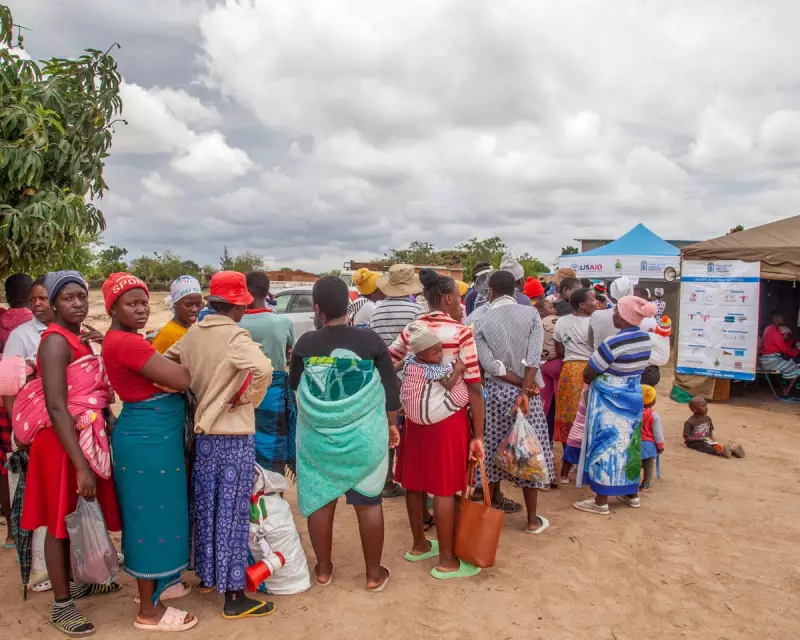
Exclusive new data has laid bare the devastating global impact of cuts to United States foreign aid, revealing the direct closure of more than a thousand family planning and sexual health clinics. A survey by the world's largest reproductive health network shows the stark human cost of a political shift in Washington.
Closures and Job Losses Mount
The International Planned Parenthood Federation (IPPF) conducted a survey of its member associations in July 2024, polling 151 organisations globally. The findings, shared with the Guardian, are alarming. The research indicates that approximately 1,394 service delivery points, or clinics, have been shut down as a direct result of funding withdrawals initiated by the Trump administration.
The damage is heavily concentrated in the world's most vulnerable regions. Of the total closures, a staggering 1,175 were in Africa, with the Middle East also severely affected. These were often facilities serving as the only available option for communities. The financial haemorrhage has also led to significant job losses, with 34 associations forced to lay off staff, representing at least 969 people now out of work.
Eighty-six member associations responded to the survey. Forty-six reported losing a combined minimum of $43 million (£32m) in funding for 2025-2029 due to contracts being cancelled or drastically reduced. The African region bore the brunt, losing $26 million, while the Arab world saw cuts of $9.4 million.
A "Radical Shift" with Dire Consequences
IPPF's Director General, Alvaro Bermejo, described the cuts as part of a "radical shift towards conservative ideologies that deliberately block human rights." He warned of the immediate fallout: "women giving birth without skilled care, people living with HIV unable to access testing and treatment to stay alive, and survivors of violence being turned away from the only clinic in their area."
The federation estimates that 9 million people worldwide have been affected by the loss of services. The survey identified 106 specific projects, mostly funded by UNFPA or USAID, that were impacted; 64 were cancelled entirely and 42 were greatly scaled back.
On the ground, the consequences are tangible and severe. Stock levels of essential contraceptives like implants, coils, and condoms have plummeted in many countries. Supplies of tests and treatments for sexually transmitted infections, gynaecology equipment, and even emergency kits for rape survivors have been disrupted. IPPF highlighted a cruel irony: while there is a $13 million funding gap for contraceptives in Uganda, Mozambique, Nigeria, Tanzania, and Bangladesh, $9.7 million worth of US-funded contraceptives sits unused in a warehouse in Belgium.
Empowering Anti-Rights Voices and Rolling Back Progress
Campaigners report that the funding vacuum has empowered anti-rights groups, who are amplifying rhetoric against abortion and contraception access for young people. Sarah Shaw, Associate Director of Advocacy at MSI Reproductive Choices, stated that the "dismantling of USAID" had caused devastation across Africa. "The US government is now indicating that faith-based organisations will be their partner of choice and we’re seeing some of these organisations ramp up their anti-abortion rhetoric across Africa," she said. "Decades of progress on gender equality are now at risk."
In Kenya, Nelly Munyasia of the Reproductive Health Network Kenya warned that "serious stockouts" would lead to a rise in unsafe abortions. She noted that anti-rights groups were already opposing contraception for teenagers, finding the current climate "a ground that is really fertile for them."
The damage is felt from Asia to the Horn of Africa. In Bangladesh, the Population Services and Training Center lost 30% of its 2025 budget ($500,000), forcing it to halt advocacy work with police. In Ethiopia, the Family Guidance Association lost half its income—$2.5 million—and had to lay off 162 staff, ending free services for the most vulnerable.
IPPF has established a mitigation fund to provide emergency support, determined not to, in Bermejo's words, "allow these radical macho-political agendas to determine who can and cannot access healthcare." However, the figures reveal a global health crisis in the making, driven by political decisions thousands of miles away.




