
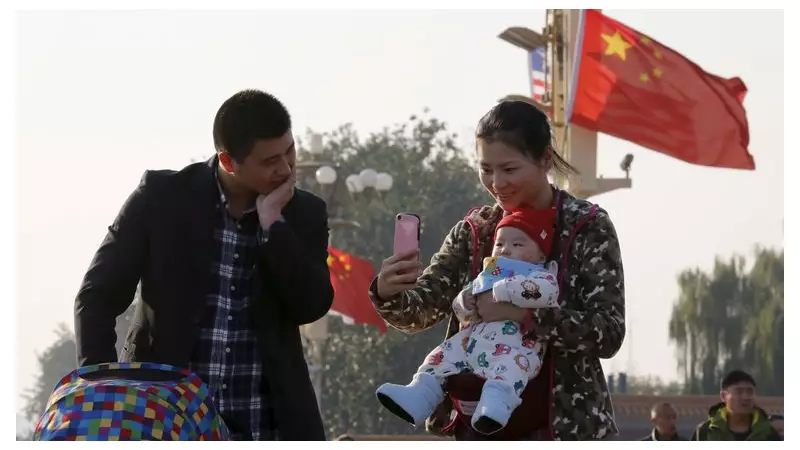
In a significant policy shift, China has announced it will begin taxing contraceptives for the first time in over three decades, a move analysts see as part of broader efforts to encourage families to have more children.
End of an Era for Tax-Free Contraception
Under the nation's newest tax laws, contraceptive drugs and products, including condoms, will no longer be exempt from China's 13% value-added tax. The change is set to take effect from January 1, 2026. This marks a stark reversal from previous decades, where contraception was actively promoted and often provided for free as part of stringent population control measures.
The decision comes against a backdrop of a rapidly declining birth rate. Official data from China's National Bureau of Statistics reveals a stark drop: 9.5 million babies were born in 2024, a figure roughly one-third lower than the 14.7 million recorded in 2019. This demographic trend led to a historic moment in 2023 when India overtook China as the world's most populous nation, as deaths began to outpace births.
Public Backlash and Expert Warnings
The tax change has been met with widespread ridicule and anger on Chinese social media platforms. Many users have sarcastically noted that the cost of raising a child vastly exceeds the price of taxed condoms. One mother, Hu Lingling, who is determined not to have a second child, told Sky News she found the move "ruthless" and "hilarious," especially when contrasted with the forced abortions of the past. She declared she would "lead the way in abstinence" as a form of rebellion.
Beyond the online mockery, demographers and public health experts have raised serious concerns. Qian Cai, Director of the University of Virginia's Demographics Research Group, warned that higher prices could reduce access to contraceptives for economically disadvantaged groups. This, she stated, could lead to increases in unintended pregnancies and sexually transmitted infections, potentially resulting in more abortions and higher healthcare costs.
However, Qian Cai also suggested the tax would have a "very limited" effect on actual reproductive decisions, as the cost of raising a child remains the primary deterrent for most couples. Conversely, Yi Fuxian, a senior scientist at the University of Wisconsin-Madison, argued the tax was "only logical," representing a return to treating contraceptives as ordinary commodities now that the state's goal has shifted from limiting to encouraging births.
A Complete Policy Reversal
This latest fiscal measure underscores a dramatic U-turn in China's population management strategy. For approximately 35 years, from 1980 until 2015, the ruling Communist Party enforced a controversial one-child policy through fines and penalties, which in some cases involved forced abortions. The limit was raised to two children in 2015 and then to three in 2021 as demographic alarms sounded.
The move to tax essential family planning products signifies the closing chapter of an era defined by strict birth control and opens a new, uncertain phase where economic and social policy are being leveraged to address a looming population crisis.




