
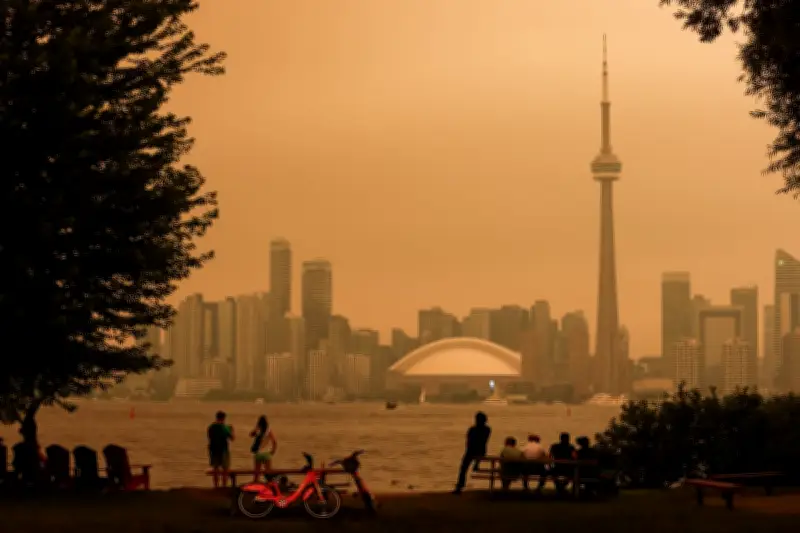
A spate of ferocious wildfires across North America and Europe, worsened by the climate crisis, has incinerated homes and forests and forced thousands of people to flee. Previous fires suggest the effects of these blazes may linger for years to come.
Current Wildfires and Smoke Plumes
Nearly 1,000 fires have erupted in Canada's boreal forests, causing evacuations and toxic smoke drifting into major Canadian and US cities. This prompted threats from Donald Trump, who accused Canada of “poisoning” US air. In the US, smoke from lightning-sparked fires in Washington, eastern Oregon, and Idaho may reach Florida. In Europe, huge fires in the UK, France, and Spain forced the evacuation of more than 250,000 people.
Climate Crisis and Health Risks
The climate crisis, driven by fossil fuel burning, creates fire-prone conditions by drying soils and plants. “The entire Iberian peninsula is suffering the effects of the climate emergency in a very specific way,” said Spanish Prime Minister Pedro Sánchez. Wildfire smoke triggers severe respiratory and cardiac problems. A recent study found that exposure to tiny particles in wildfire smoke raises hospitalization risk for older people hundreds of miles away. “The cardiovascular toll of wildfire smoke reaches well beyond the fire lines and well beyond the day the sky turns orange,” said Kai Chen, associate professor of epidemiology at Yale School of Public Health and study co-author.
Long-Term Impacts: The Maui Example
Three years after Maui wildfires killed over 100 people and razed thousands of buildings, many still struggle. The Maui Wildfire Exposure Study, led by University of Hawaii researchers and released Monday, found that while living and economic conditions have improved, many face health concerns like poorer lung function, higher blood pressure, and mental health challenges. “The progress is real, and it should be recognized,” said Alika Maunakea, co-director of the study. “But the biological, emotional and social consequences of a disaster do not disappear on the same timeline as debris removal or reconstruction.”
Nearly half of all adults in the study reported depressive symptoms, with nearly one in five experiencing post-traumatic stress. Screenings of over 2,500 participants found severe depressive symptoms and PTSD increased among children and adolescents, as did blood pressure and obesity. “Children may appear resilient while still carrying significant emotional and physical effects beneath the surface,” said Christopher Knightsbridge, a mental health therapist in Lahaina. “Supporting children means supporting the entire family, including their housing, food security, daily routines and access to trusted care.”
Need for Long-Term Monitoring and Public Health Measures
Researchers stress that long-term monitoring and intervention are required after major wildfires due to lasting impacts. Experts suggest authorities in smoke-affected areas create “clean air centers” for people to escape smoke. A 2025 research paper found a 7% increase in mortality among older people in southern California over three years due to wildfire smoke exposure, recommending that “activation of public health measures such as clean air centers should not only depend on intensity of smoke, as the long-term effects can be harmful, even at low levels.” Lara Schwarz, an environmental health scientist at UC Berkeley who led the research, said: “As wildfires become more frequent and severe in the context of climate change, with California being at high risk, understanding how these harmful wildfires will affect us in the long term is critical to informing better public health action and response.”




